

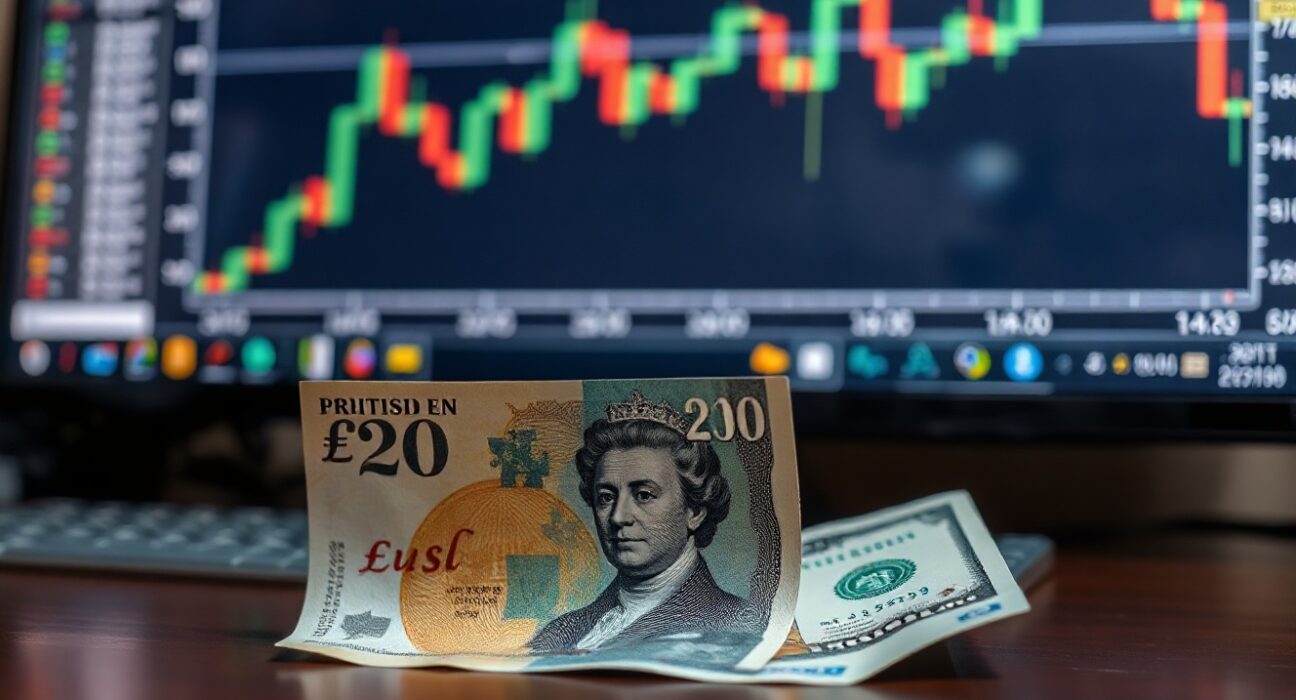
The British pound strengthened against the U.S. dollar on [date], as the greenback lost ground following the release of U.S. inflation data that came in line with market expectations. The U.S. Consumer Price Index (CPI) for [month/year] rose [X]% year-over-year, matching forecasts, which tempered speculation of an aggressive Federal Reserve rate hike and boosted risk appetite.
Market reaction: Sterling gains ground
Sterling traded higher against the dollar, with GBP/USD rising to [price] as of [time] GMT, up [X]% on the day. The dollar index, which measures the currency against a basket of peers, slipped [X]% to [level], reflecting a softer dollar across major currencies.
The in-line CPI print reduced the likelihood of a more hawkish Fed stance, which had been supporting the dollar in recent weeks. As a result, investors rotated back into risk-sensitive currencies like the pound, which had been under pressure from domestic economic concerns.
Context: Why this matters for sterling
The pound’s gains come amid a complex backdrop for the UK economy. The Bank of England has been navigating high inflation and sluggish growth, and recent data have shown mixed signals. While the UK labor market remains tight, wage growth has moderated, and the housing market has cooled.
Analysts note that sterling’s direction will likely hinge on the relative pace of monetary policy between the Fed and the Bank of England. If the Fed pauses rate hikes sooner than expected, the pound could find further support. Conversely, any signs of UK economic weakness could cap gains.
What this means for traders and businesses
For currency traders, the immediate reaction suggests a shift in sentiment, but volatility is likely to persist. For UK businesses that import or export, a stronger pound lowers the cost of imports but can make exports less competitive. The pound’s movement also affects inflation dynamics, as a firmer currency can help dampen imported price pressures.
Conclusion
Sterling’s rise against the dollar reflects a market recalibrating its expectations for U.S. monetary policy after the latest CPI data. While the immediate reaction is positive for the pound, the outlook remains uncertain, with both central banks’ next moves and economic data releases likely to drive further volatility. Investors will closely watch upcoming UK GDP figures and Fed communications for direction.
FAQs
Q1: Why did the pound rise against the dollar?
The pound rose because the U.S. CPI report matched expectations, reducing the chance of a more aggressive Federal Reserve rate hike. This weakened the dollar and boosted risk-sensitive currencies like sterling.
Q2: What is the current GBP/USD exchange rate?
As of [time] GMT on [date], GBP/USD traded at [price], up [X]% on the day. Exchange rates fluctuate constantly, so check a live source for the latest.
Q3: How does U.S. inflation affect the pound?
U.S. inflation influences the Federal Reserve’s interest rate decisions. Higher inflation typically leads to higher rates, which strengthens the dollar and can weaken the pound. In-line or lower inflation can have the opposite effect.
Disclaimer: The information provided is not trading advice, Bitcoinworld.co.in holds no liability for any investments made based on the information provided on this page. We strongly recommend independent research and/or consultation with a qualified professional before making any investment decisions.
