

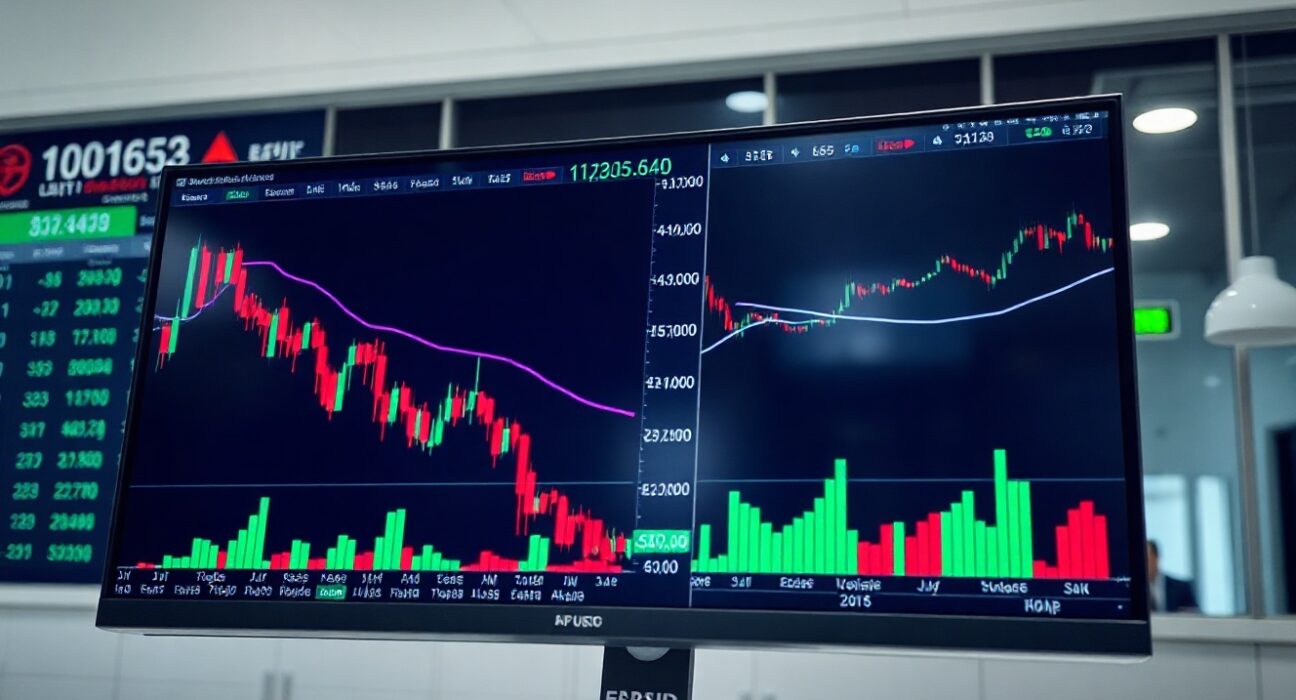
The euro advanced against the US dollar on [Date], as fresh inflation data signaled cooling price pressures in the United States, prompting traders to reassess the Federal Reserve’s monetary policy trajectory.
What’s Driving the Dollar’s Decline?
The latest US inflation report, released on [Date], showed a slower-than-expected rise in consumer prices, reinforcing market expectations that the Fed may pause or slow its rate-hiking cycle. A less hawkish Fed outlook typically weakens the dollar, as lower interest rates reduce the currency’s yield appeal to global investors.
In contrast, the euro has drawn support from the European Central Bank’s relatively more hawkish stance, with policymakers signaling further rate increases to combat persistent inflation in the eurozone. This policy divergence has narrowed the interest rate differential between the two currencies, favoring the euro.
Market Reaction and Immediate Impact
Following the inflation data, EUR/USD rose by approximately [X]% to trade near [Y] as of [Date]. The move reflects a broader trend of dollar weakness, which has been building over recent weeks as investors grow more confident that US inflation has peaked.
For global markets, a weaker dollar has wide-ranging implications: it can ease financial conditions for emerging market economies, boost commodity prices (as they are dollar-denominated), and affect corporate earnings for multinational companies.
What This Means for Traders and Investors
Currency traders are now closely watching upcoming Fed meetings and economic data for further clues on the pace of rate changes. A sustained dollar decline could signal a shift in global capital flows, with investors seeking higher yields in other currencies or assets.
For businesses engaged in international trade, a stronger euro reduces the cost of importing goods priced in dollars but makes European exports less competitive abroad. This dynamic could influence corporate earnings and pricing strategies in the coming quarters.
Conclusion
The euro’s advance against the dollar, driven by cooling US inflation and contrasting central bank policies, marks a notable shift in the currency market. As the Federal Reserve and European Central Bank navigate their respective inflation challenges, the direction of EUR/USD will remain a key indicator of global economic sentiment.
FAQs
Q1: Why does cooling inflation weaken the US dollar?
Cooling inflation reduces the likelihood of aggressive interest rate hikes by the Federal Reserve. Lower interest rates make the dollar less attractive to yield-seeking investors, thereby weakening its value relative to other currencies.
Q2: How does the euro’s strength affect European consumers?
A stronger euro lowers the cost of imported goods and services, potentially reducing inflation in the eurozone. However, it can also make European exports more expensive, which may impact economic growth and employment in export-oriented sectors.
Q3: What should traders watch next in the currency market?
Traders should monitor upcoming US inflation reports, Federal Reserve policy meetings, and European Central Bank communications. Any surprises in economic data or shifts in central bank rhetoric could trigger significant movements in EUR/USD and other currency pairs.
Disclaimer: The information provided is not trading advice, Bitcoinworld.co.in holds no liability for any investments made based on the information provided on this page. We strongly recommend independent research and/or consultation with a qualified professional before making any investment decisions.
