

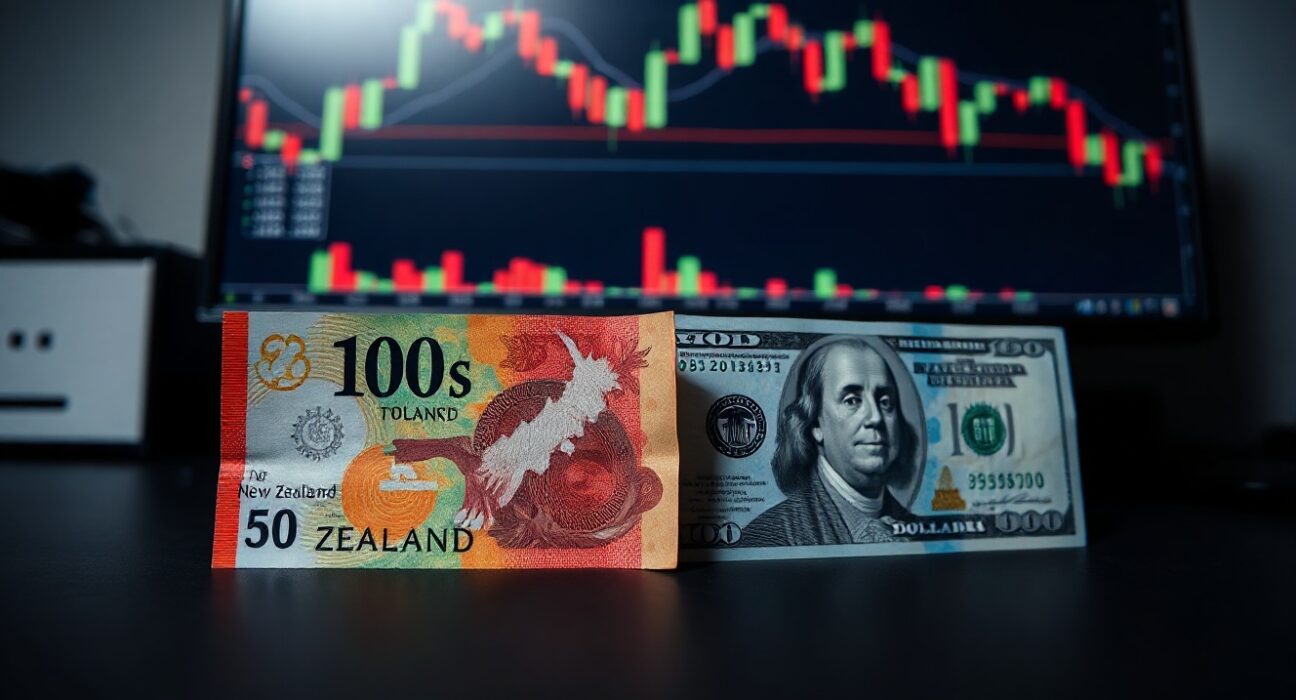
The New Zealand Dollar (NZD) traded under pressure against the US Dollar (USD) on Tuesday, following data showing a further cooling in New Zealand inflation expectations, which reinforced market bets that the Reserve Bank of New Zealand (RBNZ) will resume its easing cycle sooner rather than later. The NZD/USD pair slipped to a session low of 0.6090, down 0.35% on the day, as investors digested the implications of softer price pressures.
Inflation Expectations Ease Further
According to the latest RBNZ survey of expectations, two-year-ahead inflation expectations fell to 2.0% in the fourth quarter, down from 2.2% in the previous quarter, landing squarely at the central bank’s target midpoint. One-year-ahead expectations also declined to 1.8% from 2.0%. The data, released earlier today, suggests that inflation is becoming more anchored within the RBNZ’s 1-3% target band, reducing the need for restrictive policy.
This cooling in expectations comes on the back of a series of softer economic indicators, including a contraction in GDP in the second quarter and a softening labor market. The RBNZ has already cut the Official Cash Rate (OCR) twice this year, bringing it to 4.75%, and markets are now pricing in a high probability of another cut at the November 27 meeting. According to the OIS curve, there is a 70% chance of a 25 basis point reduction, with some traders even speculating on a larger 50 bp move.
US Dollar Strength Adds to Kiwi Woes
Adding to the Kiwi’s downside, the US Dollar remained firm amid expectations that the Federal Reserve will proceed with gradual rate cuts, while the US economy continues to show resilience. The USD index hovered near a two-month high, supported by robust consumer spending and a still-tight labor market. This divergence in monetary policy outlooks between the Fed and the RBNZ is a key driver of the pair’s recent weakness.
From a technical perspective, NZD/USD has broken below its 50-day moving average, a bearish signal that could open the door for further losses. The pair is now testing support at the 0.6080-0.6100 zone, which corresponds to the 61.8% Fibonacci retracement of the September-October rally. A decisive break below this level could expose the 0.6000 psychological handle, while resistance is seen at 0.6150 and then 0.6200.
What This Means for Traders and the Economy
For traders, the key event risk remains the RBNZ policy decision later this month. A dovish surprise, such as a 50 bp cut or a strongly dovish statement, could accelerate the Kiwi’s decline. Conversely, if the central bank signals a pause, we could see a short-covering bounce. For the broader New Zealand economy, lower inflation expectations are generally positive as they preserve household purchasing power, but they also reflect subdued demand, which underscores the need for policy support.
Conclusion
In summary, NZD/USD is under pressure as cooling inflation expectations reinforce the case for RBNZ rate cuts, while the US Dollar remains firm on Fed policy divergence. The technical breakdown below key moving averages suggests further downside risk, but the pair’s fate will likely hinge on the upcoming RBNZ meeting. Traders should watch the 0.6080 support level and prepare for potential volatility.
FAQs
Q1: Why is the New Zealand Dollar falling?
The NZD is falling due to cooling inflation expectations, which increase the likelihood of further RBNZ rate cuts, and a firmer US Dollar amid Fed policy divergence.
Q2: What is the RBNZ’s current interest rate?
As of the last meeting, the RBNZ’s Official Cash Rate stands at 4.75%, and markets expect a possible cut at the November 27 meeting.
Q3: What are the key technical levels for NZD/USD?
Immediate support is at 0.6080-0.6100, with the 0.6000 handle as the next major level. Resistance is at 0.6150 and 0.6200.
Disclaimer: The information provided is not trading advice, Bitcoinworld.co.in holds no liability for any investments made based on the information provided on this page. We strongly recommend independent research and/or consultation with a qualified professional before making any investment decisions.
