

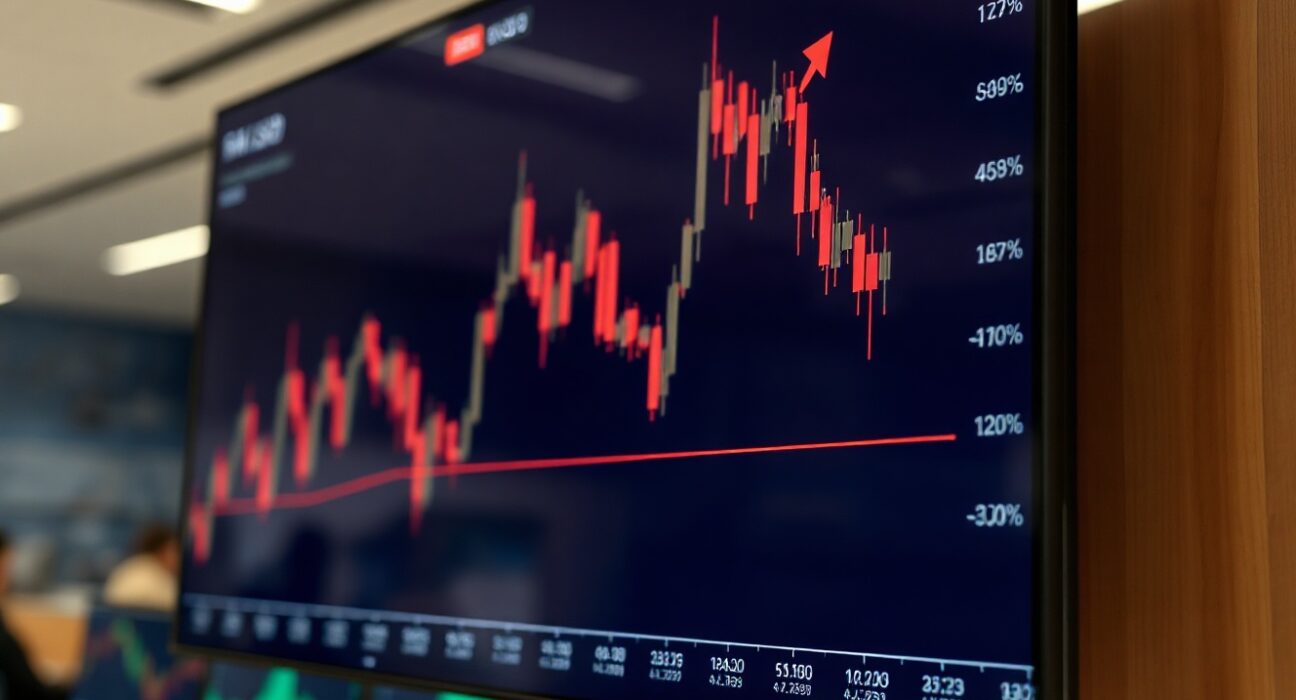
ING analysts see the euro trading in a range against the US dollar with an upside bias, according to a note released on [date of note, if known, otherwise ‘recently’]. The currency pair is testing the upper bounds of its recent trading band, with market participants weighing divergent monetary policy expectations between the European Central Bank and the Federal Reserve.
What’s Driving the Euro’s Upside Bias?
The euro’s resilience stems from a combination of factors, including better-than-expected eurozone economic data and a softening of US economic momentum. ING notes that the market has already priced in aggressive Fed rate cuts, while the ECB’s policy path appears less dovish than previously anticipated. This divergence in policy expectations is providing a floor under EUR/USD, limiting downside moves.
Technical indicators also support the range-bound view, with the pair repeatedly finding support around the lower end of its recent consolidation zone. However, ING cautions that a breakout above the range’s upper boundary would require a fresh catalyst, such as a significant shift in US inflation data or a surprise ECB policy signal.
Key Levels to Watch for EUR/USD
For traders, the immediate focus is on the upper end of the range, which has acted as resistance in recent sessions. A daily close above this level could open the door to further gains, targeting the next psychological level. On the downside, the lower boundary remains a critical support zone; a break below it would negate the upside bias and signal a potential trend reversal.
ING emphasizes that the range-bound behavior is typical in the absence of strong directional catalysts, and they expect the pair to remain within these parameters in the near term. They advise watching upcoming economic releases, particularly US inflation data and eurozone PMI figures, for potential triggers.
Market Context and Implications
This analysis comes amid a period of heightened uncertainty in global currency markets. The dollar has been under pressure from expectations of Fed rate cuts, while the euro has been supported by the ECB’s relatively hawkish stance. However, the market is also wary of geopolitical risks and potential surprises in economic data, which could quickly alter the outlook.
For investors and businesses with exposure to EUR/USD, this range-bound environment suggests a need for careful risk management. Options strategies that benefit from low volatility could be attractive, while those with directional views should wait for a clear breakout before committing capital.
Conclusion
In summary, ING’s analysis points to a euro that is likely to stay range-bound against the dollar, but with a slight upward tilt. The pair is testing key resistance levels, and the outcome of upcoming economic data will likely determine whether the range holds or breaks. As always, market conditions can change rapidly, and traders should stay informed on the latest developments.
FAQs
Q1: What does “range-bound with upside bias” mean for EUR/USD?
It means the currency pair is likely to trade within a defined range, but the risk is skewed toward the upper end of that range, suggesting a higher probability of upward movement.
Q2: What are the key levels to watch in EUR/USD according to ING?
While specific levels are not detailed in the original note, traders typically watch the recent range highs as resistance and the range lows as support. A break above the range high could signal further gains, while a break below the range low would negate the upside bias.
Q3: How might upcoming economic data affect EUR/USD?
Data such as US inflation and eurozone PMI can influence monetary policy expectations. Stronger US data could boost the dollar, while weaker data could reinforce the upside bias for the euro. Similarly, eurozone data that beats expectations could support the euro.
Disclaimer: The information provided is not trading advice, Bitcoinworld.co.in holds no liability for any investments made based on the information provided on this page. We strongly recommend independent research and/or consultation with a qualified professional before making any investment decisions.
