

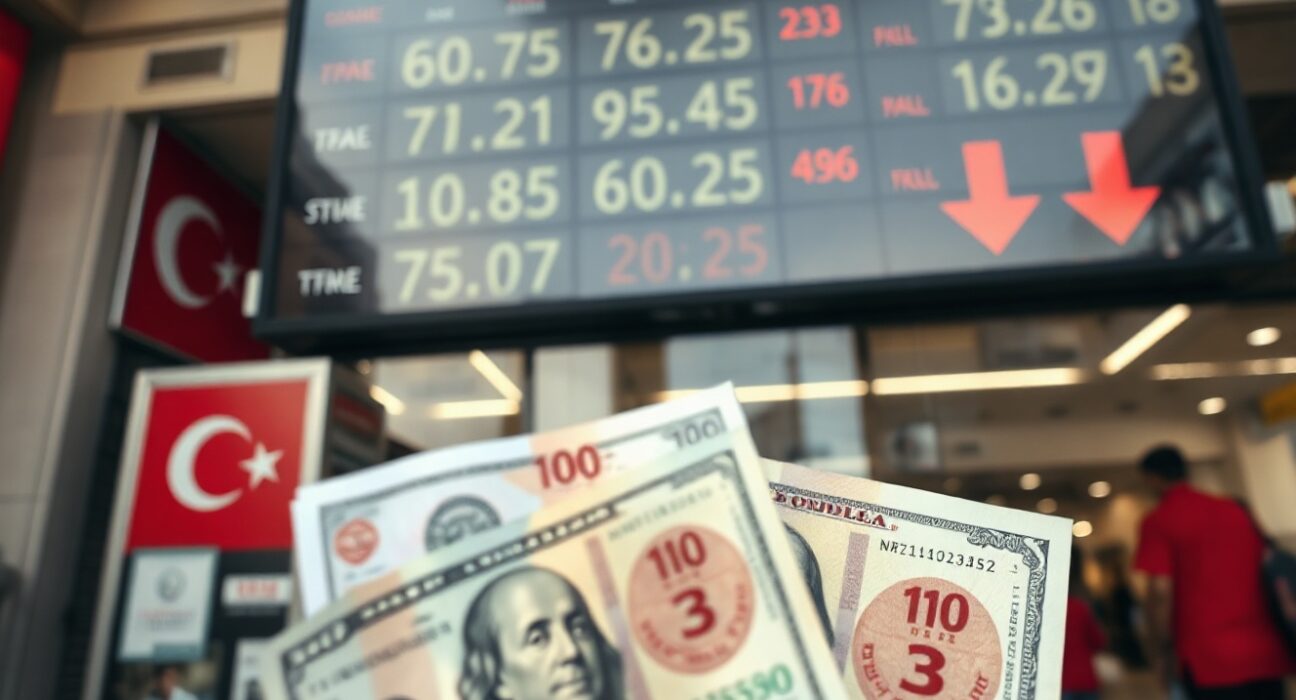
Commerzbank analysts expect the Turkish lira to continue losing ground against the US dollar, according to a recent note. The bank’s currency strategists point to persistent inflation and monetary policy challenges as key drivers of the projected depreciation.
What’s Driving the Lira’s Decline?
The Turkish lira has been under sustained pressure due to high inflation, which remains well above the central bank’s target. Despite multiple interest rate hikes, real yields remain deeply negative, discouraging foreign investment. Political pressure on the central bank to maintain loose policy has also undermined credibility, prompting investors to demand a higher risk premium for holding lira assets.
As of the latest data, Turkey’s annual inflation rate is above 60%, far exceeding the central bank’s 5% medium-term goal. The central bank has raised its policy rate to 50%, but with inflation still accelerating, the real interest rate is negative, making lira deposits unattractive. This dynamic fuels dollarization, as households and businesses convert savings into foreign currency to protect purchasing power.
Commerzbank’s Forecast and Market Implications
Commerzbank’s note, dated this week, indicates that the lira will likely weaken further against the dollar in the coming months. The bank cites the central bank’s limited room for aggressive tightening due to political constraints and the need to support economic growth. Additionally, external vulnerabilities, such as a large current account deficit and low foreign exchange reserves, exacerbate the pressure.
For investors and businesses with exposure to Turkey, this outlook implies continued currency risk. Importers will face higher costs, while exporters may benefit from a weaker lira. However, the overall effect on the economy is likely negative, as it feeds into inflation and erodes real incomes.
What This Means for the Broader Market
The lira’s trajectory is not just a Turkish issue; it has regional and global implications. A weaker lira can put pressure on other emerging market currencies, especially those with similar vulnerabilities. It also affects European banks with exposure to Turkish debt, adding to systemic risk concerns.
For global investors, the situation underscores the importance of monitoring central bank independence and inflation dynamics in emerging markets. The lira’s decline serves as a reminder that currency stability requires credible monetary policy and structural reforms.
Conclusion
Commerzbank’s forecast aligns with broader market expectations of continued lira depreciation. The combination of high inflation, negative real rates, and political interference in monetary policy creates a challenging environment for the currency. Until these fundamental issues are addressed, the lira is likely to remain under pressure against the dollar.
FAQs
Q1: Why is the Turkish lira depreciating?
The lira is depreciating due to high inflation, negative real interest rates, and concerns about central bank independence. These factors reduce investor confidence and encourage dollarization.
Q2: What is Commerzbank’s forecast for USD/TRY?
Commerzbank expects the Turkish lira to weaken further against the US dollar, although they did not provide a specific target rate. The forecast is based on persistent inflation and policy constraints.
Q3: How does the lira’s decline affect the average person in Turkey?
A weaker lira raises the cost of imported goods, fueling inflation and reducing purchasing power. It also makes foreign travel and savings in foreign currency more expensive for locals.
Disclaimer: The information provided is not trading advice, Bitcoinworld.co.in holds no liability for any investments made based on the information provided on this page. We strongly recommend independent research and/or consultation with a qualified professional before making any investment decisions.
