

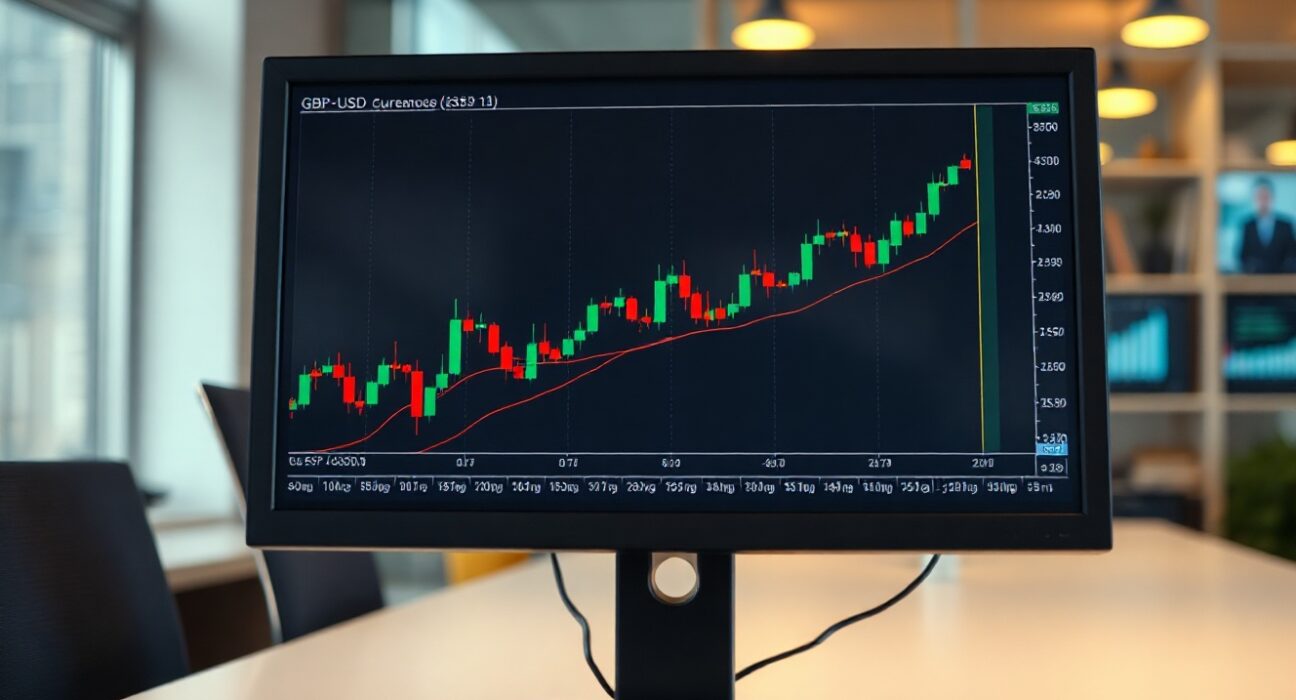
The British pound trimmed its early-session losses against the US dollar on [Date], as market sentiment steadied following a volatile start to the trading day. The GBP/USD pair moved back toward the key 1.2700 level after dipping to an intraday low of 1.2655, reflecting a cautious but resilient mood among currency traders.
What Drove the Pound’s Recovery?
The initial weakness in sterling was largely attributed to a stronger US dollar, which gained ground on the back of robust US economic data released earlier in the week. However, as European markets opened, the dollar’s momentum faded, allowing the pound to claw back its losses. Traders also noted that month-end portfolio rebalancing flows provided some support for the UK currency.
Market participants are now focusing on the upcoming Bank of England policy meeting, scheduled for next week, where interest rate decisions will be closely scrutinized. Expectations of a potential rate hold have been priced in, but any hawkish surprises could give the pound a further boost.
Technical Outlook for GBP/USD
From a technical perspective, the GBP/USD pair is trading within a well-established range, with immediate support seen at 1.2650 and resistance at 1.2750. A break above the latter could open the door for further gains toward the 1.2800 mark, while a failure to hold above 1.2650 might signal a retest of the 1.2600 level.
Indicators such as the Relative Strength Index (RSI) are hovering near the neutral 50 level, suggesting that the pair is neither overbought nor oversold, and that direction will likely be determined by upcoming economic data releases.
Why This Matters for Traders
For traders and investors, the pound’s resilience against the dollar is a key indicator of market confidence in the UK economy. The currency’s performance is closely tied to interest rate expectations, inflation data, and broader global risk sentiment. A stable or appreciating pound can have significant implications for UK import prices, corporate earnings, and international investment flows.
Broader Market Context
The dollar index, which measures the greenback against a basket of major currencies, has been volatile this week, influenced by shifting expectations for US Federal Reserve policy. Meanwhile, the euro and the Japanese yen have also shown mixed movements, reflecting a market that is still digesting the latest central bank communications.
Geopolitical developments, including ongoing trade negotiations and energy supply concerns, continue to add an element of uncertainty to the currency markets. Investors are advised to stay informed and consider risk management strategies in this environment.
Conclusion
In summary, the pound’s recovery against the dollar highlights the dynamic nature of the currency market, where sentiment can shift rapidly. While the near-term outlook remains uncertain, the pound’s ability to bounce back from early losses suggests underlying support. Traders will be watching the Bank of England meeting and upcoming US data for further direction.
FAQs
Q1: Why did the pound initially fall against the dollar?
The pound initially weakened due to a stronger US dollar, which was supported by positive US economic data earlier in the week. This put pressure on GBP/USD, but the pair later recovered as the dollar’s momentum faded.
Q2: What are the key support and resistance levels for GBP/USD?
Immediate support is at 1.2650, with a stronger support zone near 1.2600. On the upside, resistance is seen at 1.2750, followed by 1.2800. A break above these levels could signal further gains.
Q3: How might the Bank of England meeting affect the pound?
The Bank of England’s interest rate decision and accompanying commentary are likely to influence the pound. If the bank signals a more hawkish stance, the pound could strengthen; conversely, a dovish tone could lead to weakness.
Disclaimer: The information provided is not trading advice, Bitcoinworld.co.in holds no liability for any investments made based on the information provided on this page. We strongly recommend independent research and/or consultation with a qualified professional before making any investment decisions.
