

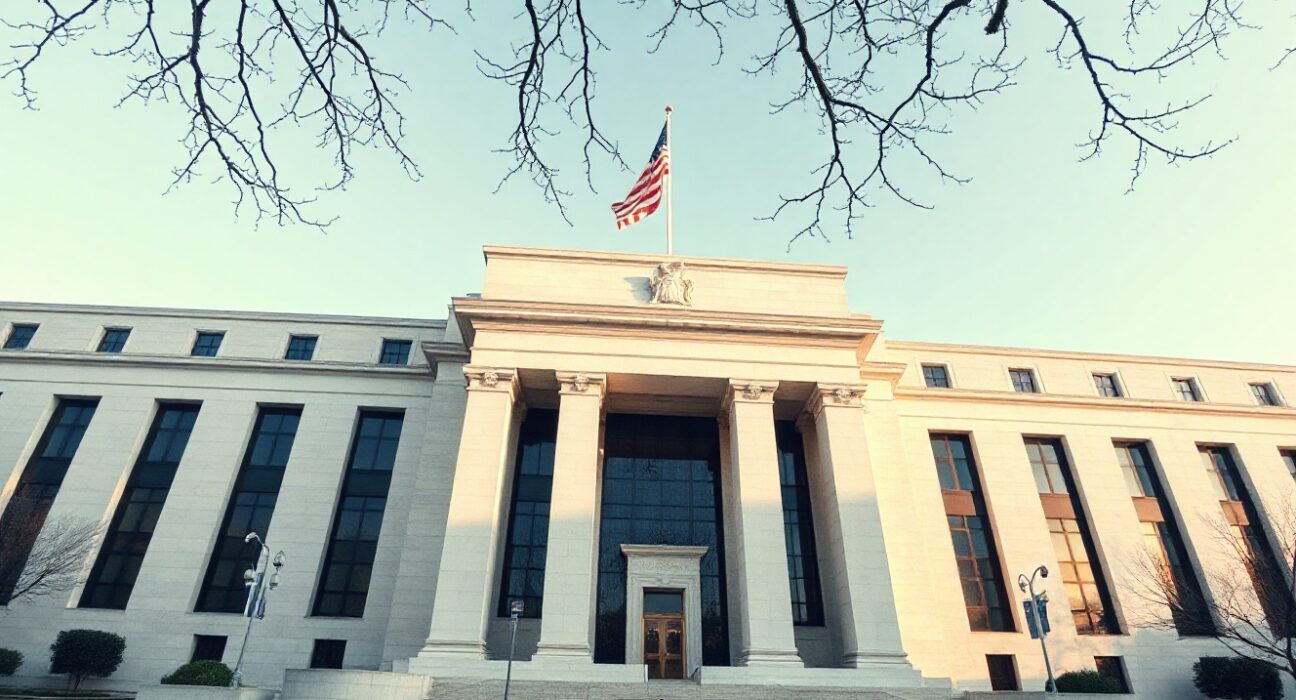
The Federal Reserve left interest rates unchanged at its January 2026 meeting, signaling a cautious approach as the U.S. economy exhibits uneven growth across sectors. The decision keeps the benchmark federal funds rate in a range of 4.25% to 4.50%, a level maintained since December 2025, as policymakers balance persistent inflation pressures with signs of a cooling labor market.
Mixed Signals in Economic Data
Recent data paint a complex picture of the U.S. economy. While consumer spending has remained resilient, manufacturing activity has contracted for three consecutive months, and the housing market continues to struggle with elevated mortgage rates. The labor market, though still adding jobs, has shown a slowdown in wage growth, which could ease inflationary pressures over time.
Inflation, as measured by the Consumer Price Index, stood at 3.2% year-over-year in December 2025, down from a peak of 9.1% in June 2022 but still above the Fed’s 2% target. Core inflation, which excludes food and energy prices, was 3.0% over the same period, indicating that underlying price pressures remain sticky.
Fed’s Cautious Stance
In its post-meeting statement, the Federal Open Market Committee (FOMC) reiterated its data-dependent approach, emphasizing that future rate decisions will hinge on incoming economic indicators. Chair Jerome Powell, in a press conference, noted that the economy is “at a crossroads,” with risks of both prolonged inflation and a sharper slowdown in growth.
The central bank’s updated economic projections, released in December, show a median expectation of two rate cuts in 2026, but the timing remains uncertain. Market participants now price in a roughly 60% probability of a rate cut by June, according to CME FedWatch, though futures have been volatile in response to mixed data.
Why This Matters
The Fed’s decision has direct implications for households and businesses. Borrowing costs for mortgages, auto loans, and credit cards are directly influenced by the federal funds rate. For savers, higher rates have boosted yields on savings accounts and certificates of deposit, but for those carrying variable-rate debt, the burden remains heavy.
For investors, the prolonged hold on rates has supported equity markets, but uncertainty about the path forward could increase volatility. The Fed’s balancing act between taming inflation and avoiding a recession is a critical factor for economic stability.
Conclusion
The Federal Reserve’s decision to hold rates steady reflects an economy growing at an uneven pace, with persistent inflation and a cooling labor market. The path ahead depends on incoming data, and policymakers remain flexible. For now, the central bank’s cautious stance suggests that any shift in policy will be deliberate and well-communicated, providing a measure of stability for markets and consumers alike.
FAQs
Q1: Why did the Fed keep interest rates unchanged?
The Fed held rates steady to assess the mixed economic data, balancing persistent inflation with signs of a slowdown in the labor market. This cautious approach allows policymakers to wait for clearer signals before adjusting policy.
Q2: How does the Fed’s decision affect mortgage rates?
While the Fed doesn’t directly set mortgage rates, its policy influences them. With the federal funds rate unchanged, mortgage rates are likely to remain elevated, though they may fluctuate based on market expectations for future Fed actions.
Q3: What could prompt the Fed to cut rates in 2026?
A significant weakening in the labor market or a sustained decline in inflation toward the 2% target could prompt the Fed to cut rates. The central bank will closely monitor upcoming economic data, including employment reports and inflation readings, to guide its decisions.
Disclaimer: The information provided is not trading advice, Bitcoinworld.co.in holds no liability for any investments made based on the information provided on this page. We strongly recommend independent research and/or consultation with a qualified professional before making any investment decisions.
