

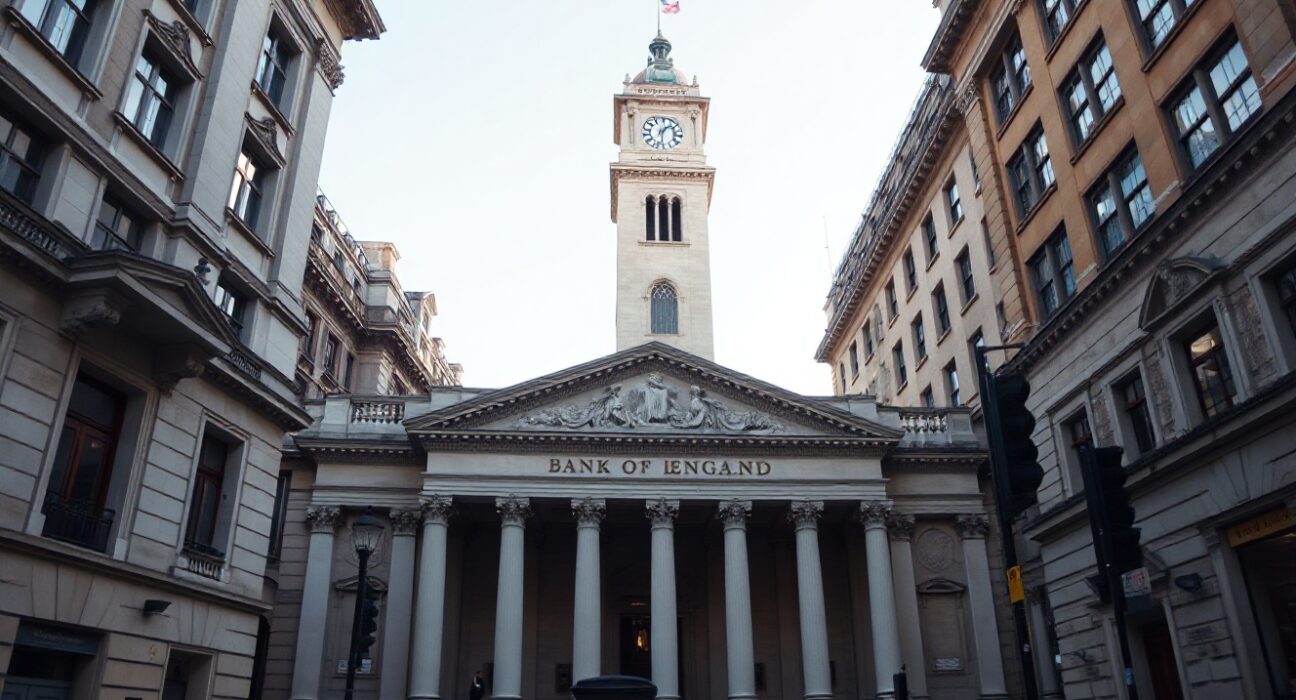
The Bank of England left interest rates unchanged at its latest meeting, and Standard Chartered notes that the UK economy continues to show resilience despite a restrictive monetary policy stance. The decision, widely expected by markets, keeps the Bank Rate at its current level as policymakers weigh persistent inflation pressures against signs of economic strength.
What Does the Bank of England’s Hold Mean for the UK Economy?
The Bank of England’s decision to hold rates reflects a delicate balancing act. While inflation has cooled from its peaks, it remains above the 2% target, and the central bank is cautious about easing policy too quickly. Standard Chartered’s assessment highlights that the UK’s growth momentum has held up better than many had anticipated, supported by a resilient labor market and consumer spending.
The hold also signals that the Bank is not yet convinced that price pressures are fully contained. Services inflation, in particular, remains sticky, and wage growth, while moderating, is still elevated. This suggests that any rate cuts are unlikely in the immediate future, and the Bank will need to see sustained evidence of disinflation before adjusting policy.
How Does Standard Chartered View the UK’s Growth Prospects?
Standard Chartered’s commentary points to a UK economy that is growing steadily, even as the full impact of previous rate hikes continues to feed through. The firm’s analysis suggests that the resilience is broad-based, with business investment and exports also contributing to the positive picture. This is a more optimistic outlook than some other forecasters, who have warned of a possible slowdown.
The bank’s view is that the UK is likely to avoid a recession, but growth will remain modest. This is a scenario where the economy expands slowly, unemployment stays relatively low, and inflation gradually moves back to target. For investors and businesses, this means a stable but not spectacular environment, with policy rates likely to stay higher for longer than previously expected.
Why Does This Matter for Your Finances and Investments?
The Bank of England’s policy stance directly affects borrowing costs, savings rates, and the value of the pound. For homeowners with variable-rate mortgages, a hold means their monthly payments will not change immediately, but they should still plan for the possibility of higher costs if rates remain elevated. Savers, on the other hand, may continue to benefit from attractive interest rates on easy-access accounts and fixed-rate bonds.
For investors, the UK equity market’s performance is often linked to the economic cycle and interest rate expectations. A resilient economy with stable rates can support corporate earnings, particularly in domestic-focused sectors. However, global factors, such as commodity prices and geopolitical tensions, also play a significant role in shaping the outlook.
Conclusion
The Bank of England’s decision to hold rates, coupled with Standard Chartered’s view of UK growth resilience, paints a picture of an economy navigating a challenging environment with relative stability. While the path ahead is not without risks, the immediate outlook appears more positive than many feared. For now, the central bank is in a wait-and-see mode, and the coming months will be crucial in determining whether the current stance is maintained or adjusted.
FAQs
Q1: Why did the Bank of England keep interest rates unchanged?
The Bank of England held rates to assess whether inflation is on a sustainable path back to its 2% target. While inflation has fallen, underlying price pressures remain, and the central bank wants to avoid loosening policy too early.
Q2: What does ‘growth resilient’ mean in this context?
It means that the UK economy has continued to expand despite higher interest rates. Standard Chartered’s analysis indicates that the economy is growing steadily, avoiding a recession, with support from consumer spending, investment, and exports.
Q3: How might this affect mortgage rates and savings?
With rates on hold, mortgage rates are likely to remain stable in the near term, but borrowers should be prepared for potential future increases. Savers can continue to find competitive rates, though they may start to decline if the Bank signals a move toward cuts later in the year.
Disclaimer: The information provided is not trading advice, Bitcoinworld.co.in holds no liability for any investments made based on the information provided on this page. We strongly recommend independent research and/or consultation with a qualified professional before making any investment decisions.
