

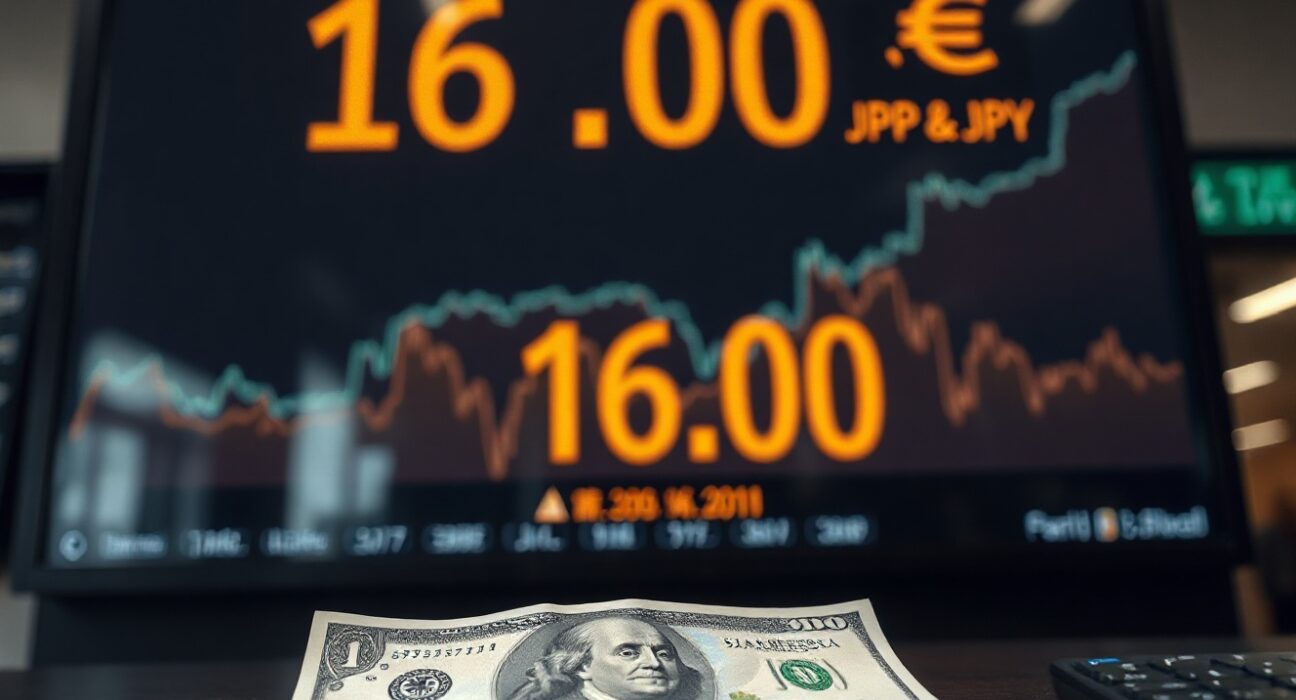
USD/JPY has climbed above the 160 level for the first time in decades, raising fresh concerns about the credibility of Japan’s economic policy framework and the potential for currency intervention by the Ministry of Finance. As of the latest trading session, the pair traded at 160.20, driven by persistent interest rate differentials between the US and Japan, with the Federal Reserve maintaining higher rates while the Bank of Japan remains cautious about tightening policy.
Why the 160 Level Matters
The 160 mark is more than a psychological threshold; it represents a critical test for Japanese policymakers. In 2022, intervention occurred near 145 and 150, but the current move beyond 160 signals that market forces are overwhelming verbal warnings. Analysts argue that each successive breach weakens the credibility of the Ministry of Finance’s commitment to stability, as traders increasingly test the limits of tolerance.
Historical context shows that the previous high was in 1990, when USD/JPY hit 160.35, before Japan’s asset bubble burst. The current level therefore resonates with memories of economic turmoil, amplifying concerns about import costs, inflation, and the Bank of Japan’s ability to normalize policy without triggering a bond market selloff.
Intervention Risks and Policy Response
The immediate question is whether Japan will intervene to support the yen. While officials have repeated their warning of ‘excessive volatility’, actual intervention remains uncertain due to the high cost and the need for US cooperation. A unilateral move could prove ineffective if the fundamental drivers—US yields and Japan’s negative rates—remain unchanged.
Market participants are also watching the Bank of Japan’s July policy meeting. Some expect a reduction in bond purchases, but a full rate hike seems unlikely given the fragile economy. The credibility gap lies in the BOJ’s communication: it has signaled normalization but has not followed through decisively, leaving investors to sell the yen with confidence.
Impact on Importers, Consumers, and Global Markets
For Japan, a weaker yen raises import costs for energy and food, squeezing households and small businesses. This could undermine consumer sentiment and complicate the BOJ’s inflation outlook. Globally, a sustained move above 160 may pressure other Asian currencies and prompt competitive devaluations, while also increasing the cost of servicing dollar-denominated debt for emerging markets.
Investors should also consider the carry trade: with Japanese rates near zero, borrowing yen to buy higher-yielding assets remains attractive. But if intervention occurs, sudden yen spikes could trigger margin calls and volatility across global markets, reminiscent of the 2022 episode when USD/JPY dropped by over 5% in a single day.
What Credibility Loss Means for the Yen
When a central bank and finance ministry lose credibility, market participants begin to disregard verbal interventions, requiring ever larger actual interventions to achieve the same effect. This dynamic is already visible: earlier warnings at 155 and 158 were ignored. The longer the yen remains weak, the harder it becomes to reverse expectations without a coordinated policy shift.
Moreover, the political dimension cannot be ignored. With an election cycle approaching, public discontent over the cost of living may pressure politicians to demand stronger action, potentially leading to politically motivated intervention that lacks economic coherence. This would further erode institutional credibility.
Conclusion
USD/JPY above 160 is a significant development that underscores the limits of Japan’s current policy mix. The credibility of the Ministry of Finance and the Bank of Japan is under scrutiny, and the path forward is fraught with risks. For traders, the key levels to watch are 161 and 162, but the more critical factor is the policy response. As of now, no intervention has been confirmed, and the market remains on edge. The situation demands close monitoring, as the next move could be swift and impactful.
FAQs
Q1: What is the significance of USD/JPY reaching 160?
A1: The 160 level is a psychological and historical threshold. It marks the highest level in over 30 years, raising concerns about Japan’s policy credibility and the potential for market intervention.
Q2: How might Japan respond to the yen’s weakness?
A2: Japan could intervene in the foreign exchange market, as it did in 2022. However, unilateral intervention may be limited in effectiveness without US support and a shift in monetary policy fundamentals.
Q3: What are the risks of a weaker yen for the global economy?
A3: A weaker yen can increase import costs in Japan, potentially fueling inflation. Globally, it may pressure other Asian currencies, affect trade balances, and trigger volatility in carry trades.
Disclaimer: The information provided is not trading advice, Bitcoinworld.co.in holds no liability for any investments made based on the information provided on this page. We strongly recommend independent research and/or consultation with a qualified professional before making any investment decisions.
