

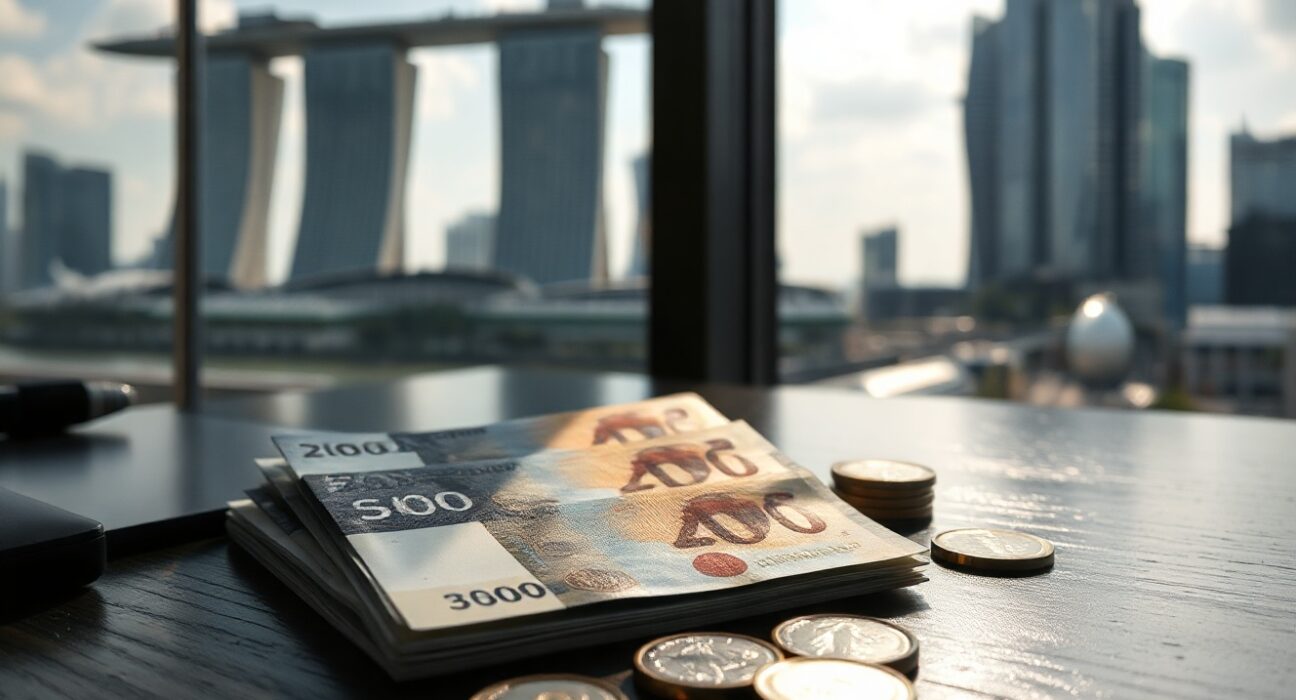
The Singapore dollar retains a mild upside bias against the US dollar, according to the latest currency outlook from United Overseas Bank (UOB), as market participants weigh regional growth prospects against US monetary policy expectations.
UOB’s Assessment of the Singapore Dollar
UOB’s foreign exchange strategy team noted that the SGD’s mild upside bias remains intact, reflecting a combination of resilient domestic fundamentals and a broadly stable external environment. The bank’s view suggests that while the US dollar may see intermittent strength, the SGD is likely to hold its ground, supported by Singapore’s trade performance and the Monetary Authority of Singapore’s (MAS) policy stance.
The assessment comes as investors monitor shifts in global risk sentiment and the trajectory of the Federal Reserve’s interest rate path. UOB’s commentary points to a measured optimism, rather than a strong bullish call, indicating that the SGD’s appreciation potential is gradual.
Key Factors Supporting the SGD
Several elements underpin the mild upside bias. Singapore’s export data has remained relatively robust, and the MAS’s exchange-rate-centered policy framework continues to provide a stabilizing influence. Additionally, the city-state’s status as a safe haven in the region attracts capital flows during periods of uncertainty, which can lend support to the currency.
On the other side, the US dollar’s direction will largely depend on the Federal Reserve’s data-dependent approach. If US inflation remains sticky, the dollar could strengthen, limiting SGD gains. Conversely, if the Fed pivots to rate cuts, the SGD could see more pronounced appreciation.
Implications for Businesses and Investors
For businesses engaged in trade with Singapore or holding SGD-denominated assets, the mild upside bias implies a modestly stronger currency over the medium term. This could affect import costs, export competitiveness, and repatriated earnings. Investors in Singapore assets may also see currency appreciation as a tailwind, though the effect is likely to be gradual.
The UOB view aligns with broader market consensus that the SGD will trade within a range, with a slight upward tilt. This suggests that sharp moves are unlikely unless there is a major shift in global monetary policy or geopolitical developments.
Conclusion
In summary, UOB’s latest note indicates that the Singapore dollar is positioned with a mild upside bias against the US dollar, driven by domestic resilience and a steady external backdrop. While the outlook is not aggressively bullish, it reflects a measured confidence in the SGD’s stability. Market watchers will continue to watch US economic data and MAS policy signals for further direction.
FAQs
Q1: What does ‘mild upside bias’ mean for the Singapore dollar?
It means that UOB expects the SGD to appreciate modestly against the USD over the forecast horizon, but not dramatically. The bias suggests a gradual strengthening trend rather than a sharp rally.
Q2: How does the MAS policy affect the SGD?
The MAS manages monetary policy by adjusting the rate of appreciation of the SGD’s nominal effective exchange rate (S$NEER) band. A stable or appreciating band supports the currency’s value against major peers, including the USD.
Q3: What could change the outlook for the SGD?
A significant shift in US monetary policy, such as a faster or slower pace of rate cuts, or unexpected global economic shocks, could alter the SGD’s trajectory. Domestic factors like trade performance and inflation also play a role.
Disclaimer: The information provided is not trading advice, Bitcoinworld.co.in holds no liability for any investments made based on the information provided on this page. We strongly recommend independent research and/or consultation with a qualified professional before making any investment decisions.
