

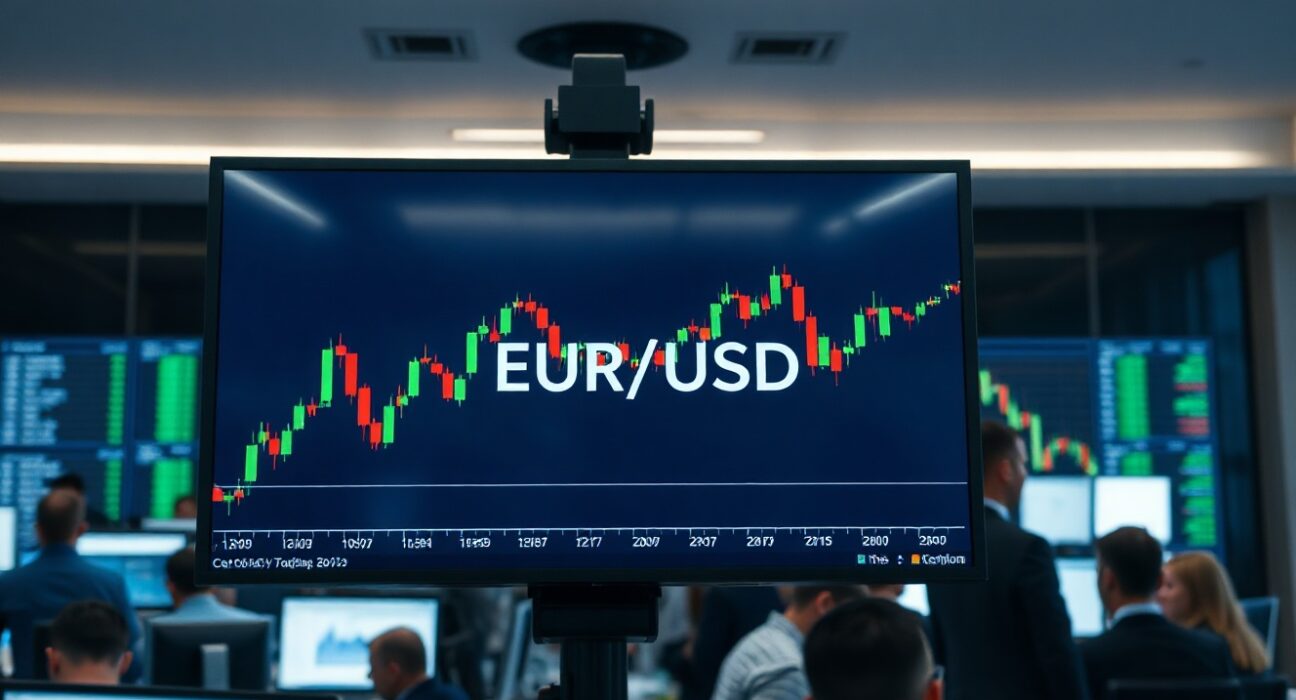
The euro traded flat against the U.S. dollar on Thursday, holding near a two-month low as rising oil prices fueled inflation concerns that continue to support the greenback. The EUR/USD pair hovered around 1.0850 in early European trading, after touching its weakest level since mid-December in the previous session.
Oil Prices and Inflation Fears Underpin the Dollar
Brent crude oil has climbed above $90 per barrel, driven by supply disruptions and geopolitical tensions, raising concerns that energy costs could reignite inflation. This dynamic has strengthened the case for the Federal Reserve to maintain higher interest rates for longer, which in turn boosts the dollar’s appeal.
Market participants are now pricing in a lower probability of Fed rate cuts in the coming months. According to CME FedWatch, the chance of a rate cut in June has dropped to around 50%, down from nearly 70% a month ago. This shift in expectations has widened the yield differential between U.S. and German government bonds, further supporting the greenback.
ECB Policy Divergence Weighs on Euro
In contrast, the European Central Bank has signaled a more dovish stance amid sluggish eurozone growth. ECB President Christine Lagarde recently reiterated that the central bank is prepared to ease policy if inflation continues to decline toward its 2% target. This policy divergence is a key factor dragging the euro lower.
Additionally, recent eurozone economic data, including weak manufacturing PMIs and soft retail sales, have reinforced expectations of an ECB rate cut as early as June. The combination of a hawkish Fed and a dovish ECB is a classic driver of EUR/USD downside.
Key Levels and Market Sentiment
Technical analysts point to immediate support at 1.0830, followed by 1.0800, a psychological level. On the upside, resistance is seen at 1.0900 and then 1.0950. A break below 1.0800 could open the door for a test of the December low near 1.0720.
Sentiment in the options market remains bearish for the euro, with risk reversals indicating the highest demand for downside protection in several weeks. However, some analysts caution that the dollar’s rally may be overextended, and any surprise dip in oil prices could trigger a short-term euro rebound.
Why This Matters for Traders and Investors
For forex traders, the EUR/USD pair is the most traded currency pair globally, and its movements have broad implications for international trade, corporate earnings, and global capital flows. A weaker euro makes European exports cheaper but increases the cost of imported goods, particularly energy, which could add to inflationary pressures in the eurozone.
Investors with exposure to European assets should monitor oil prices and central bank communications closely, as these are the primary catalysts for the next significant move in the pair.
Conclusion
The euro remains under pressure as oil-driven inflation supports the U.S. dollar, with the policy gap between the Fed and the ECB likely to keep EUR/USD subdued in the near term. Traders will watch upcoming U.S. CPI data and ECB meeting minutes for further direction.
FAQs
Q1: Why is the euro falling against the dollar?
The euro is falling primarily due to higher oil prices, which are fueling inflation concerns and supporting the U.S. dollar. Additionally, the European Central Bank is expected to cut interest rates sooner than the Federal Reserve, making the dollar more attractive.
Q2: What is the key support level for EUR/USD?
Immediate support is at 1.0830, with the psychological level of 1.0800 as the next major support. A break below that could lead to a test of the December low around 1.0720.
Q3: How do oil prices affect the EUR/USD exchange rate?
Oil prices affect inflation expectations. When oil prices rise, they can push inflation higher, prompting central banks like the Federal Reserve to keep interest rates elevated. Higher U.S. interest rates relative to the eurozone make the dollar more attractive, causing EUR/USD to fall.
Disclaimer: The information provided is not trading advice, Bitcoinworld.co.in holds no liability for any investments made based on the information provided on this page. We strongly recommend independent research and/or consultation with a qualified professional before making any investment decisions.
