

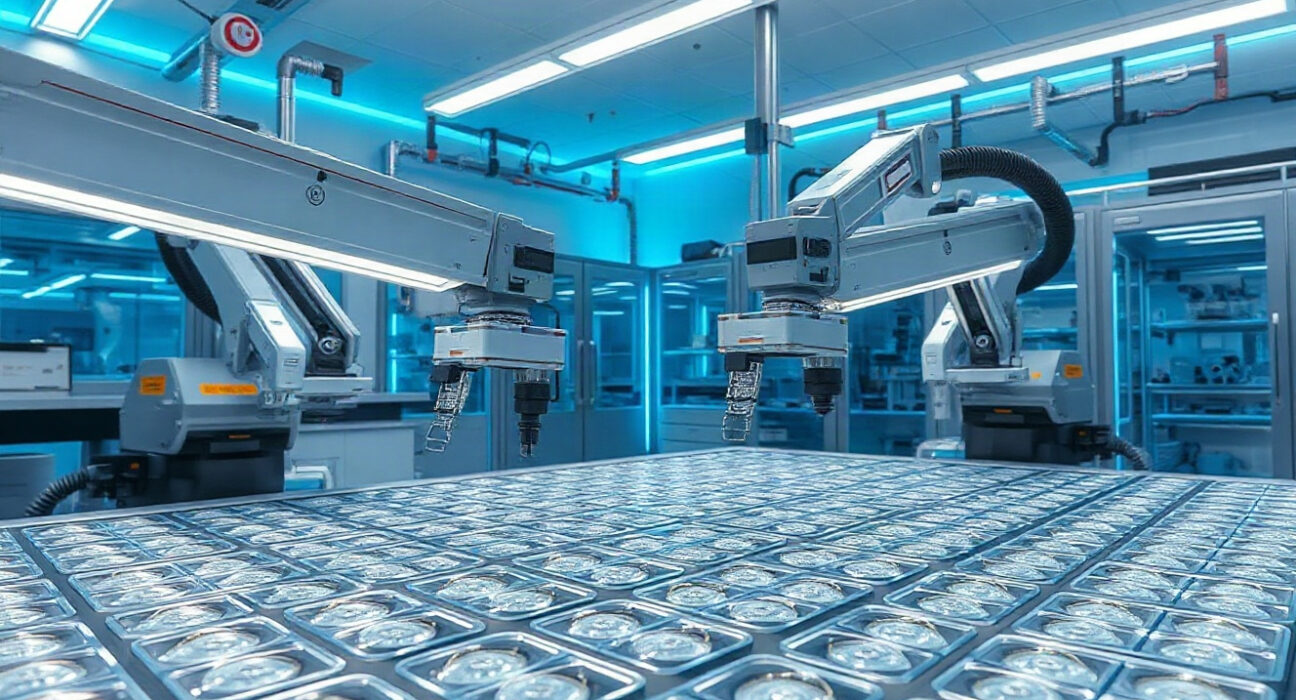
Vivodyne, a biotech startup spun out of the University of Pennsylvania, is tackling the data bottleneck in AI-driven drug discovery with a new kind of robotic laboratory that grows and tests human tissue at scale. The company opened what it calls the world’s largest ‘human data center’ outside San Francisco last week, aiming to generate the causal biological data that current AI models lack.
The missing link in AI drug discovery
While AI has made headlines for predicting protein structures and designing drug candidates, most models train on static snapshots of cells or protein interactions, not living human tissue. This gap leads to a fundamental problem: drugs that work in animal tests often fail in humans. In fact, about 90% of drug candidates that enter clinical trials after successful animal testing never receive regulatory approval.
Vivodyne’s HIVE machines address this by growing 20 types of human tissue, then autonomously dosing and monitoring them. The company claims its liver cells have 94% predictive accuracy for human toxicity, its airway tissue matches human behavior 96% of the time, and its bone marrow has shown 100% concordance in tests of 20 chemotherapy drugs.
Why current AI models fall short
Andrei Georgescu, Vivodyne’s CEO and co-founder, argues that the industry needs a ‘sanity check.’ He points to a study published in Nature Methods last month that found no clear data scaling laws when training generative AI models on existing cellular data. ‘All the training is done on static snapshots of these cells, and the models are not conditioned at all by how a cell got to that state,’ Georgescu told Bitcoin World. ‘In other words, the model learns ‘this is cell state A,’ ‘this is cell state B,’ but never ‘cell state B is the effect of inflaming cell state A.”
This causal understanding is critical for predicting how a drug will affect a living system. Without it, AI models may be learning correlations that don’t hold up in real-world biology.
From animal testing to human tissue data
Vivodyne’s approach is to replace or supplement animal testing with human tissue models that better mimic human responses. The company says it is already achieving twice the throughput of all animal trials conducted in the US. By providing more relevant data before expensive clinical trials, Vivodyne aims to improve the odds of success in human testing.
Georgescu compares this to automotive crash tests: ‘An automaker is typically confident its car will pass NHTSA requirements before testing it, but drugmakers rarely have that same confidence going into a clinical trial.’
Implications for the pharmaceutical industry
The potential impact is significant. Clinical trials typically cost tens of millions of dollars, and most drugs fail. If Vivodyne’s data can help pharma companies identify promising candidates earlier, it could reduce costs and speed up the delivery of new treatments.
The company is working with multiple major pharma companies (though it won’t name them publicly) and has raised just under $80 million from investors including Khosla Ventures.
Beyond immediate drug development
Vivodyne’s larger vision is to generate the kind of causal data that can train AI models to understand human biology more deeply. This could enable combination therapies that target multiple pathways, a complex space that Georgescu says ‘can’t be an experimental approach.’ Instead, he envisions a future where researchers can say, ‘I want this effect to happen, so what cause should I invoke?’
While the promise of AI curing cancer has become a common trope among tech leaders, the reality is that meaningful progress requires better data. Vivodyne’s approach offers a concrete step toward that goal.
Conclusion
Vivodyne is betting that the future of AI in medicine depends on better data, not just bigger models. By building robotic labs that generate causal human tissue data, the startup aims to fill a critical gap in drug discovery. Whether this approach will deliver on its promise remains to be seen, but it represents a pragmatic response to the industry’s most pressing challenge.
FAQs
Q1: What is Vivodyne’s HIVE?
HIVE is a modular robotic lab system that grows human tissue and autonomously doses and monitors it, generating causal biological data for AI drug discovery.
Q2: How does Vivodyne’s data differ from existing AI training data?
Existing AI models often train on static snapshots of cells or proteins, while Vivodyne generates data from living human tissue, capturing how cells respond to stimuli over time, which is crucial for understanding drug effects.
Q3: Why is this important for drug development?
Most drugs fail in human trials because animal tests don’t predict human responses. Vivodyne’s human tissue models aim to provide more relevant data, potentially improving clinical trial success rates and reducing costs.
Disclaimer: The information provided is not trading advice, Bitcoinworld.co.in holds no liability for any investments made based on the information provided on this page. We strongly recommend independent research and/or consultation with a qualified professional before making any investment decisions.
