

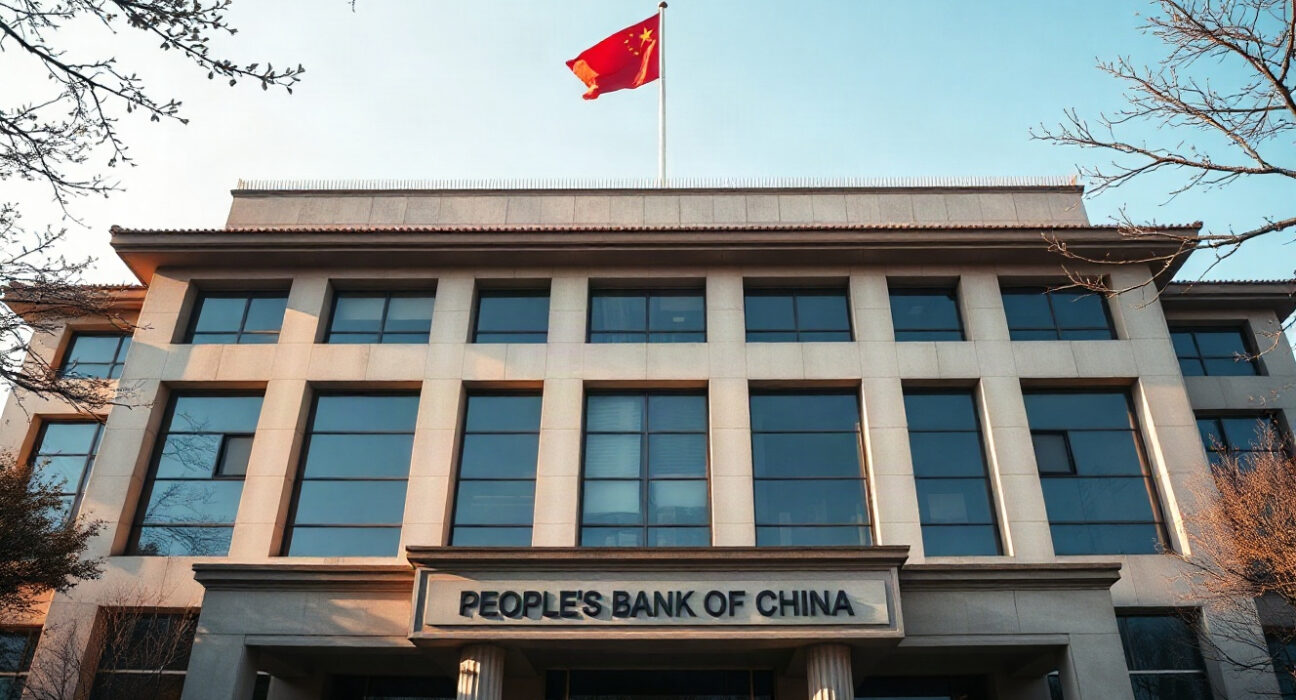
The People’s Bank of China (PBOC) announced on Monday that it would leave its benchmark lending rates unchanged, marking the fifth consecutive month without a rate adjustment. The one-year loan prime rate (LPR), which serves as the reference for most corporate and household loans, remains at 3.0%, while the five-year LPR, the benchmark for mortgage rates, stays at 3.5%.
Why the PBOC is holding rates steady
The decision aligns with market expectations, as most analysts had predicted no change following the central bank’s recent liquidity operations. The PBOC has been cautious in adjusting rates, prioritizing financial stability and supporting the economic recovery without triggering inflationary pressures. The unchanged rates also reflect the central bank’s aim to maintain a stable yuan and avoid widening interest rate differentials with the U.S. Federal Reserve.
In its quarterly monetary policy report, the PBOC reiterated its commitment to a ‘prudent’ policy stance, emphasizing the need to balance growth support with risk prevention. The central bank has used other tools, such as medium-term lending facilities and reserve requirement ratio cuts, to inject liquidity into the banking system, reducing the urgency for direct rate cuts.
Implications for borrowers and the property market
The steady five-year LPR is particularly significant for homeowners and the real estate sector, which has been under pressure in recent years. While some economists had called for a cut to stimulate housing demand, the PBOC’s decision suggests a preference for targeted measures rather than broad-based easing. New home sales in major cities have shown mixed signals, and policymakers are closely monitoring the sector’s recovery.
For businesses, the unchanged one-year LPR means borrowing costs remain relatively low, supporting investment and consumption. However, small and medium-sized enterprises may still face challenges in accessing affordable credit, prompting calls for more structural reforms in the financial system.
What this means for the broader economy
The decision comes as China’s economy shows signs of stabilization, with recent data indicating moderate growth in industrial output and exports. However, deflationary pressures persist, with consumer prices rising at a slower pace than expected. The PBOC’s cautious approach suggests it is waiting for more concrete evidence of a sustainable recovery before adjusting rates.
Global factors also play a role. The U.S. Federal Reserve’s policy trajectory and geopolitical tensions could influence capital flows and exchange rates, making the PBOC’s balancing act more complex. Analysts believe that any future rate adjustment will depend on the strength of domestic demand and external conditions.
Conclusion
The PBOC’s decision to hold benchmark lending rates steady underscores its data-dependent approach to monetary policy. While the unchanged rates provide stability, the central bank remains vigilant about evolving economic conditions. Borrowers and investors should monitor upcoming economic indicators and policy signals for clues about future adjustments.
FAQs
Q1: What is the loan prime rate (LPR)?
The LPR is the benchmark interest rate for loans in China, set monthly by the People’s Bank of China based on quotes from a panel of commercial banks. It serves as a reference for corporate and household lending rates.
Q2: How does the unchanged LPR affect mortgage holders?
For existing mortgage holders with floating rates, the unchanged five-year LPR means their monthly payments will not change. New homebuyers may also see stable borrowing costs, though commercial banks can adjust margins based on individual risk assessments.
Q3: Will the PBOC cut rates in the near future?
Future rate decisions will depend on economic data, including inflation, growth, and property market trends. The central bank has signaled a cautious stance, so any adjustment would likely be gradual and data-driven.
Disclaimer: The information provided is not trading advice, Bitcoinworld.co.in holds no liability for any investments made based on the information provided on this page. We strongly recommend independent research and/or consultation with a qualified professional before making any investment decisions.
