

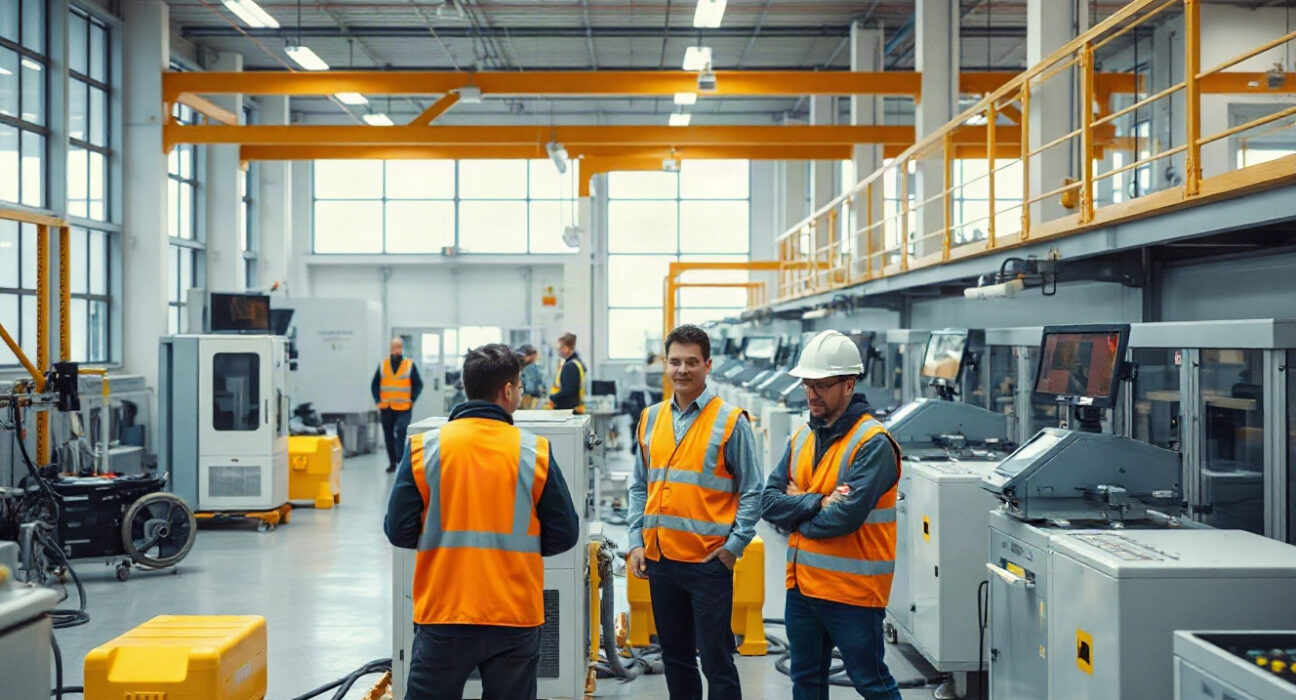
Germany’s HCOB Manufacturing Purchasing Managers’ Index (PMI) climbed to 54.1 in August, surpassing market expectations of 52 and indicating a solid expansion in the country’s manufacturing sector. The reading, released on September 1, marks a notable improvement from the previous month’s 52.0, pointing to renewed vigor in Europe’s largest economy.
What the PMI Reading Means for the German Economy
The PMI is a key indicator of economic health in the manufacturing sector, with readings above 50 signaling expansion and below 50 indicating contraction. August’s figure of 54.1 not only beat forecasts but also reflects a broad-based uptick in new orders, production, and employment. According to HCOB, the improvement was driven by stronger domestic demand and a gradual recovery in export orders, particularly from Asia and North America.
This data comes at a critical time as the German economy has been navigating a period of sluggish growth, with the government projecting only modest GDP expansion for 2025. The manufacturing sector, which accounts for about a fifth of Germany’s economic output, has been under pressure from high energy costs and global supply chain disruptions. However, the latest PMI suggests that the sector may be turning a corner, providing a glimmer of hope for policymakers and businesses alike.
Implications for the Eurozone and the European Central Bank
The strong German PMI reading is likely to have ripple effects across the eurozone, as Germany is the bloc’s largest economy and a key driver of regional growth. A robust manufacturing sector in Germany could support the European Central Bank’s (ECB) efforts to normalize monetary policy, as it reduces the risk of a prolonged economic downturn. The data may also influence the ECB’s decision-making on interest rates, with some analysts arguing that sustained strength in the manufacturing sector could justify further tightening.
However, economists caution against overinterpreting a single month’s data. While the August PMI is encouraging, it remains to be seen whether this momentum can be sustained in the coming months. External risks, including geopolitical tensions and potential energy price spikes, could still derail the recovery. Moreover, the services sector, which has been more resilient, may face headwinds from elevated inflation and consumer caution.
Why This Matters to Investors and Businesses
For investors, the PMI data provides a timely signal of the health of the German economy, which is a key player in global trade. A stronger manufacturing sector often translates into better corporate earnings for industrial companies, potentially boosting stock prices. Businesses, particularly those in the supply chain, may also view the data as a sign to ramp up production and inventory levels in anticipation of continued demand.
Moreover, the PMI reading can influence currency markets, as a robust economy often attracts foreign investment, strengthening the euro. The data could also impact commodity prices, given Germany’s significant role in the consumption of raw materials. As such, the August PMI is not just a number for economists but a critical piece of information for a wide range of stakeholders.
Conclusion
Germany’s HCOB Manufacturing PMI for August, coming in at 54.1, exceeded expectations and signals a positive trajectory for the country’s manufacturing sector. While the data is encouraging, it is essential to monitor whether this growth is sustainable in the face of ongoing global challenges. For now, the reading provides a much-needed boost to confidence in the German and broader European economies.
FAQs
Q1: What is the HCOB Manufacturing PMI?
The HCOB Manufacturing PMI is a monthly survey-based index that measures the economic health of the manufacturing sector. It tracks new orders, output, employment, supplier delivery times, and inventories. A reading above 50 indicates expansion, while below 50 signals contraction.
Q2: Why is the German PMI important for the eurozone?
Germany is the largest economy in the eurozone, and its manufacturing sector is a key driver of regional growth. A strong German PMI can signal broader economic health in the eurozone and influence the European Central Bank’s monetary policy decisions.
Q3: How does the PMI affect the euro and financial markets?
A higher PMI often leads to a stronger euro as investors view the economy as more robust. It can also boost stock prices of industrial companies and influence commodity prices due to increased demand for raw materials.
Disclaimer: The information provided is not trading advice, Bitcoinworld.co.in holds no liability for any investments made based on the information provided on this page. We strongly recommend independent research and/or consultation with a qualified professional before making any investment decisions.
