

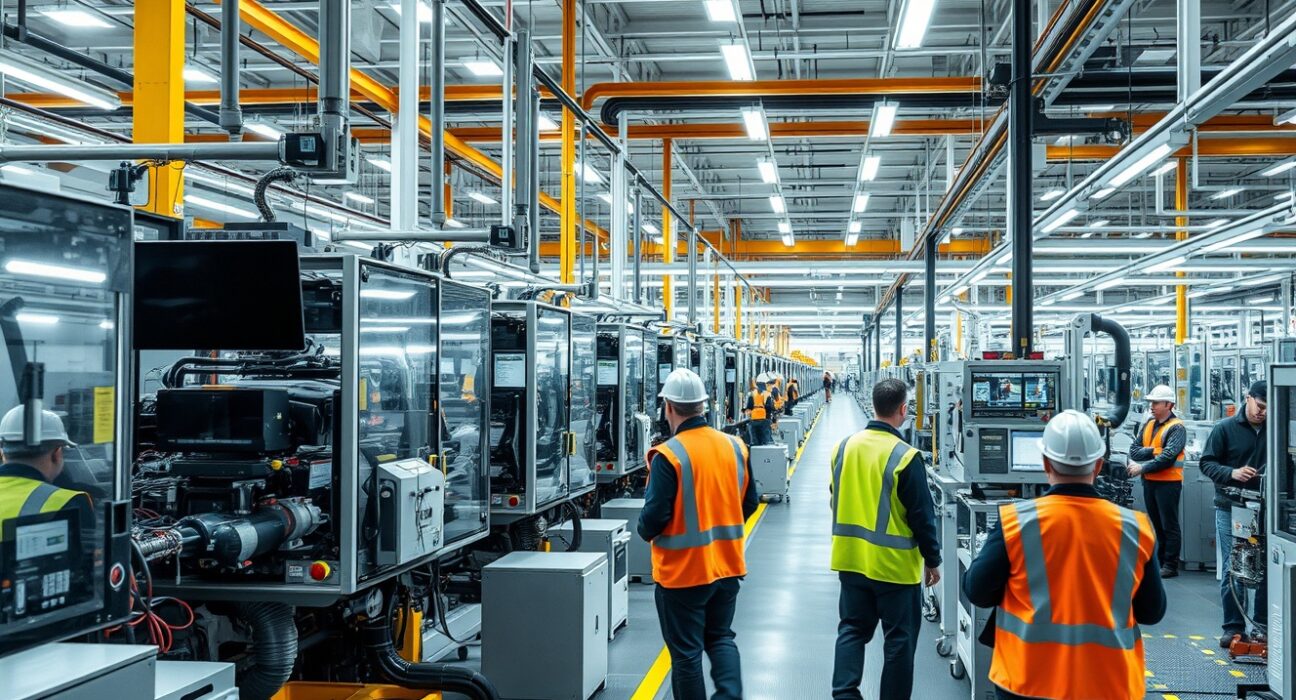
Germany’s flash Manufacturing PMI unexpectedly accelerated to 54.1 in February 2026, up from 52.0 in January and well above the 52.0 consensus estimate, signaling a stronger-than-expected expansion in the country’s factory sector.
What does the flash PMI reading indicate?
The flash Manufacturing PMI, compiled by S&P Global, is an early indicator of economic health in the manufacturing sector, based on surveys of purchasing managers across key metrics like output, new orders, employment, and supplier delivery times. A reading above 50 indicates expansion, while below 50 signals contraction.
The February figure of 54.1 marks the second consecutive month of expansion after a brief slowdown at the start of the year, and the fastest pace since mid-2024. Analysts had expected the index to hold steady at 52.0, so the upside surprise suggests that German manufacturers are experiencing a more robust recovery than previously anticipated.
What is driving the unexpected rise?
While the full breakdown of sub-indices is not yet available, the headline beat likely reflects improvements in new orders and output, supported by resilient domestic demand and a gradual stabilization in export markets. The recent easing of energy costs and supply chain pressures may also be contributing to the positive momentum.
However, some caution remains warranted. The flash reading is preliminary and subject to revision when the final PMI data is released later in the month. Additionally, geopolitical uncertainties and potential trade disruptions could still weigh on the sector in the coming months.
Why this matters for the eurozone and ECB policy
Germany is the largest economy in the eurozone, and its manufacturing sector plays a pivotal role in the region’s overall economic performance. A stronger-than-expected PMI could reduce pressure on the European Central Bank to implement further rate cuts, as it suggests that the industrial downturn may be easing.
Markets are now likely to adjust their expectations for the ECB’s next policy meeting, with some analysts speculating that the central bank might adopt a more hawkish stance if the positive trend continues. Conversely, if the final data disappoints, the ECB could maintain its accommodative posture.
Conclusion
The unexpected acceleration in Germany’s flash Manufacturing PMI to 54.1 is a positive signal for the eurozone’s largest economy, indicating that the manufacturing sector is gaining momentum. While the preliminary nature of the data warrants caution, the reading beats expectations and could influence ECB policy decisions in the near term. Investors and policymakers will be watching the final PMI release for confirmation of this trend.
FAQs
Q1: What is a flash PMI reading?
A flash PMI is an early estimate of the Purchasing Managers’ Index, based on a subset of survey responses, providing a preliminary look at economic activity before the final data is released.
Q2: How does the Manufacturing PMI affect the euro?
A higher PMI often strengthens the euro as it signals economic strength, which may lead to tighter monetary policy. Conversely, a lower PMI can weaken the currency.
Q3: What should investors watch next?
Investors should monitor the final PMI release, as well as upcoming economic data from Germany and the eurozone, to gauge whether the recovery is sustainable and how the ECB might respond.
Disclaimer: The information provided is not trading advice, Bitcoinworld.co.in holds no liability for any investments made based on the information provided on this page. We strongly recommend independent research and/or consultation with a qualified professional before making any investment decisions.
