

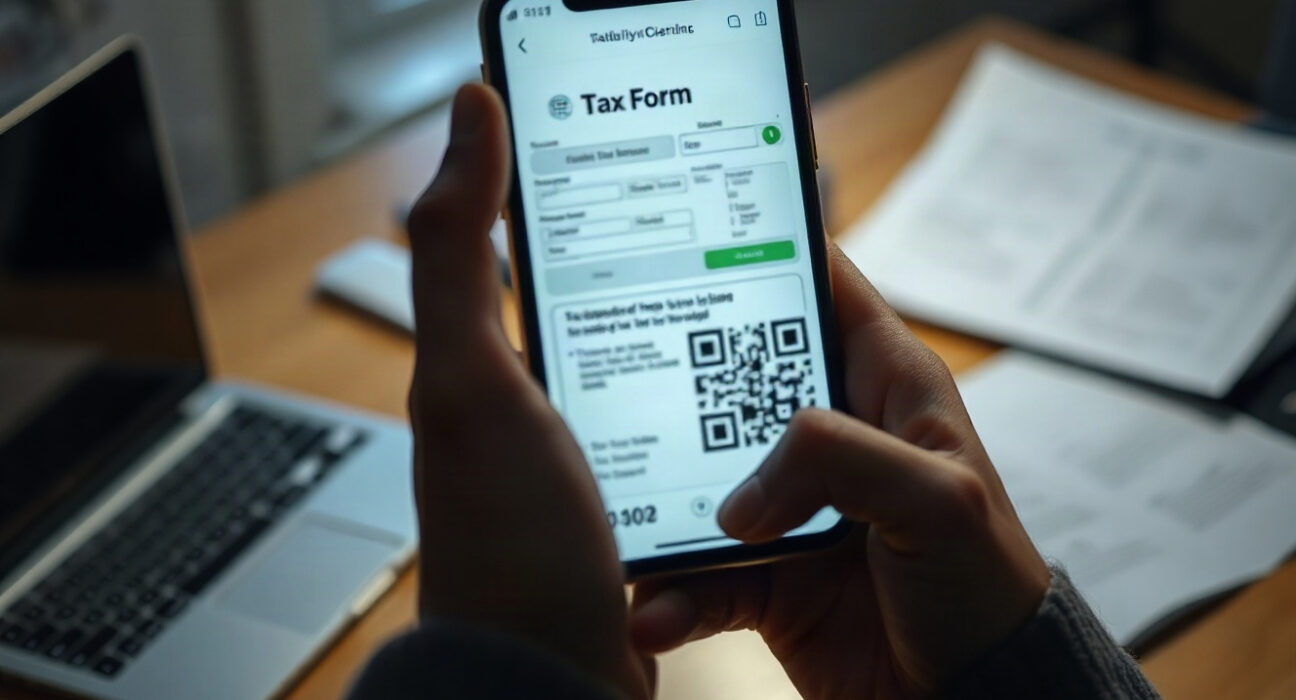
The U.S. Internal Revenue Service (IRS) has issued a warning about a new wave of phishing attacks that impersonate the agency and specifically target cryptocurrency holders. According to a report by CoinDesk, attackers are sending fraudulent tax documents that prompt victims to scan malicious QR codes under the guise of tax filing or account verification. The ultimate goal is to steal crypto wallet login credentials and private keys, which would allow the scammers to drain victims’ digital assets.
How the Scam Works
The phishing campaign uses fake tax forms and official-looking emails that appear to come from the IRS. Victims are instructed to scan a QR code, which leads them to a fraudulent website designed to capture sensitive information. The IRS emphasized that it never initiates contact with taxpayers via email, text, or social media to request personal or financial information. Any such request should be treated as suspicious.
Cryptocurrency transactions are taxable in the United States, and the IRS has increased its scrutiny of digital assets in recent years. Scammers exploit this awareness, using tax-related fear to trick even cautious users. The phishing attempts are particularly dangerous because they combine a trusted government agency name with a technology—QR codes—that many people still find novel and less threatening than clicking a link.
Why This Matters for Crypto Investors
This warning comes at a time when crypto adoption is growing, and tax season is a peak period for such scams. Losing a private key or wallet credentials can mean irreversible loss of funds, as transactions on blockchain networks are final and cannot be reversed. The IRS warning serves as a reminder that security hygiene is as important as market analysis for anyone holding digital assets.
Moreover, the scam underscores a broader trend of cybercriminals adapting their tactics to current events and regulatory attention. As governments worldwide increase crypto oversight, phishing campaigns will likely become more sophisticated, using official-sounding language and legal references to build trust.
How to Protect Yourself
To avoid falling victim to such scams, the IRS advises taxpayers to be wary of unsolicited communications, especially those requesting immediate action. Always verify the authenticity of any IRS communication by visiting the official IRS website or calling the agency directly. For crypto holders, enabling two-factor authentication (2FA) on exchange accounts and using hardware wallets for long-term storage are essential security measures.
Additionally, never scan a QR code from an unsolicited email or message. If a QR code is provided, manually type the URL into your browser instead. Be aware that the IRS will never ask for your private keys or wallet seed phrase—these are personal and should never be shared with anyone.
Conclusion
The IRS warning about phishing scams targeting crypto holders is a timely reminder of the evolving threats in the digital asset space. By staying informed and adopting robust security practices, investors can protect themselves from losing their hard-earned crypto. Always treat unsolicited tax-related communications with caution, and remember that the IRS has clear protocols for contacting taxpayers—none of which involve QR codes or requests for sensitive information.
FAQs
Q1: How can I verify if an IRS communication is legitimate?
The IRS primarily contacts taxpayers by mail. If you receive an email, text, or social media message claiming to be from the IRS, it is likely a scam. You can verify any official communication by logging into your IRS account at IRS.gov or calling the IRS directly at 1-800-829-1040.
Q2: What should I do if I’ve already scanned a malicious QR code?
If you’ve scanned a QR code and entered your wallet credentials or private keys, immediately transfer your funds to a new, secure wallet. Change your passwords and enable two-factor authentication on all accounts. Report the incident to the IRS and the FBI’s Internet Crime Complaint Center (IC3).
Q3: Are QR codes inherently unsafe for crypto transactions?
QR codes themselves are not unsafe, but they can be used to direct you to malicious websites. Always ensure that the QR code comes from a trusted source, and if you are scanning a QR code to send crypto, double-check the recipient address before confirming the transaction.
Disclaimer: The information provided is not trading advice, Bitcoinworld.co.in holds no liability for any investments made based on the information provided on this page. We strongly recommend independent research and/or consultation with a qualified professional before making any investment decisions.
