

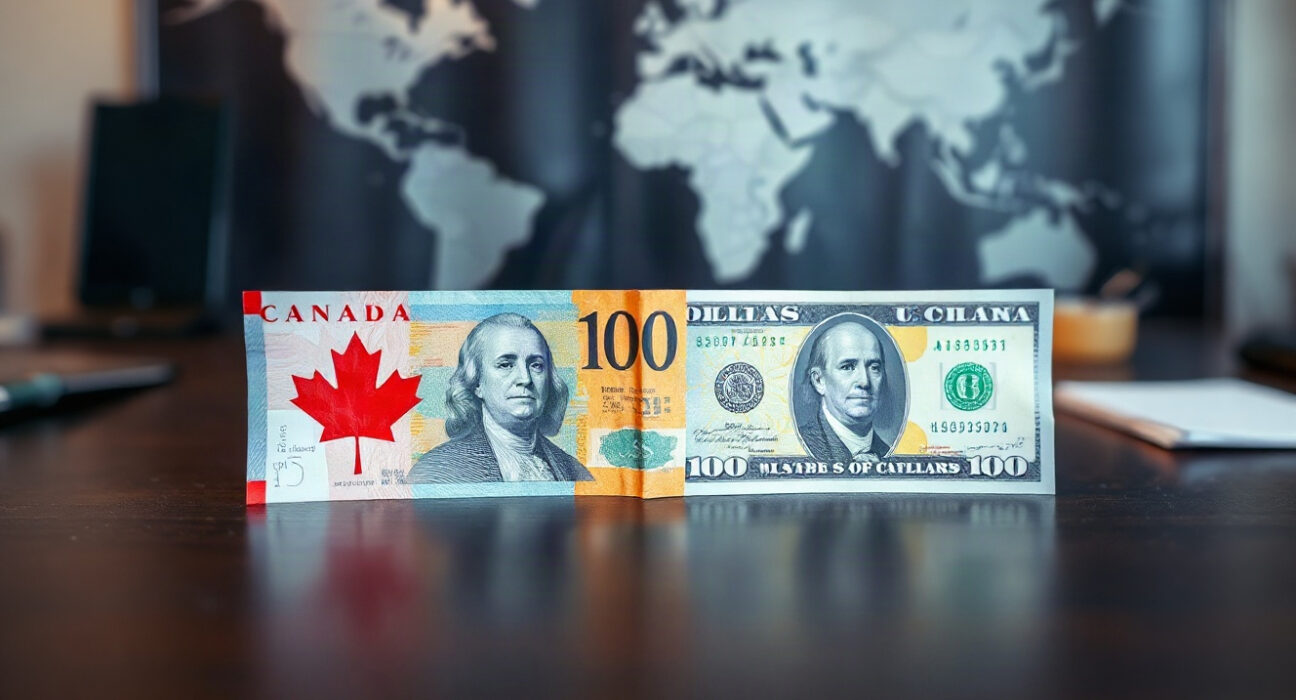
The Canadian dollar weakened against its U.S. counterpart on [Day, Date], as escalating trade tensions between Canada and its major trading partners, particularly the United States, weighed on investor sentiment and pushed the loonie lower.
Trade tensions drive loonie lower
The Canadian dollar slipped to [specific rate] against the U.S. dollar as of [time], down [percentage] from the previous close. The move comes amid renewed uncertainty over trade policies, including potential tariffs on Canadian exports and retaliatory measures from Ottawa. These developments have raised concerns about the impact on Canada’s export-driven economy, which relies heavily on trade with the U.S.
Market analysts point to the direct correlation between trade headlines and the currency’s performance. “Any escalation in trade rhetoric tends to hit the loonie quickly,” said [analyst name], a currency strategist at [firm]. “Investors are pricing in the risk of slower growth and reduced demand for Canadian goods.”
Key drivers behind the currency movement
Several factors are contributing to the loonie’s weakness:
- Trade policy uncertainty: The possibility of new tariffs on Canadian aluminum, lumber, or dairy products has created a cloud of uncertainty over bilateral trade relations.
- Commodity prices: Oil, a major Canadian export, has seen price fluctuations, with any drop directly affecting the loonie’s value.
- Interest rate differentials: The Bank of Canada’s cautious stance on rate hikes contrasts with the U.S. Federal Reserve’s more hawkish posture, widening the yield gap and making the U.S. dollar more attractive.
- Global risk sentiment: Broader market risk aversion, driven by geopolitical tensions and inflation concerns, often leads investors to favor safe-haven currencies like the U.S. dollar.
What this means for Canadian consumers and businesses
A weaker loonie has mixed implications. For exporters, it makes Canadian goods cheaper abroad, potentially boosting sales. However, for consumers, it means higher costs for imported goods, including electronics, vehicles, and food, which could add to inflationary pressures. Businesses that rely on cross-border trade may also face increased costs for raw materials and equipment.
The currency’s movement also affects travel: Canadians planning trips to the U.S. will find their dollars buy less, while U.S. tourists may find Canada more affordable. Investors with cross-border portfolios may see returns affected by currency fluctuations.
Market outlook and analyst perspectives
Looking ahead, the loonie’s trajectory will likely depend on the outcome of trade negotiations and upcoming economic data. Key indicators to watch include Canada’s GDP growth, employment figures, and inflation data, which could influence the Bank of Canada’s policy decisions.
“The market is closely watching for any signs of a de-escalation in trade tensions,” said [analyst name]. “If we see progress, the loonie could recover quickly, but the current environment suggests continued volatility.”
As of now, the Bank of Canada has maintained its benchmark interest rate at [rate], with analysts divided on whether the next move will be a cut or a hike. The central bank’s next policy announcement is scheduled for [date].
Conclusion
The Canadian dollar’s slide reflects the immediate impact of trade tensions on market sentiment. While the currency’s future direction remains uncertain, its performance will be closely tied to trade policy developments, commodity prices, and economic data. For now, investors and consumers alike should brace for potential continued fluctuations in the loonie’s value.
FAQs
Q1: Why is the Canadian dollar weakening?
The Canadian dollar is weakening primarily due to trade tensions between Canada and the U.S., which raise concerns about reduced export demand and slower economic growth. Additionally, lower commodity prices and interest rate differentials contribute to the loonie’s decline.
Q2: How does a weaker loonie affect the average Canadian?
A weaker loonie makes imported goods more expensive, potentially increasing the cost of living. It also reduces the purchasing power of Canadians traveling abroad. However, it can benefit exporters and industries that sell goods internationally.
Q3: What should investors watch to gauge the loonie’s future?
Investors should monitor trade negotiation headlines, oil prices, and economic indicators such as GDP, employment, and inflation. Also, the Bank of Canada’s interest rate decisions and statements from central bank officials will be key signals.
Disclaimer: The information provided is not trading advice, Bitcoinworld.co.in holds no liability for any investments made based on the information provided on this page. We strongly recommend independent research and/or consultation with a qualified professional before making any investment decisions.
