

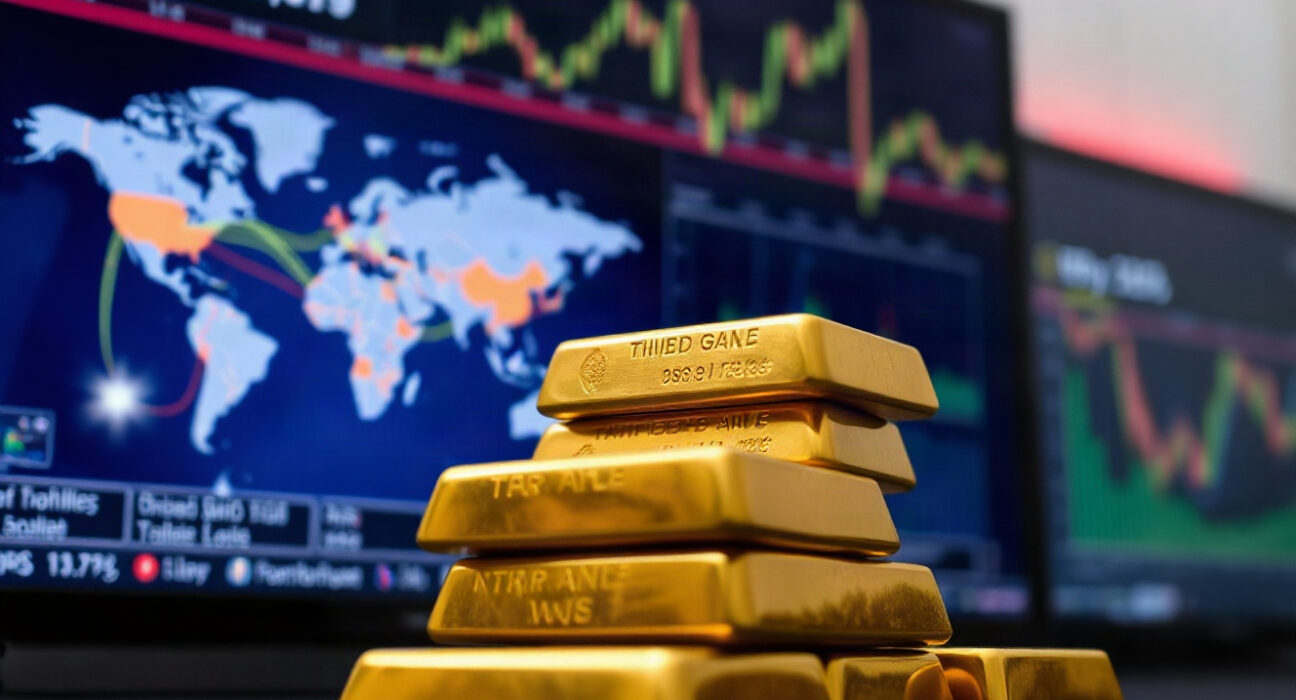
Gold prices have surged to record highs as escalating tariff conflicts between major economies intensify safe-haven demand, according to a recent note from Commerzbank. The precious metal has benefited from investor uncertainty surrounding global trade policies, with the bank highlighting that the current geopolitical and economic climate is driving capital toward traditional safe-haven assets.
Commerzbank’s View on Gold’s Rally
Commerzbank analysts point to the ongoing tariff disputes as a key catalyst for gold’s upward momentum. The bank notes that trade tensions, particularly between the US and its major trading partners, have created an environment of economic unpredictability. This has led investors to seek refuge in assets like gold, which historically perform well during periods of market stress and geopolitical instability.
The bank’s assessment comes as gold prices have climbed steadily over recent weeks, breaking previous resistance levels. While the bank does not provide a specific price target in the note, it emphasizes that the fundamental drivers for gold remain firmly in place as long as tariff conflicts persist.
How Tariff Conflicts Drive Safe-Haven Demand
Tariffs are taxes imposed on imported goods, and when countries engage in tit-for-tat tariff measures, it can escalate into a full-blown trade war. Such conflicts disrupt global supply chains, increase costs for businesses, and create uncertainty about economic growth. This uncertainty often prompts investors to reduce exposure to riskier assets like equities and corporate bonds, and instead allocate capital to assets perceived as stable stores of value, such as gold.
Central banks also play a role. In times of trade tension, central banks in emerging markets may diversify their reserves away from the US dollar, and gold is a natural alternative. This institutional buying adds another layer of support to gold prices.
What This Means for Investors
For individual investors, the current environment suggests that gold may continue to serve as an effective hedge against geopolitical and economic uncertainty. However, it is important to note that gold prices can be volatile, and past performance is not indicative of future results. Investors should consider their own risk tolerance and investment goals before allocating to gold, and may benefit from consulting a financial advisor.
Conclusion
In summary, Commerzbank’s analysis underscores that the current tariff conflicts are a significant factor fueling gold’s safe-haven bid. As long as trade tensions remain unresolved, gold is likely to retain its appeal among investors seeking stability. The situation remains fluid, and market participants will be watching for any de-escalation in trade disputes, which could potentially temper gold’s rally.
FAQs
Q1: Why is gold considered a safe-haven asset?
Gold is considered a safe-haven asset because it has historically maintained its value during times of economic uncertainty, political instability, or market volatility. Unlike fiat currencies or stocks, gold is a tangible asset with intrinsic value, and it is not directly tied to the performance of any single economy or government.
Q2: How do tariff conflicts specifically affect gold prices?
Tariff conflicts create economic uncertainty, which prompts investors to move away from riskier assets and into safe havens like gold. Additionally, trade tensions can lead to currency fluctuations and central bank diversification, both of which can increase demand for gold.
Q3: Should I invest in gold now?
Investment decisions should be based on your individual financial situation, risk tolerance, and long-term goals. Gold can be a useful portfolio diversifier, but it is not without risks. It is advisable to consult with a qualified financial advisor to determine if gold is appropriate for your portfolio.
Disclaimer: The information provided is not trading advice, Bitcoinworld.co.in holds no liability for any investments made based on the information provided on this page. We strongly recommend independent research and/or consultation with a qualified professional before making any investment decisions.
