

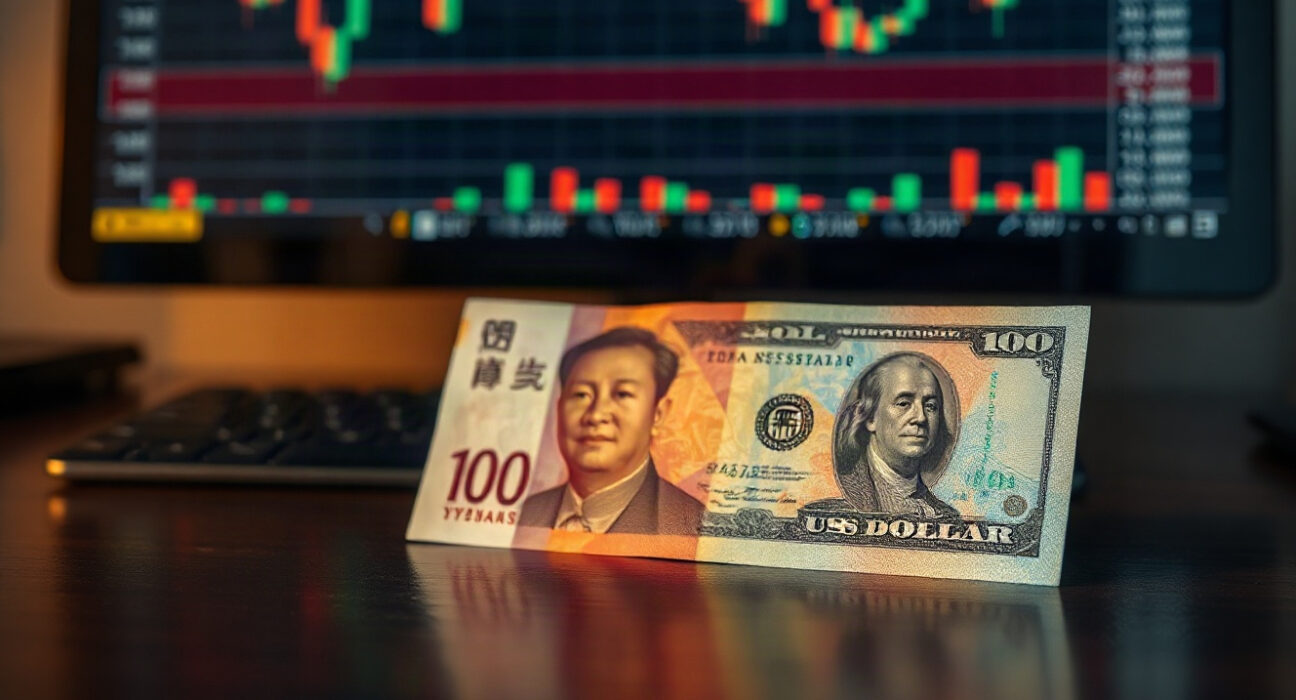
The Chinese yuan’s appreciation against the US dollar is being capped by persistent trade-related risks, according to a note from OCBC Bank’s FX strategists, as of Tuesday.
What’s Driving the Yuan’s Limited Upside?
OCBC analysts point to ongoing trade tensions and tariff uncertainties as the primary factors preventing the yuan from gaining more ground against the greenback. While the yuan has shown resilience in recent sessions, the threat of new US tariffs and potential retaliation from Beijing keeps a lid on sustained appreciation.
The bank’s commentary reflects a broader market sentiment where traders remain cautious about adding long yuan positions amid unpredictable policy shifts. Even as China’s economic data shows pockets of stability, the external demand outlook remains clouded by trade policy risks.
Market Context and Recent Yuan Performance
The yuan has traded within a relatively narrow band against the dollar over the past month, with USD/CNY hovering near the 7.1 level. This stability comes despite a softer dollar index, which typically would support emerging market currencies. The divergence underscores the unique pressure on the yuan from trade frictions.
OCBC’s assessment aligns with other major banks that see the yuan range-bound in the near term, with risks tilted toward depreciation if trade disputes escalate. Conversely, any progress in negotiations could trigger a sharp rebound, but such a scenario remains speculative at this stage.
Implications for Businesses and Investors
For multinational companies with exposure to China, the yuan’s limited upside means currency hedging strategies remain crucial. Importers and exporters face continued uncertainty, making forward contracts and options more attractive to mitigate volatility.
Investors in Chinese assets should also monitor the yuan’s trajectory, as currency weakness can dampen foreign returns. A stable but capped yuan suggests that the People’s Bank of China is comfortable with the current level, prioritizing export competitiveness over currency strength.
Conclusion
In summary, OCBC’s view highlights that while the yuan has room to appreciate, trade risks act as a powerful counterweight. The currency is likely to stay range-bound until clearer signals emerge from Washington and Beijing on trade policy. Market participants should remain vigilant and factor in potential policy shifts that could alter the current dynamic.
FAQs
Q1: Why is the yuan unable to gain against the dollar despite a weaker dollar?
Trade tensions and the threat of tariffs create a risk premium that discourages sustained yuan appreciation, offsetting the usual support from a softer dollar.
Q2: What level is USD/CNY trading at?
As of late April, USD/CNY is hovering near 7.1, reflecting a relatively stable but capped yuan.
Q3: How can businesses manage currency risk given this outlook?
Companies should use hedging instruments like forwards and options to protect against potential volatility stemming from trade policy developments.
Disclaimer: The information provided is not trading advice, Bitcoinworld.co.in holds no liability for any investments made based on the information provided on this page. We strongly recommend independent research and/or consultation with a qualified professional before making any investment decisions.
