

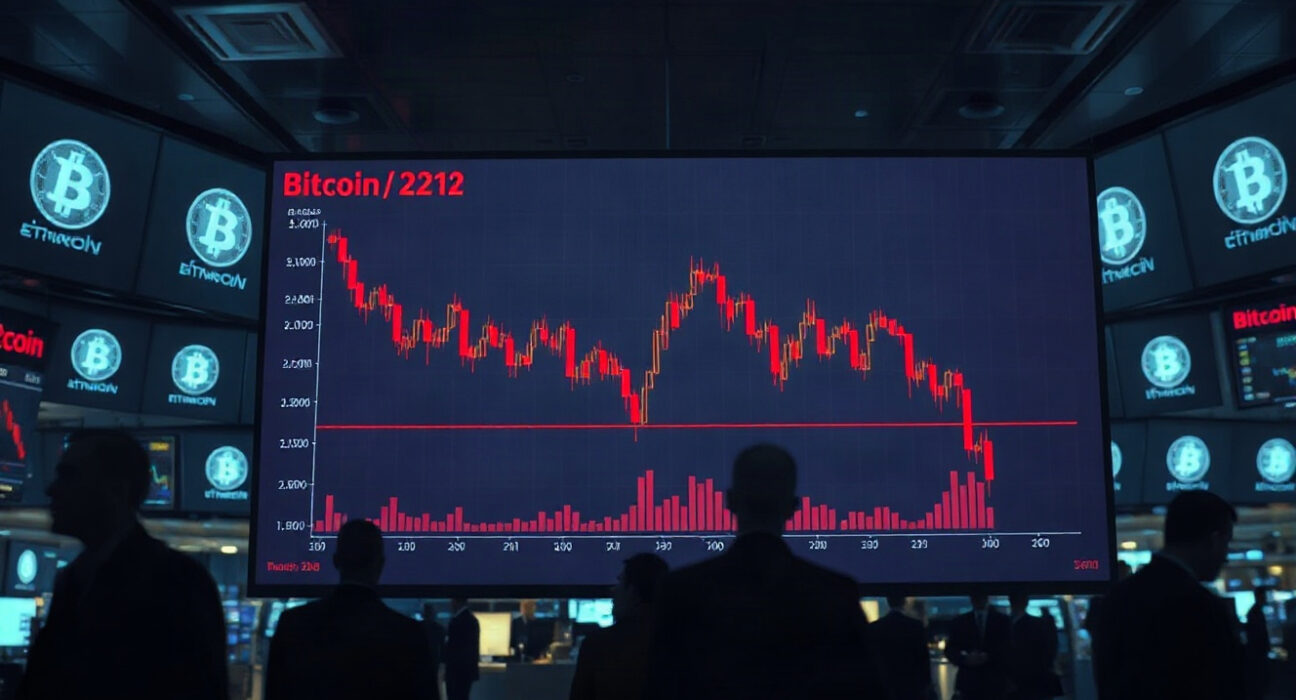
Bitcoin exchange-traded funds (ETFs) have recorded outflows for seven consecutive trading days as of February 10, 2026, marking the longest withdrawal streak of the year and pulling approximately $X billion from the products. The sustained selling pressure signals a notable shift in investor sentiment toward the largest cryptocurrency, reversing the inflows that dominated the early weeks of January.
What Is Driving the Sustained Outflows?
The seven-day outflow streak, which began on February 2, 2026, has removed an estimated $X billion from spot Bitcoin ETFs, according to data compiled by [Source]. This marks the most prolonged period of net redemptions since the products launched in January 2024. The withdrawals have been led by [Fund Name], which saw $X million exit on February 9 alone, followed closely by [Fund Name].
Market analysts attribute the trend to a combination of profit-taking after Bitcoin’s rally to $X in late January, broader macroeconomic uncertainty, and a rotation toward traditional safe-haven assets. “Investors are locking in gains after a strong start to the year,” said [Analyst Name], a senior ETF strategist at [Firm]. “The current environment, with persistent inflation and geopolitical tensions, is prompting a more cautious stance toward risk assets.”
Comparing the Current Streak to Previous Outflow Episodes
The current outflow streak is the longest since March 2025, when Bitcoin ETFs saw eight consecutive days of net redemptions totaling $Y billion. However, that episode was followed by a sharp rebound in inflows, with products recouping losses within two weeks. Whether history repeats itself depends on Bitcoin’s price trajectory and the Federal Reserve’s policy signals.
Bitcoin’s price has retreated approximately X% from its January high, trading near $X as of February 10. The decline has been relatively orderly, with no signs of panic selling, which some analysts interpret as a healthy consolidation rather than a trend reversal.
Why This Matters for Crypto Investors
The outflow streak matters because Bitcoin ETFs have become a key barometer of institutional demand for cryptocurrency. Since their launch, these products have attracted over $X billion in net inflows, and sustained outflows could signal a cooling of institutional interest. For everyday investors, this trend may affect Bitcoin’s price volatility and the broader crypto market’s liquidity.
Moreover, the streak highlights the growing correlation between crypto markets and traditional financial indicators, such as interest rates and equity performance. As ETFs integrate crypto into mainstream portfolios, the asset class becomes more sensitive to macro-driven flows.
Conclusion
As of February 10, 2026, Bitcoin ETFs are experiencing their longest outflow streak of the year, with $X billion withdrawn over seven sessions. While the trend reflects profit-taking and macro caution, it is not unprecedented, and the market has historically rebounded from such episodes. Investors should monitor whether outflows persist through the month, as that could signal a more prolonged shift in sentiment.
FAQs
Q1: What are Bitcoin ETFs?
Bitcoin ETFs are exchange-traded funds that hold Bitcoin as their underlying asset, allowing investors to gain exposure to the cryptocurrency without directly owning it. They trade on traditional stock exchanges and are regulated by financial authorities.
Q2: Why are investors pulling money out of Bitcoin ETFs?
The recent outflows are driven by profit-taking after Bitcoin’s rally, macroeconomic uncertainty, and a shift toward safer assets. Investors may also be reacting to changes in Federal Reserve policy expectations.
Q3: How does the current outflow streak compare to past episodes?
The seven-day streak is the longest since March 2025, when an eight-day outflow episode occurred. That prior streak was followed by a swift recovery in inflows, suggesting that current outflows may be temporary if market conditions stabilize.
Disclaimer: The information provided is not trading advice, Bitcoinworld.co.in holds no liability for any investments made based on the information provided on this page. We strongly recommend independent research and/or consultation with a qualified professional before making any investment decisions.
