

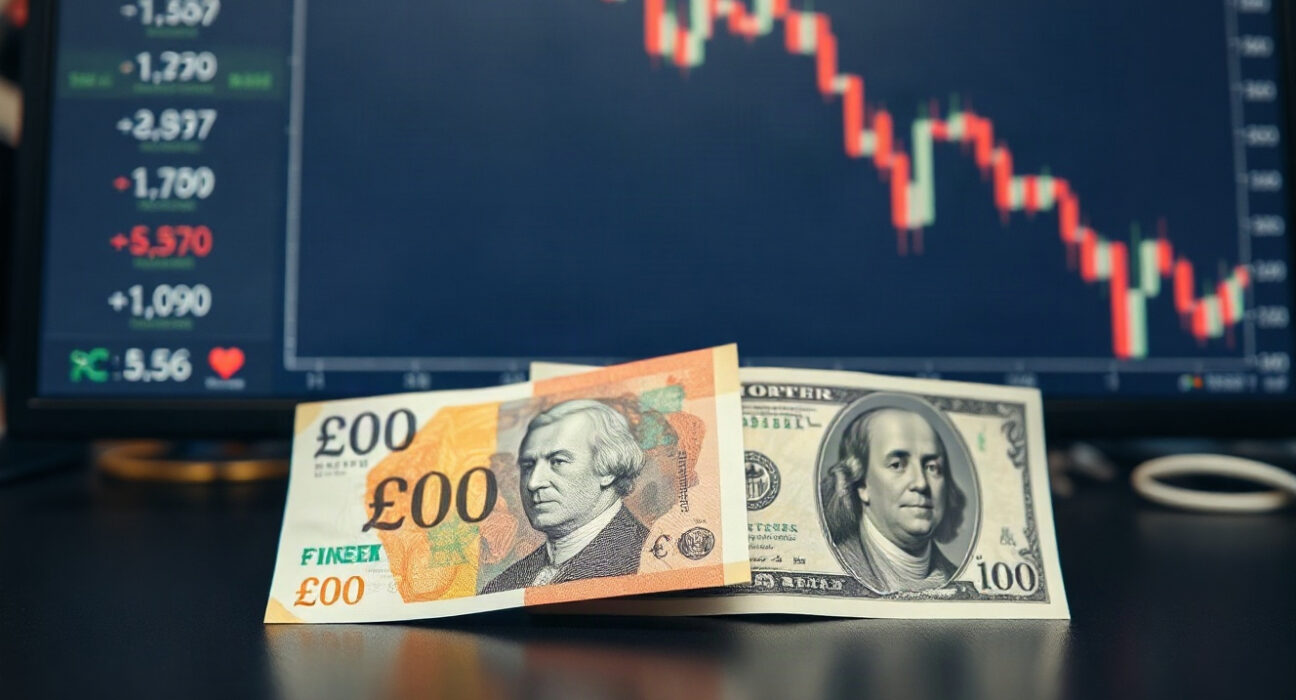
The British Pound retreated against the US Dollar on Friday as hotter-than-expected US inflation data, measured by the Personal Consumption Expenditures (PCE) price index, revived market bets that the Federal Reserve could hike interest rates again, boosting demand for the greenback.
The core PCE price index, the Fed’s preferred inflation gauge, rose more than forecast in the latest monthly reading, signaling that price pressures remain stubbornly elevated. This prompted traders to reprice the likelihood of further monetary policy tightening by the US central bank, a scenario that typically strengthens the dollar by offering higher yields to investors.
Market Reaction and Immediate Impact
The immediate reaction in the foreign exchange market was a sharp move against the Pound. The GBP/USD pair dropped to its lowest level in several weeks as the dollar index climbed. The sell-off reflects a recalibration of interest rate expectations, with futures markets now showing a higher probability of a Fed rate hike at the next policy meeting than before the data release.
For currency traders, the correlation is straightforward: when the Fed is expected to raise rates, US assets become more attractive, funneling capital into the dollar and away from other currencies like the Pound. The Pound’s weakness is also compounded by domestic economic challenges in the UK, including sluggish growth and its own inflation concerns, which had previously led the Bank of England to pause its own hiking cycle.
Why This Matters for the UK Economy
The weaker Pound has a dual-edged impact on the UK economy. On one hand, it makes British exports cheaper and more competitive in the global market, potentially providing a boost to manufacturers. On the other hand, it increases the cost of imports, particularly energy and food priced in dollars, which can fuel domestic inflation and squeeze household budgets.
For UK consumers and businesses, a sustained decline in the Pound could delay the relief from high prices that many had hoped for. The Bank of England is now in a delicate position, balancing the need to control inflation with the risk of stifling economic growth. A weaker currency complicates this task by making imported goods more expensive.
Investor Outlook and Future Data Points
Investors will now look ahead to key economic indicators from both sides of the Atlantic. The upcoming US Non-Farm Payrolls report will be crucial in determining whether the labor market is cooling enough for the Fed to hold rates steady. Simultaneously, the UK’s own GDP and inflation figures will be scrutinized for signs of resilience or further weakness.
The short-term trajectory of GBP/USD hinges on data divergence. If the US economy continues to show strength and inflation proves sticky, the dollar is likely to maintain its upper hand. Conversely, any significant deterioration in US economic data could quickly reverse the dollar’s gains and provide relief for the Pound.
Conclusion
The British Pound’s retreat against the US Dollar is a direct consequence of renewed Federal Reserve rate hike expectations fueled by sticky US inflation. This dynamic highlights the ongoing sensitivity of global currency markets to interest rate differentials and inflation data. For traders and businesses alike, the key takeaway is that monetary policy expectations, driven by economic data, remain the primary driver of currency movements.
FAQs
Q1: What is the PCE price index and why does it matter?
The PCE price index is the Federal Reserve’s preferred measure of inflation. It tracks the prices of goods and services purchased by consumers and provides a comprehensive view of price pressures in the US economy. A higher-than-expected reading suggests inflation is persistent, leading the Fed to consider raising interest rates.
Q2: How does a Federal Reserve rate hike affect the British Pound?
A Fed rate hike typically strengthens the US Dollar because it offers higher returns on US-denominated assets. This attracts global capital, increasing demand for the dollar and causing other currencies, like the British Pound, to depreciate against it.
Q3: What are the potential consequences of a weaker Pound for UK consumers?
A weaker Pound makes imports more expensive, particularly commodities like oil and food that are traded in dollars. This can lead to higher prices in UK shops, contributing to domestic inflation and reducing the purchasing power of consumers.
Disclaimer: The information provided is not trading advice, Bitcoinworld.co.in holds no liability for any investments made based on the information provided on this page. We strongly recommend independent research and/or consultation with a qualified professional before making any investment decisions.
