

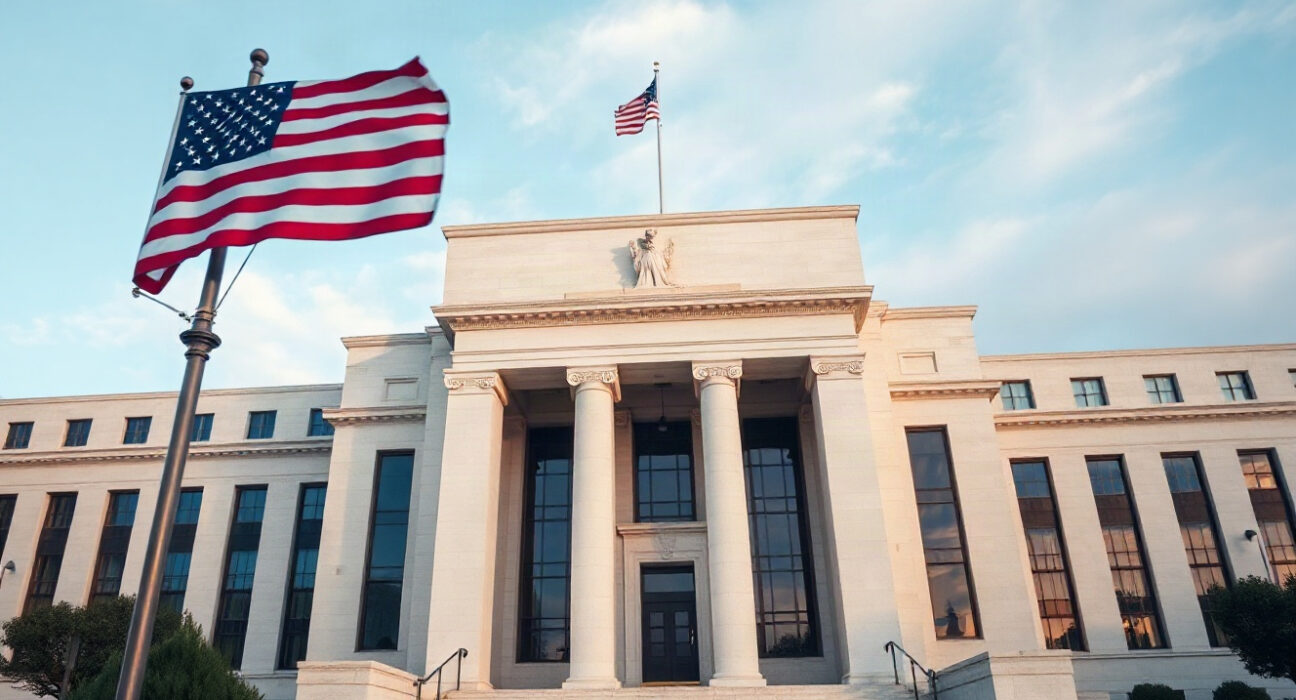
Boston Federal Reserve President Susan Collins said on Friday that the latest Personal Consumption Expenditures (PCE) price index reading does not alter her view that monetary policy remains restrictive, signaling that interest rates are likely to stay elevated for an extended period.
What Did Collins Say About the PCE Report?
Speaking at a moderated event in Boston, Collins acknowledged the February PCE inflation data, which showed a 2.5% annual increase in core prices, but emphasized that the report is consistent with her existing assessment of the economy. She reiterated that the central bank needs to see “more confidence” that inflation is moving sustainably toward the 2% target before considering rate cuts.
Collins noted that while progress on inflation has been uneven, the overall trend remains downward. She pointed to cooling labor market conditions and easing wage pressures as factors that should help bring price growth under control over time. However, she stopped short of providing a specific timeline for any policy adjustment, stressing the importance of a data-dependent approach.
Why Does This Matter for Markets and Borrowers?
The remarks come at a critical juncture for financial markets, where investors have been recalibrating expectations for Federal Reserve rate cuts in 2025. Earlier this year, markets priced in multiple reductions, but stronger-than-expected inflation data and resilient economic activity have pushed those expectations later into the year.
For consumers and businesses, the prospect of sustained restrictive policy means borrowing costs—including mortgages, auto loans, and corporate credit—are likely to remain higher for longer. This could weigh on housing activity, capital investment, and discretionary spending, potentially slowing economic growth in the second half of the year.
What Are the Broader Implications for the Fed’s Policy Path?
Collins’s comments align with a growing consensus among Federal Reserve officials that patience is warranted. Several policymakers have recently emphasized the need to avoid premature easing, which could reignite inflationary pressures. The central bank’s next policy meeting is scheduled for late April, where officials will update their economic projections and rate decisions.
While Collins is not a voting member of the Federal Open Market Committee (FOMC) this year, her views are influential given her role as a regional bank president. Her stance suggests that even among more centrist officials, there is little appetite for near-term rate cuts unless inflation data improves decisively.
Conclusion
Federal Reserve Bank of Boston President Susan Collins reiterated that recent inflation data does not change her view that policy is restrictive, reinforcing expectations that interest rates will remain elevated until there is clearer evidence of sustained disinflation. Markets and borrowers should prepare for a prolonged period of tight financial conditions as the central bank prioritizes price stability.
FAQs
Q1: What is the PCE price index?
The Personal Consumption Expenditures (PCE) price index is the Federal Reserve’s preferred measure of inflation. It tracks changes in the prices of goods and services consumed by individuals and is used to assess progress toward the central bank’s 2% target.
Q2: Why does Collins’s comment matter if she isn’t a voting member this year?
Even non-voting regional bank presidents participate in FOMC discussions and contribute to the consensus. Their public statements provide insight into the broader sentiment among Fed officials, which can influence market expectations and policy direction.
Q3: How might this affect interest rates for consumers?
If the Fed maintains a restrictive stance, short-term interest rates, including the federal funds rate, are likely to stay higher. This translates to elevated borrowing costs for mortgages, credit cards, and other loans, while savings rates may remain attractive.
Disclaimer: The information provided is not trading advice, Bitcoinworld.co.in holds no liability for any investments made based on the information provided on this page. We strongly recommend independent research and/or consultation with a qualified professional before making any investment decisions.
