

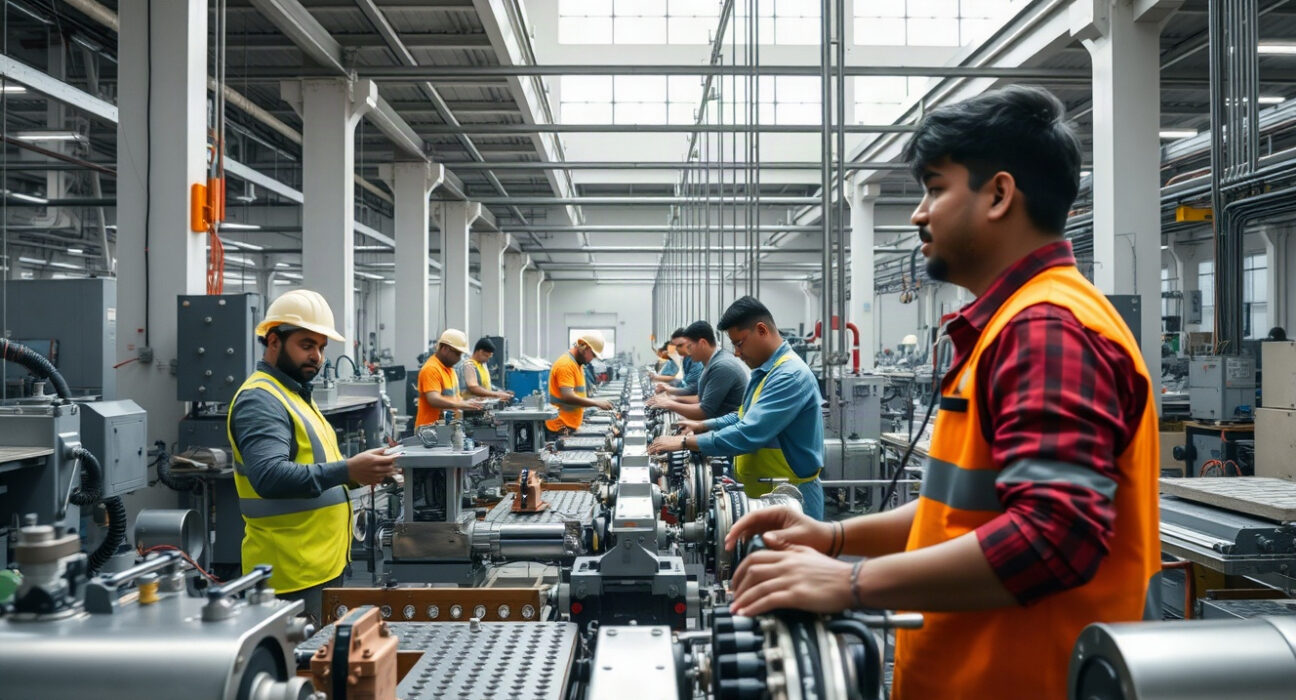
India’s industrial output rose 6.7% in July, surpassing market expectations of 6% and signaling continued momentum in the country’s manufacturing and mining sectors. The Index of Industrial Production (IIP) data, released by the Ministry of Statistics and Programme Implementation, reflects a steady expansion compared to the same month last year.
What the IIP data reveals
The 6.7% year-on-year growth in July is a notable uptick from the previous month’s revised figure, indicating resilience in factory activity despite global headwinds. Manufacturing, which accounts for the largest weight in the IIP, remained the primary driver, supported by robust output in sectors such as basic metals, pharmaceuticals, and automobiles. Mining and electricity generation also contributed positively, though at a slightly slower pace.
Analysts had projected a softer reading of around 6%, making the actual data a positive surprise. The numbers suggest that domestic demand remains firm, even as export orders face pressure from slowing global trade. This performance aligns with the Reserve Bank of India’s assessment of sustained economic expansion, though policymakers remain watchful of inflationary pressures.
Why this matters for the economy
The IIP is a key barometer of economic health, influencing monetary policy decisions and investor sentiment. A stronger-than-expected reading could bolster confidence in India’s growth trajectory, potentially supporting the rupee and equity markets. For businesses, sustained industrial expansion often translates into higher capacity utilization and increased capital expenditure, which can have a multiplier effect on job creation.
However, the data also warrants caution. The base effect from last year’s low output may have amplified the percentage increase. Moreover, uneven recovery across sectors—such as continued weakness in consumer durables—highlights structural challenges that could temper long-term optimism. The upcoming festive season will be crucial in determining whether demand holds up.
Market and policy implications
For investors, the IIP print reinforces the narrative of India as a relatively bright spot in the global economy. It may also influence the RBI’s stance on interest rates, as the central bank balances growth support with inflation management. While a rate cut remains unlikely in the near term, stronger industrial data could reduce pressure for aggressive easing.
For consumers, sustained industrial growth often leads to better availability of goods and competitive pricing, though the impact on retail inflation will depend on supply-side factors. The government’s infrastructure push and production-linked incentive schemes are expected to provide further tailwinds to the manufacturing sector in the coming quarters.
Conclusion
India’s industrial output growth of 6.7% in July, beating expectations, underscores the economy’s resilience amid global uncertainties. While the data is encouraging, a nuanced view is necessary—sectoral disparities and base effects require careful interpretation. As the fiscal year progresses, sustained monitoring of industrial trends will be essential for businesses, investors, and policymakers alike.
FAQs
Q1: What is the Index of Industrial Production (IIP)?
The IIP is a key economic indicator that measures the growth of various industrial sectors in India, including manufacturing, mining, and electricity. It is released monthly by the Ministry of Statistics and Programme Implementation.
Q2: How does industrial output impact the common person?
Higher industrial output often leads to more jobs, better availability of products, and potentially lower prices due to economies of scale. It also signals overall economic health, which can influence interest rates and investment returns.
Q3: What factors contributed to the better-than-expected growth in July?
The growth was driven primarily by strong manufacturing performance, particularly in sectors like basic metals, pharmaceuticals, and automobiles. A favorable base effect from the previous year and resilient domestic demand also played a role.
Disclaimer: The information provided is not trading advice, Bitcoinworld.co.in holds no liability for any investments made based on the information provided on this page. We strongly recommend independent research and/or consultation with a qualified professional before making any investment decisions.
