

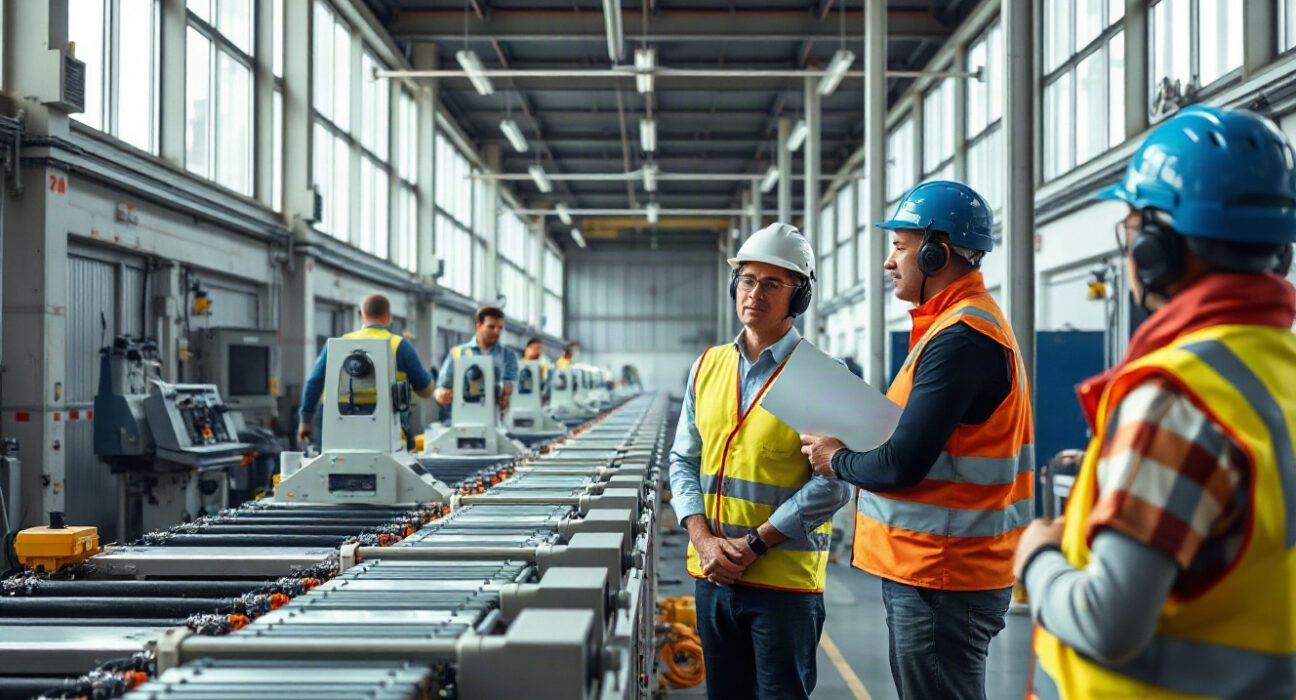
Ireland’s manufacturing sector continued its expansionary streak in August, as the AIB Manufacturing Purchasing Managers’ Index (PMI) climbed to 55.4 from 55.1 in July. The reading, released by AIB and S&P Global, marks another month of solid growth for Irish manufacturers, signaling sustained momentum in new orders, output, and employment.
What the PMI Reading Means
The PMI is a composite indicator based on monthly surveys of manufacturers, with readings above 50 indicating expansion and below 50 contraction. At 55.4, the August figure points to a robust improvement in business conditions, extending the sector’s recovery that began earlier this year.
According to the survey data, new orders increased at a faster pace, driven by both domestic and export demand. Firms reported stronger inflows of new work from key trading partners, including the euro zone and the United States. Output growth also accelerated, with companies ramping up production to meet rising orders.
Employment and Supply Chains
August also saw a further increase in employment, as manufacturers added staff to handle higher workloads. The rate of job creation was solid, though slightly softer than in July. On the supply side, delivery times continued to lengthen, but the rate of deterioration eased compared to earlier in the year, suggesting some stabilization in global supply chains.
Input costs rose again, but the rate of inflation was moderate and broadly in line with recent trends. Firms passed some of these costs on to customers, with output prices increasing at a similar pace.
Why This Matters for the Irish Economy
The manufacturing sector is a key pillar of the Irish economy, accounting for a significant share of exports and employment. The continued expansion in the PMI suggests that the sector remains resilient despite global headwinds, including elevated interest rates and geopolitical tensions. This resilience supports overall economic growth and provides a buffer against potential slowdowns in other areas.
Outlook and Considerations
Looking ahead, manufacturers remain cautiously optimistic about the coming months, with business confidence staying above the historical average. However, concerns about cost pressures and supply chain disruptions persist. The PMI data will be closely watched by policymakers and investors as a gauge of the broader economic trajectory.
Conclusion
Ireland’s manufacturing sector continued its solid performance in August, with the AIB PMI rising to 55.4. The data underscores the sector’s resilience and its contribution to the economy, even as global uncertainties remain. For businesses and policymakers, the sustained expansion is a positive signal, though vigilance on costs and supply chains remains warranted.
FAQs
Q1: What is the AIB Manufacturing PMI?
The AIB Manufacturing PMI is a monthly survey-based index that measures the health of the manufacturing sector in Ireland. It is compiled by S&P Global and sponsored by Allied Irish Banks (AIB). A reading above 50 indicates expansion, while below 50 indicates contraction.
Q2: How does the PMI affect the economy?
The PMI is a leading indicator of economic health. A rising PMI suggests improving business conditions, which can lead to higher production, employment, and investment. It is closely monitored by financial markets and policymakers as a timely gauge of economic activity.
Q3: What factors contributed to the August PMI increase?
The increase was driven by stronger new orders, both domestic and export, and a faster pace of output growth. Employment also rose, and while supply chain pressures persisted, they eased slightly compared to earlier in the year.
Disclaimer: The information provided is not trading advice, Bitcoinworld.co.in holds no liability for any investments made based on the information provided on this page. We strongly recommend independent research and/or consultation with a qualified professional before making any investment decisions.
