

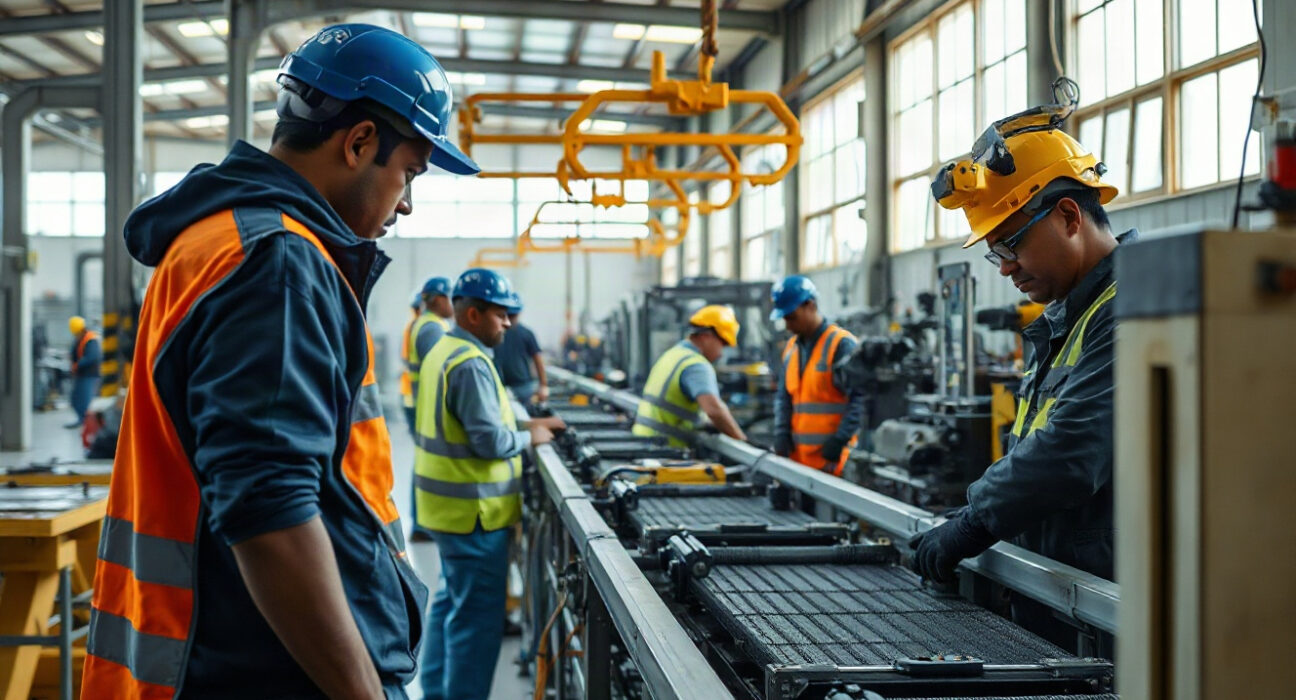
India’s HSBC Manufacturing Purchasing Managers’ Index (PMI) came in at 52.8 in August, marginally below the expected 52.9 and down from the previous month’s reading. The data, released on [current date], indicates a continued but slightly slower expansion in the country’s manufacturing sector.
What the Latest PMI Reading Signals
The PMI, compiled by S&P Global and sponsored by HSBC, is a key indicator of the health of the manufacturing economy. A reading above 50 signifies expansion, while below 50 points to contraction. August’s figure of 52.8 marks the 38th consecutive month of expansion, but the pace has moderated from July’s 53.9, suggesting a cooling in growth momentum.
Analysts note that while the sector remains in positive territory, the slight miss against expectations could reflect softening demand both domestically and internationally. New orders and output continued to rise, but at a slower rate than in the previous month. Employment in the sector also increased, though at a modest pace.
Context and Market Implications
The Indian manufacturing sector has been a bright spot in the broader economy, supported by strong domestic consumption and government infrastructure spending. However, global headwinds, including elevated interest rates and subdued export demand, are beginning to weigh on activity.
For investors, the PMI data offers a real-time snapshot of economic momentum. A reading below expectations, while not alarming, may influence market sentiment, particularly for rate-sensitive sectors. The Reserve Bank of India (RBI) is closely watching such indicators as it balances inflation control with growth support.
Why This Matters to You
For businesses, a softer PMI can signal a need to adjust inventory and production plans. For consumers, it may hint at moderating price pressures, as slower demand often leads to more competitive pricing. For policymakers, it provides a basis for calibrating monetary and fiscal measures.
Conclusion
India’s manufacturing sector continues to expand, but the slight dip in the August PMI serves as a reminder that growth is not linear. While the reading remains comfortably above the neutral threshold, the moderation warrants attention. Going forward, the trajectory of global demand and domestic policy actions will be key determinants of whether the sector can regain its earlier momentum.
FAQs
Q1: What is the HSBC Manufacturing PMI?
The HSBC Manufacturing PMI is a monthly survey-based index that tracks the business conditions in the manufacturing sector. It is compiled by S&P Global and sponsored by HSBC. A reading above 50 indicates expansion, below 50 indicates contraction.
Q2: Why is the August PMI important?
The August PMI provides an early signal of economic activity in the manufacturing sector, which is a significant contributor to India’s GDP. A deviation from expectations can influence market sentiment and policy decisions.
Q3: What does a PMI of 52.8 mean for the average person?
A PMI of 52.8 still indicates growth, but at a slower pace. This could mean steadier prices and potentially more moderate job creation, as businesses may be cautious about expanding aggressively.
Disclaimer: The information provided is not trading advice, Bitcoinworld.co.in holds no liability for any investments made based on the information provided on this page. We strongly recommend independent research and/or consultation with a qualified professional before making any investment decisions.
