

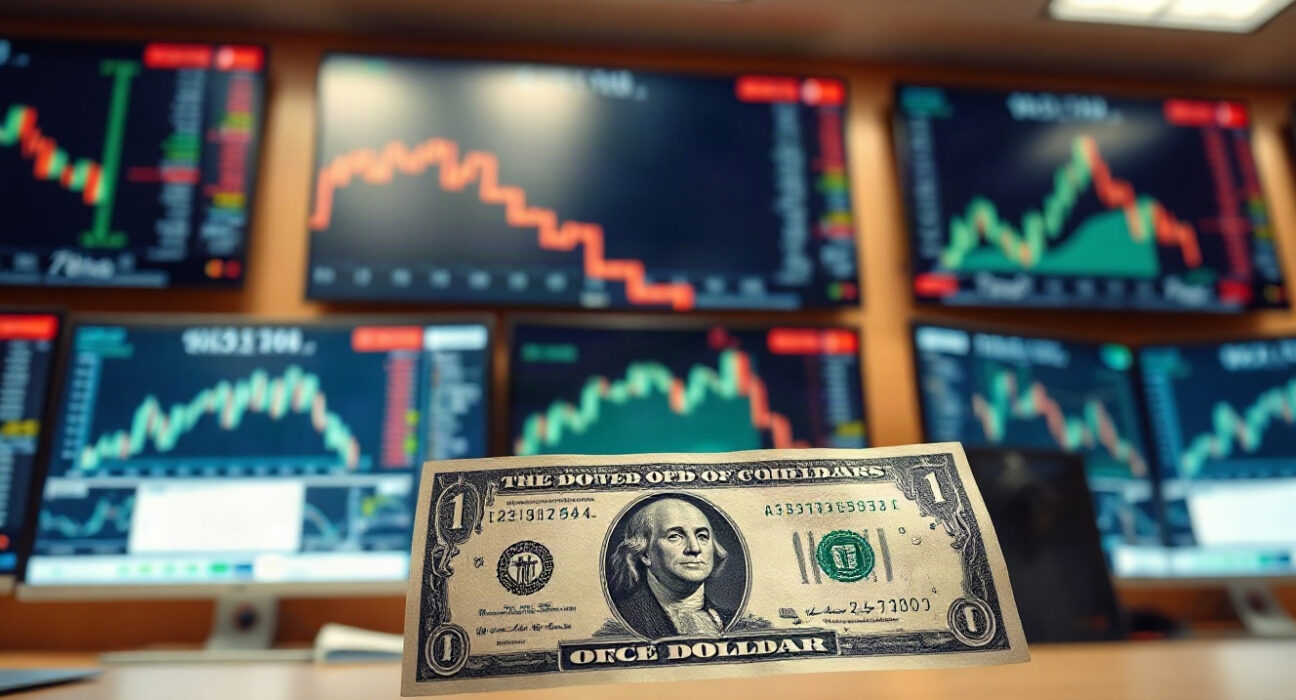
The US dollar is finding it difficult to recover from the so-called debasement trade, as persistent concerns over fiscal deficits and monetary policy keep the greenback under pressure in global currency markets.
What Is the Debasement Trade and Why Does It Matter?
The debasement trade refers to investor strategies that bet against fiat currencies, particularly the US dollar, due to expectations that central banks and governments will expand money supply and run large deficits, eroding the currency’s purchasing power over time.
In recent sessions, the dollar index has hovered near multi-month lows, reflecting market sentiment that the Federal Reserve may need to keep interest rates lower for longer, while fiscal spending remains elevated. This combination tends to weaken a currency in the long run, prompting investors to seek alternatives such as gold, cryptocurrencies, or other hard assets.
According to analysts, the debasement narrative has gained traction as US government debt continues to climb and political debates over spending limits add uncertainty. While the dollar remains the world’s primary reserve currency, its status is being tested by these structural factors.
Market Drivers Behind the Dollar’s Weakness
Several factors are contributing to the dollar’s struggle to shake off the debasement trade. First, economic data points to a cooling US economy, which could prompt the Fed to cut rates sooner than previously anticipated. Lower interest rates typically reduce the appeal of dollar-denominated assets.
Second, geopolitical tensions and trade policy uncertainties are prompting some central banks to diversify their reserves away from the dollar, a trend that has been observed in recent years. Although the pace is gradual, it adds to the bearish sentiment.
Third, the relative strength of other major currencies, such as the euro and the yen, has also weighed on the dollar. The European Central Bank and the Bank of Japan have signaled a more hawkish stance, making their currencies more attractive to investors.
Impact on Global Markets and Investors
The dollar’s weakness has significant implications for global trade, emerging markets, and commodity prices. A softer dollar makes commodities like oil and gold cheaper in other currencies, often leading to higher prices. It also eases debt servicing burdens for countries with dollar-denominated debt.
For investors, the debasement trade suggests a shift in portfolio allocation towards assets that historically perform well in inflationary environments, such as precious metals and inflation-linked bonds. However, this strategy carries risks, as any reversal in Fed policy or unexpected economic strength could boost the dollar.
Conclusion
The dollar’s inability to escape the debasement trade reflects deeper concerns about fiscal sustainability and monetary policy direction. While the greenback remains dominant, its near-term outlook is clouded by these structural headwinds. Market participants will closely watch upcoming economic data and central bank communications for clues on whether this trend will persist.
FAQs
Q1: What is the debasement trade in simple terms?
The debasement trade is a strategy where investors bet against a currency, like the US dollar, expecting that government actions—such as printing more money or running large deficits—will reduce its value over time.
Q2: Why is the dollar struggling despite a strong US economy?
Even with a relatively strong economy, the dollar faces pressure from expectations of future Fed rate cuts, high government debt, and global diversification away from dollar assets, all of which fuel the debasement narrative.
Q3: How does a weak dollar affect everyday consumers?
A weaker dollar can lead to higher prices for imported goods and travel abroad, but it can also boost exports and benefit multinational companies. For consumers, it may mean inflation pressures in the short term.
Disclaimer: The information provided is not trading advice, Bitcoinworld.co.in holds no liability for any investments made based on the information provided on this page. We strongly recommend independent research and/or consultation with a qualified professional before making any investment decisions.
