

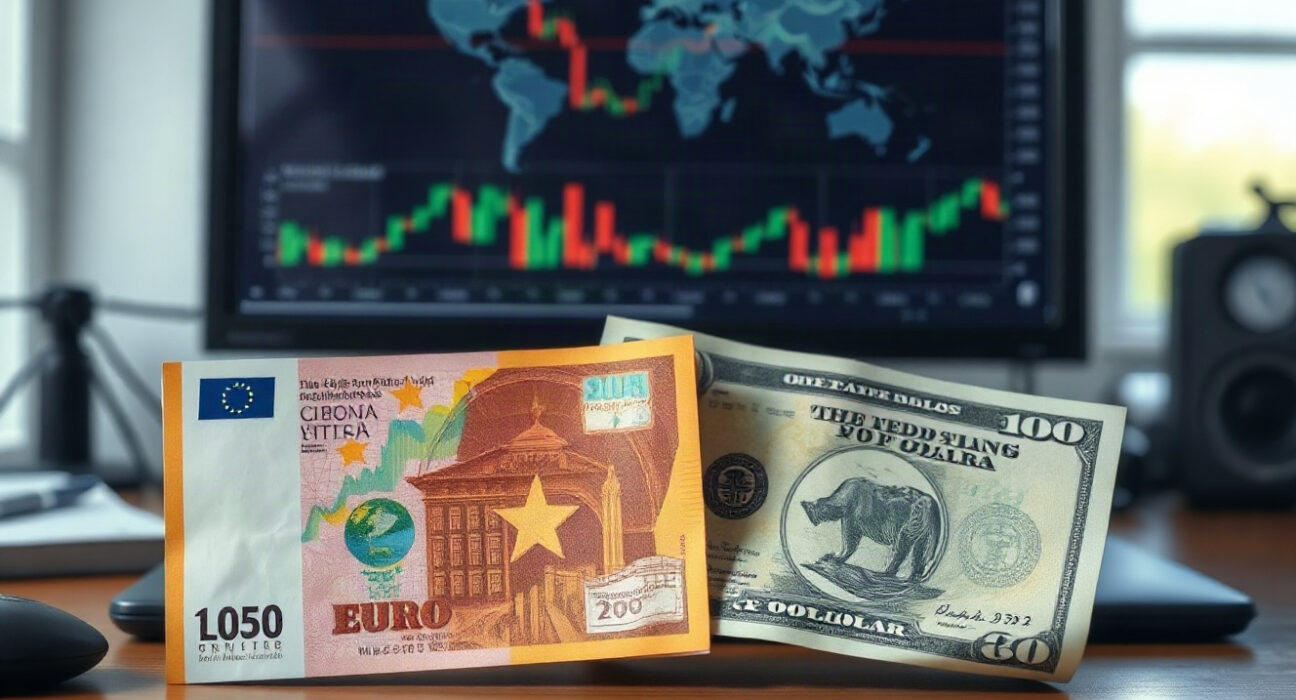
The euro traded lower against the U.S. dollar on Tuesday, as softer-than-expected U.S. economic data offered little relief to the single currency, which remains pressured by divergent monetary policy expectations and persistent dollar strength.
Market Overview: Euro Under Pressure Despite Weak US Data
As of the latest trading session, EUR/USD slipped below the 1.08 mark, extending its recent decline. The U.S. dollar index, which measures the greenback against a basket of major currencies, held firm near multi-month highs, even after data showed U.S. consumer confidence and manufacturing activity came in below forecasts.
Investors had hoped that softer U.S. figures would reinforce the case for Federal Reserve rate cuts, which could weaken the dollar. However, the market’s reaction was muted, as traders focused on the resilience of the U.S. economy compared with the eurozone, where growth remains sluggish.
Why the Euro Continues to Struggle
The euro’s weakness is not just a function of U.S. data. The European Central Bank (ECB) has signaled a more accommodative stance than the Fed, with policymakers hinting at potential rate cuts later this year. In contrast, the Fed has maintained a cautious approach, emphasizing that it needs more evidence of inflation sustainably moving toward its 2% target before easing policy.
This policy divergence has made the dollar more attractive to yield-seeking investors, putting downward pressure on the euro. Additionally, political uncertainties in Europe, including fiscal concerns in France and Germany’s economic slowdown, have further weighed on the single currency.
Impact on Businesses and Consumers
A weaker euro has mixed implications. European exporters may benefit from cheaper goods abroad, but it also raises the cost of imports, particularly energy, which could fuel inflation. For U.S. investors, a stronger dollar reduces the value of overseas holdings, while for travelers, it makes trips to Europe more expensive.
Technical Outlook and Key Levels
From a technical perspective, EUR/USD is testing a key support zone around 1.0780–1.0800. A break below this level could open the door to further losses toward 1.0700. On the upside, resistance is seen at 1.0850 and then 1.0900. Traders are closely watching upcoming U.S. jobs data and eurozone inflation figures for fresh catalysts.
Conclusion
The euro’s decline despite soft U.S. data underscores the dominant role of interest rate differentials in currency markets. With the Fed and ECB on different policy paths, the dollar is likely to remain supported in the near term. However, any surprise in U.S. economic data or a more hawkish tone from the ECB could trigger a reversal. Investors should monitor key data releases and central bank communications for direction.
FAQs
Q1: Why is the euro falling against the dollar?
The euro is falling primarily due to divergent monetary policy expectations, with the ECB expected to cut rates while the Fed remains cautious. Additionally, weaker eurozone economic data and political uncertainties have weighed on the currency.
Q2: How does a weaker euro affect the European economy?
A weaker euro can boost exports by making goods cheaper for foreign buyers, but it also increases import costs, especially for energy, which can fuel inflation. The net impact depends on the balance of trade and the structure of the economy.
Q3: What should investors watch next?
Investors should watch upcoming U.S. employment data, eurozone inflation figures, and any comments from Fed and ECB officials for clues on future policy moves. These factors will likely determine the next major trend in EUR/USD.
Disclaimer: The information provided is not trading advice, Bitcoinworld.co.in holds no liability for any investments made based on the information provided on this page. We strongly recommend independent research and/or consultation with a qualified professional before making any investment decisions.
