

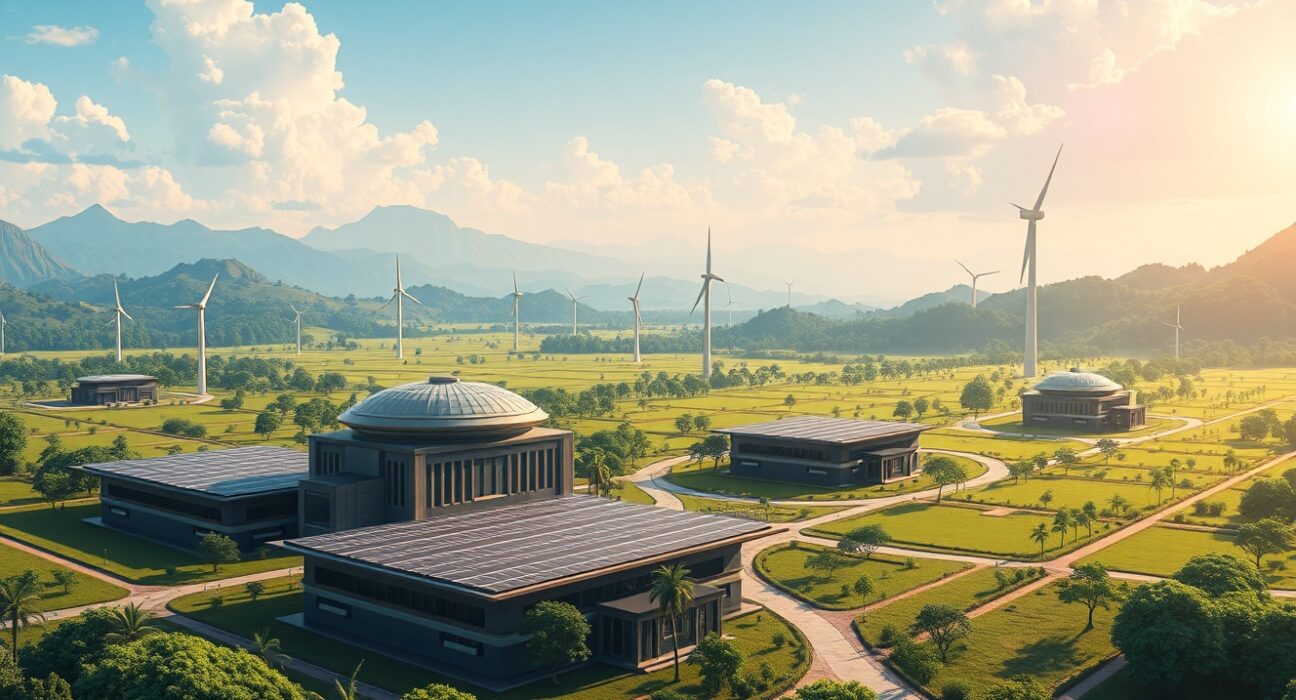
In a landmark announcement from New Delhi this week, Indian conglomerate Adani Group has committed $100 billion to construct specialized AI data centers across India, positioning the nation as a serious contender in the global artificial intelligence race. This massive investment, spanning through 2035, represents one of the largest infrastructure commitments in technology history and signals India’s strategic pivot from AI consumer to AI infrastructure creator. The announcement coincides with India’s AI Impact Summit, where global leaders from OpenAI, Nvidia, Anthropic, Microsoft, and Google are gathering to shape the future of artificial intelligence.
Adani AI Data Centers: The $250 Billion Infrastructure Vision
Adani Group’s ambitious plan extends far beyond the initial $100 billion investment. Company executives project this commitment will catalyze an additional $150 billion in related investments, ultimately creating a $250 billion AI infrastructure ecosystem within India over the coming decade. This ecosystem approach distinguishes Adani’s strategy from isolated data center projects elsewhere. The conglomerate plans to develop these facilities as a unified system that scales power generation and processing capacity in parallel, addressing one of AI’s most significant challenges: energy consumption.
The timing of this announcement reflects broader global trends. Companies worldwide are increasingly looking beyond traditional technology hubs in the United States for computing power, energy resources, and favorable regulatory environments. India, with its rapidly expanding digital economy and growing renewable energy capacity, has emerged as a prime destination for AI-related infrastructure over the past two years. Adani’s move capitalizes on this shifting landscape while addressing critical infrastructure gaps.
Renewable Energy Integration: The Sustainable AI Advantage
Central to Adani’s strategy is its substantial renewable energy portfolio, which will supply carbon-neutral power to the AI data centers. The company highlighted its 30-gigawatt Khavda renewable project in western India, with more than 10 gigawatts already operational. Adani plans to invest an additional $55 billion to expand renewable generation and battery energy storage systems specifically to support these data centers. This integrated approach addresses one of AI’s most pressing criticisms: its enormous energy footprint.
Industry analysts note that AI workloads require significantly more power than traditional computing tasks. Training large language models can consume as much electricity as hundreds of homes use in a year. By pairing data centers with dedicated renewable energy sources, Adani aims to create what Gautam Adani described as “a long-term bet on the convergence of energy and computing.” This strategy could give India a competitive advantage in attracting environmentally conscious AI companies facing increasing pressure to reduce their carbon emissions.
Strategic Geographic Distribution and Existing Infrastructure
Adani’s plan builds upon existing infrastructure and partnerships. The conglomerate is developing large-scale AI data center campuses in Visakhapatnam and Noida, with additional facilities planned for Hyderabad and Pune. An expanded partnership with Walmart-owned Flipkart will focus on developing another dedicated AI data center. These locations were strategically selected based on several factors:
- Proximity to renewable energy sources for reduced transmission losses
- Access to skilled technical workforce from nearby educational institutions
- Existing digital infrastructure including fiber optic networks
- Government support and incentives for technology investments
The effort builds on AdaniConneX, a joint venture between Adani Enterprises and U.S.-based EdgeConneX. This partnership has already developed approximately 2 gigawatts of data center capacity across India, providing a foundation for rapid scaling. The JV model combines Adani’s local expertise and infrastructure with EdgeConneX’s global data center development experience.
Supply Chain Resilience and Domestic Manufacturing
Recognizing vulnerabilities in global technology supply chains, Adani plans to co-invest in domestic manufacturing of critical components. This includes transformers, power electronics, and thermal management systems essential for data center operations. The move toward domestic production addresses several strategic concerns:
| Component | Import Dependency | Domestic Plan |
|---|---|---|
| Power Electronics | Currently 85% imported | 50% domestic by 2030 |
| Thermal Systems | Currently 70% imported | 60% domestic by 2028 |
| Transformers | Currently 60% imported | 75% domestic by 2027 |
This domestic manufacturing initiative aligns with India’s broader “Make in India” policy while reducing exposure to global supply chain disruptions that have affected technology projects worldwide. The approach also creates employment opportunities in high-tech manufacturing sectors, contributing to India’s economic development goals.
Global Context: The AI Infrastructure Race Intensifies
Adani’s announcement comes amid unprecedented global investment in AI infrastructure. Major technology companies have committed hundreds of billions to data centers, semiconductor manufacturing, and research facilities. However, most of this investment has concentrated in the United States, Europe, and East Asia. India’s entry as a major AI infrastructure player represents a significant geographical diversification.
Several factors make India particularly attractive for AI infrastructure development. The country offers lower operational costs compared to Western markets, a growing pool of engineering talent, and increasing government support for technology initiatives. Additionally, India’s position as the world’s most populous nation creates substantial domestic demand for AI services, providing a built-in market for these data centers.
Industry experts note that AI infrastructure requires more than just data centers. It encompasses the entire ecosystem from energy generation to cooling systems to network connectivity. Adani’s integrated approach addresses all these elements simultaneously, potentially creating efficiencies that piecemeal developments cannot match.
Capacity and Timeline Projections
Adani’s broader plan calls for deploying up to 5 gigawatts of data center capacity. To understand the scale of this commitment, consider that 5 gigawatts could power approximately 3.75 million homes or support thousands of simultaneous AI training runs. The company has not provided detailed phasing information for the $100 billion investment or specified when the first large-scale AI workloads will become operational.
However, based on existing AdaniConneX developments and typical data center construction timelines, industry analysts project initial AI-optimized facilities could come online within 24-36 months. The full build-out will likely occur in phases aligned with renewable energy project completions and manufacturing capacity development.
Economic and Technological Implications
The potential economic impact of this investment extends far beyond the data centers themselves. Adani estimates the $100 billion commitment will catalyze $150 billion in related investments across multiple sectors:
- Renewable energy infrastructure including solar, wind, and storage systems
- Network infrastructure including fiber optic expansion and 5G/6G connectivity
- Manufacturing facilities for data center components and related equipment
- Research and development in AI algorithms and applications
- Workforce development through technical training programs
This multiplier effect could significantly boost India’s technology sector while creating hundreds of thousands of high-skilled jobs. The development also positions India to potentially export AI computing services, similar to how it became a global leader in information technology services.
Conclusion
Adani Group’s $100 billion commitment to AI data centers represents a transformative moment for India’s technology landscape and the global AI infrastructure race. By integrating renewable energy, domestic manufacturing, and strategic partnerships, the conglomerate aims to create a sustainable, resilient AI ecosystem that could position India as a major player in artificial intelligence development and deployment. As Gautam Adani stated, “India will not be a mere consumer in the AI age.” This massive investment suggests the country aims to help build and shape the AI infrastructure that will power the next generation of technological innovation worldwide. The success of this ambitious initiative will depend on execution, partnerships, and India’s ability to create the supporting ecosystem necessary for world-class AI infrastructure.
FAQs
Q1: How will Adani’s AI data centers be powered?
Adani’s AI data centers will primarily use renewable energy from the company’s substantial portfolio, including its 30-gigawatt Khavda project. The company plans to invest an additional $55 billion to expand renewable generation and battery storage specifically for these facilities.
Q2: What locations in India will host these AI data centers?
Adani is developing large-scale AI data center campuses in Visakhapatnam and Noida, with plans for additional facilities in Hyderabad and Pune. An expanded partnership with Flipkart will focus on another dedicated AI data center at a location to be determined.
Q3: How does this investment fit into global AI infrastructure trends?
This investment reflects a broader trend of companies looking beyond traditional technology hubs for AI infrastructure. India offers advantages including lower costs, growing renewable energy capacity, and a large domestic market for AI services.
Q4: What is AdaniConneX and how does it relate to this announcement?
AdaniConneX is a joint venture between Adani Enterprises and U.S.-based EdgeConneX that has already developed about 2 gigawatts of data center capacity across India. This existing infrastructure provides a foundation for the expanded AI data center development.
Q5: How will this investment impact India’s technology sector and economy?
Beyond the direct investment, Adani projects this commitment will catalyze an additional $150 billion in related investments, potentially creating a $250 billion AI infrastructure ecosystem. This could generate significant employment, boost domestic manufacturing, and position India as an AI infrastructure exporter.
Disclaimer: The information provided is not trading advice, Bitcoinworld.co.in holds no liability for any investments made based on the information provided on this page. We strongly recommend independent research and/or consultation with a qualified professional before making any investment decisions.
