

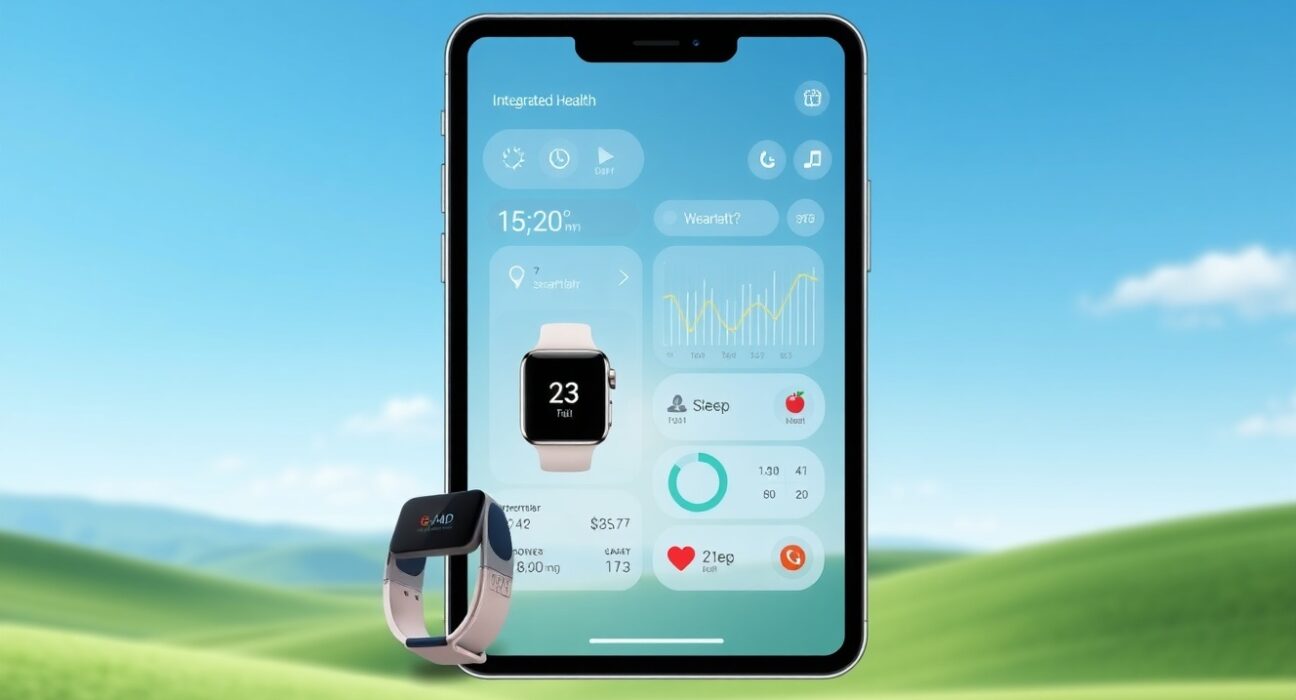
In an era where data is the new gold, our personal health data often remains scattered, siloed, and underutilized. For those deeply entrenched in the world of cryptocurrency and decentralized finance, the concept of bringing disparate data points together for greater utility is inherently appealing. Now, imagine applying that same principle to your well-being. This is precisely the mission of Bevel, a groundbreaking startup that has just secured a monumental $10 million Series A funding round from General Catalyst. Bevel is poised to transform how we approach proactive health, offering an AI health companion that unifies your entire wellness ecosystem.
The Dawn of the AI Health Companion: Unifying Your Wellness Data
For years, individuals diligently tracking their health have faced a common dilemma: a mosaic of disconnected information. Your smartwatch diligently records your sleep patterns, a dedicated fitness app logs your daily steps and workouts, and a nutrition tracker meticulously counts your calories and macros. Each tool provides a piece of the puzzle, yet the overarching picture—how these elements interlace and influence your holistic health—remains elusive. This fragmentation often leads to a reactive approach to health, addressing symptoms rather than understanding the root causes stemming from daily habits.
Bevel, a New York-based innovator, recognized this critical gap. Their solution is an intuitive AI health companion designed to be the missing link in the journey toward truly proactive health. By integrating data from an array of wearables and daily habits across crucial domains like sleep, fitness, and nutrition, Bevel generates comprehensive, personalized insights. This unification moves beyond mere data logging, offering actionable intelligence that empowers users to make informed decisions about their well-being. The recent $10 million Series A injection from General Catalyst is a powerful endorsement of Bevel’s vision and its potential to scale this transformative technology.
Remarkable Growth and Engagement: Bevel’s Impact on Digital Wellness
The investment arrives on the heels of an extraordinary year for the two-year-old healthtech company. Bevel boasts an impressive eightfold growth within the past year, now serving over 100,000 daily active users, solidifying its position as one of the fastest-growing health applications in the United States. These aren’t just vanity metrics; they speak to a profound shift in user behavior and satisfaction. The company highlights that the average user engages with the app an astounding eight times per day, and, perhaps most remarkably, retention rates remain above 80% at 90 days. Such figures are a rarity in a category often plagued by high churn, where users frequently abandon apps once a short-term fitness goal is met.
Grey Nguyen, co-founder and CEO of Bevel, articulated the company’s philosophy in an interview with Bitcoin World: “We think of health as a continuous journey, not a phase. Bevel meets you where you are, learns from your habits, and helps you make small changes that compound over time.” This continuous engagement model is a cornerstone of effective digital wellness, fostering long-term behavioral change rather than fleeting enthusiasm. Bevel’s success demonstrates a strong product-market fit, tapping into a widespread desire for holistic, ongoing health support.
Democratizing Health: A Software-First Approach Powered by Healthtech Funding
In a crowded market brimming with health companion brands—from the data-rich Whoop and Oura rings to the specialized Eight Sleep systems—one might ask: why does the world need another one? Aditya Agarwal, co-founder and CTO, offers a compelling answer. Many prominent health apps are tethered to proprietary hardware devices that customers must purchase and maintain. These devices, while sophisticated, often come with a hefty price tag, creating a significant barrier to entry for a large segment of the population.
Agarwal emphasized, “A $500 ring or band is out of reach for a lot of people. We already generate so much valuable health data from our primary wearables and other everyday sources. We wanted to make something that was more accessible across a much larger set of people.” Bevel’s purely software-based model offers a refreshing alternative, granting users the flexibility to leverage the wearables they already own. This strategic decision aligns perfectly with the company’s mission to democratize health, making advanced personalized health insights available to a broader audience without the burden of additional hardware costs.
Users can access Bevel’s premium features for a modest $6 monthly or $50 annually, a stark contrast to the combined cost of many hardware-plus-subscription models. This accessibility, combined with the recent infusion of healthtech funding, positions Bevel to rapidly expand its reach and impact, proving that cutting-edge health solutions don’t always require expensive gadgets.
Deep Dive into Bevel Intelligence: Unlocking Personalized Health Insights
Unlike conventional wellness applications that often narrow their focus to a singular aspect of health—be it steps, sleep quality, or nutritional intake—Bevel masterfully synthesizes these diverse data streams into a cohesive, singular experience. The platform seamlessly integrates with popular devices like Apple Watch and other compatible wearables via Apple Health. Furthermore, it directly syncs with continuous glucose monitors (CGMs) such as Dexcom and Libre, providing a granular view of metabolic health. The company also announced that integrations with Garmin and other major platforms are actively under development, promising an even broader ecosystem of connectivity.
All this rich, incoming information converges within Bevel Intelligence, the company’s proprietary core software. This sophisticated AI engine goes beyond simple data aggregation. It meticulously analyzes key information, identifies patterns, and, crucially, adapts its recommendations to each individual user. Through continuous learning, Bevel Intelligence discerns how a user’s unique physiology responds to various stimuli—whether it’s the impact of stress on sleep quality, the efficacy of specific movement routines, or the metabolic response to particular nutritional choices. This dynamic, adaptive system is the engine behind the truly personalized health insights that empower Bevel users to understand and optimize their bodies like never before.
For example, instead of a generic recommendation to ‘get more sleep,’ Bevel Intelligence might identify that ‘your sleep quality dips significantly on nights you consume high-sodium meals, leading to lower energy scores the following day. Consider lighter dinners on weekdays.’ This level of tailored guidance makes the insights actionable and directly relevant to the user’s life.
The Genesis of Bevel: Founders’ Personal Journeys and the Vision for Wearable Data Integration
Bevel’s compelling narrative is deeply rooted in personal experience—literally, in the case of its co-founder and CEO, Grey Nguyen. Before embarking on the Bevel journey in late 2023, Nguyen, who previously spearheaded products at Sam Altman-backed Campus, and co-founder Ben Yang, a machine learning expert from Opendoor, were immersed in building stablecoin infrastructure for enterprises. The demanding, high-stakes nature of startup life, however, took a toll on Nguyen’s health, manifesting as chronic back pain that persisted undiagnosed for months, despite his diligent use of wearables and regular doctor visits.
“Nothing pointed out what was actually causing my back pain, not even my doctors, which is crazy, right?” Nguyen recounted. “That’s when this idea came up. Everyone’s life is so nuanced. There are so many small things you do that stack on each other and, over time, create a chronic condition.” His breakthrough came from manually piecing together his own health data—tracking sleep, nutrition, and steps—and realizing that seemingly minor issues across these areas had compounded. Low mobility from prolonged sitting, sleep disruptions due to his mattress setup, and sodium-heavy meals contributing to inflammation were all interconnected culprits.
A similar epiphany guided Aditya Agarwal, formerly CTO at Dropbox and an early engineer at Facebook. Years of intense work had led to severe burnout. His recovery involved meticulously logging his own data, both manually in spreadsheets and through connected trackers, to systematically rebuild his energy and well-being. When he connected with Ben and Grey, he recognized a shared vision for what they were building with Bevel and promptly joined the team.
“We shared the same North Star, which is helping people become more intelligent about their own health,” said Agarwal, who also serves as a partner at South Park Commons. This venture capital firm, alongside General Catalyst, had previously invested $4 million into Bevel earlier this year, underscoring the early conviction in their approach to wearable data integration and holistic health management.
The Future of Proactive Health: Expanding Bevel’s Horizon
With fresh capital and a steadfast commitment to its software-first model, Bevel has no plans to venture into the competitive hardware market. Instead, the company intends to strategically grow its team and expand horizontally, forging new services and partnerships that further enhance accessibility to proactive health solutions. This expansion could include deeper integrations with telehealth providers, specialized programs for chronic condition management, or even corporate wellness initiatives, solidifying Bevel’s role as a central hub for personal health intelligence.
Neeraj Arora, managing director at General Catalyst, articulated the firm’s enthusiasm: “Bevel’s mission to democratize health through intelligence and design deeply resonates with us. The level of engagement they’re seeing from users is remarkable, and it’s become part of people’s daily lives — not just another app. We’re excited to support this team as they build the future of personal health.” This sentiment underscores the potential for Bevel to not just be another app, but a foundational tool for individuals seeking greater autonomy and understanding over their health journey.
The implications of Bevel’s success extend beyond individual users. By demonstrating a viable and highly engaging software-only model for holistic health, Bevel is challenging the industry to rethink how health solutions are delivered and consumed. It highlights the immense value of integrating and interpreting existing data, rather than constantly pushing new hardware. This approach could accelerate the shift towards preventative care, empowering individuals to identify and mitigate health risks before they escalate, ultimately leading to healthier populations and potentially reducing healthcare burdens.
Challenges and Opportunities in the Evolving Digital Wellness Landscape
While Bevel’s trajectory is promising, the burgeoning digital wellness and healthtech landscape presents its own set of challenges and opportunities. Data privacy and security remain paramount, especially when dealing with sensitive health information. Bevel must continually ensure robust protections and transparent data handling practices to maintain user trust. Another challenge lies in maintaining long-term user engagement; while initial retention is strong, sustaining motivation for continuous health improvement requires ongoing innovation in features, personalized coaching, and community building.
From an opportunity perspective, Bevel could explore integrations with clinical diagnostic tools, offering even more precise and medically relevant insights. Expansion into specialized health areas, such as women’s health, mental well-being, or athletic performance optimization, represents significant growth avenues. Furthermore, as regulatory frameworks around digital health evolve, Bevel’s data-driven approach could position it as a valuable partner for healthcare providers seeking to leverage real-world data for improved patient outcomes and preventative care strategies. The ability to provide a comprehensive, longitudinal view of a user’s health could bridge the gap between self-tracking and professional medical guidance, creating a truly integrated health ecosystem.
Frequently Asked Questions (FAQs) About Bevel and AI Health
- Who is Bevel?
Bevel is a New York-based healthtech startup that has developed an AI health companion to unify data from wearables and daily habits across sleep, fitness, and nutrition into personalized insights. You can learn more about them on their official website. - What problem does Bevel solve?
Bevel addresses the problem of fragmented health data, where information from various wearables and apps exists in silos. It unifies this data to provide holistic, actionable insights for proactive health management. - Who are the founders of Bevel?
Bevel was co-founded by Grey Nguyen (CEO), who previously led products at Sam Altman-backed Campus, and Ben Yang, who worked on machine learning at Opendoor. Aditya Agarwal, formerly CTO at Dropbox and an early engineer at Facebook, later joined the team as co-founder and CTO. - What is General Catalyst?
General Catalyst is a prominent venture capital firm that invests in powerful, positive change that endures. They led Bevel’s $10 million Series A funding round. - How does Bevel differ from other health apps?
Unlike many competitors that rely on proprietary and often expensive hardware devices (e.g., Whoop, Oura, Eight Sleep), Bevel is purely software-based. This allows users to integrate data from wearables they already own, making it more accessible and flexible. - What is “Bevel Intelligence”?
Bevel Intelligence is the company’s core software, an AI engine that analyzes integrated health data. It learns how a user’s body responds to stress, movement, or nutrition, adapting recommendations to provide highly personalized health insights. - What is the future vision for Bevel?
Bevel plans to expand its team and horizontally into more services and partnerships, aiming to make proactive health even more accessible. They intend to deepen integrations and potentially move into broader health management solutions, solidifying their position in digital wellness.
A New Era of Personalized Health Intelligence
Bevel’s successful $10 million Series A funding round marks a significant milestone not just for the company, but for the broader healthtech industry. By focusing on a software-first, hardware-agnostic approach, Bevel is democratizing access to sophisticated health intelligence, moving us closer to a future where proactive health management is truly within everyone’s reach. Their impressive growth and user engagement metrics are a testament to the acute need for unified, actionable health insights. As Bevel continues to innovate and expand its platform, it promises to empower countless individuals to embark on a more informed, continuous journey toward optimal well-being, proving that understanding your body doesn’t require a new gadget, but rather a smarter way to connect the dots.
To learn more about the latest AI market trends, explore our article on key developments shaping AI features and institutional adoption.
Disclaimer: The information provided is not trading advice, Bitcoinworld.co.in holds no liability for any investments made based on the information provided on this page. We strongly recommend independent research and/or consultation with a qualified professional before making any investment decisions.
