

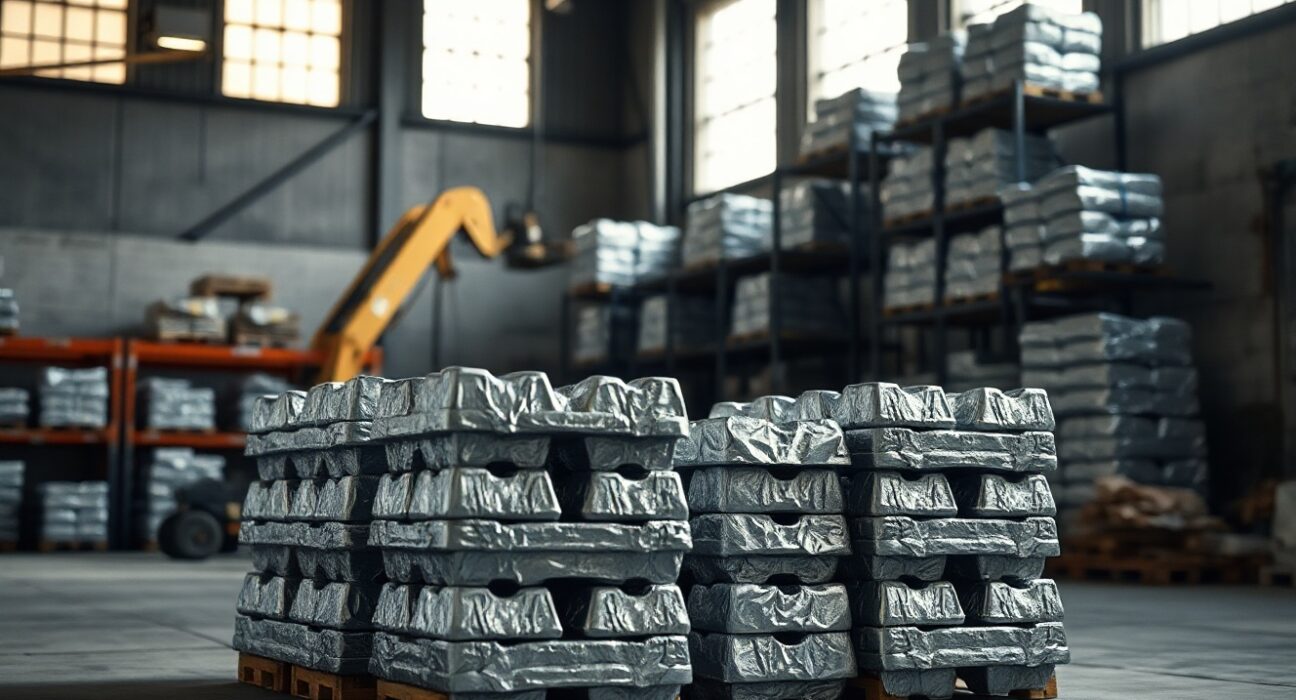
ING analysts have reaffirmed their deficit outlook for aluminium markets, arguing that the recent risk-off selloff across commodities does not alter the fundamental supply-demand imbalance. The Dutch bank’s commodities team notes that while macroeconomic headwinds have triggered short-term price weakness, structural constraints on supply and steady industrial demand continue to support a tighter market through 2025.
Market Context and Recent Selloff
Aluminium prices have faced downward pressure in recent weeks as investors rotated out of risk assets amid concerns over global growth, interest rate trajectories, and geopolitical uncertainty. However, ING stresses that this selloff is largely sentiment-driven rather than a reflection of deteriorating physical market conditions. The bank points to persistently low inventory levels at London Metal Exchange (LME) warehouses and ongoing production curtailments in key regions as evidence that the deficit narrative remains valid.
Supply Constraints Bolster Deficit Thesis
Supply-side factors continue to underpin ING’s bullish stance. Energy costs remain elevated in Europe, keeping a significant portion of smelting capacity offline. Meanwhile, China’s production growth has been capped by government-imposed output limits aimed at reducing carbon emissions. These constraints are expected to persist, limiting the ability of the market to rebuild inventories quickly. ING also highlights that new smelting capacity additions globally are insufficient to offset these closures in the near term.
Implications for Investors and Industry
For investors, ING’s analysis suggests that any further price dips may represent buying opportunities, provided the macroeconomic backdrop does not deteriorate sharply. For industrial consumers, the persistent deficit implies that hedging strategies should account for potential price spikes once risk appetite returns. The bank advises monitoring LME inventory data and Chinese production figures closely as leading indicators of market tightness.
Conclusion
ING’s latest assessment reinforces the view that aluminium’s structural deficit remains intact despite temporary market volatility. While short-term price action may remain choppy, the fundamental case for tighter supply and steady demand provides a floor for prices. Investors and industry participants should focus on supply-side developments and macroeconomic catalysts to gauge the next directional move.
FAQs
Q1: What is the main reason ING maintains a deficit view for aluminium?
ING cites persistent supply constraints, including high energy costs in Europe and production caps in China, combined with steady industrial demand, as the primary factors supporting a deficit outlook.
Q2: How does the recent risk-off selloff affect aluminium prices?
The selloff has pushed prices lower in the short term, but ING views this as sentiment-driven rather than a change in physical market fundamentals, meaning the deficit thesis remains unchanged.
Q3: What should investors watch to gauge aluminium market direction?
Key indicators include LME warehouse inventory levels, Chinese aluminium production data, energy price trends in Europe, and broader macroeconomic signals such as interest rate decisions and industrial output figures.
Disclaimer: The information provided is not trading advice, Bitcoinworld.co.in holds no liability for any investments made based on the information provided on this page. We strongly recommend independent research and/or consultation with a qualified professional before making any investment decisions.
