Rising gas prices have dominated headlines since the Trump administration escalated its conflict with Iran in late February, but aluminum has quietly become another major casualty of the geopolitical turmoil. With roughly 10% of the world’s aluminum produced in the Gulf region, prices have surged to levels not seen in decades—climbing more than 20% in recent weeks.
Even before the Iran conflict, the U.S. government had designated aluminum as a critical mineral. The country relies heavily on imports to meet demand, and much of the domestic supply comes from recycled material. For startups focused on recovering aluminum from waste streams, the current market conditions are creating a powerful incentive to scale up.
Why aluminum recycling is suddenly big business
Aluminum may account for only about 1% of municipal garbage by weight, but its value per ton makes it a highly sought-after commodity. Matanya Horowitz, chief technology officer at Amp, a waste-sorting startup, told Bitcoin World: “Aluminum might be 1% of the garbage stream, but it often trades for over $1,000 per ton. It actually ends up being one of the most significant individual commodities.”
Despite being one of the most recycled materials in the U.S., only about 20% of aluminum is recovered, according to the Environmental Protection Agency. That gap represents both an environmental challenge and a significant economic opportunity.
AI-powered sorting: A new frontier for scrap recovery
Several startups are now deploying artificial intelligence to improve recovery rates. Sortera, a metals recycling company based in Indiana, recently opened its second facility in Tennessee, the company exclusively told Bitcoin World. The new site doubles its processing capacity to 240 million pounds, with 90% to 100% of that volume being aluminum—a sizable fraction of the 4.3 million metric tons the U.S. consumed last year.
Sortera focuses on sorting aluminum scrap by grade. The facility uses a combination of sensors—including lasers, cameras, and X-ray fluorescence—to feed AI algorithms that classify each piece of scrap, roughly the size of a potato chip, by specific alloy composition. By separating grades with higher accuracy, the company can command better prices per pound.
A different approach from Amp
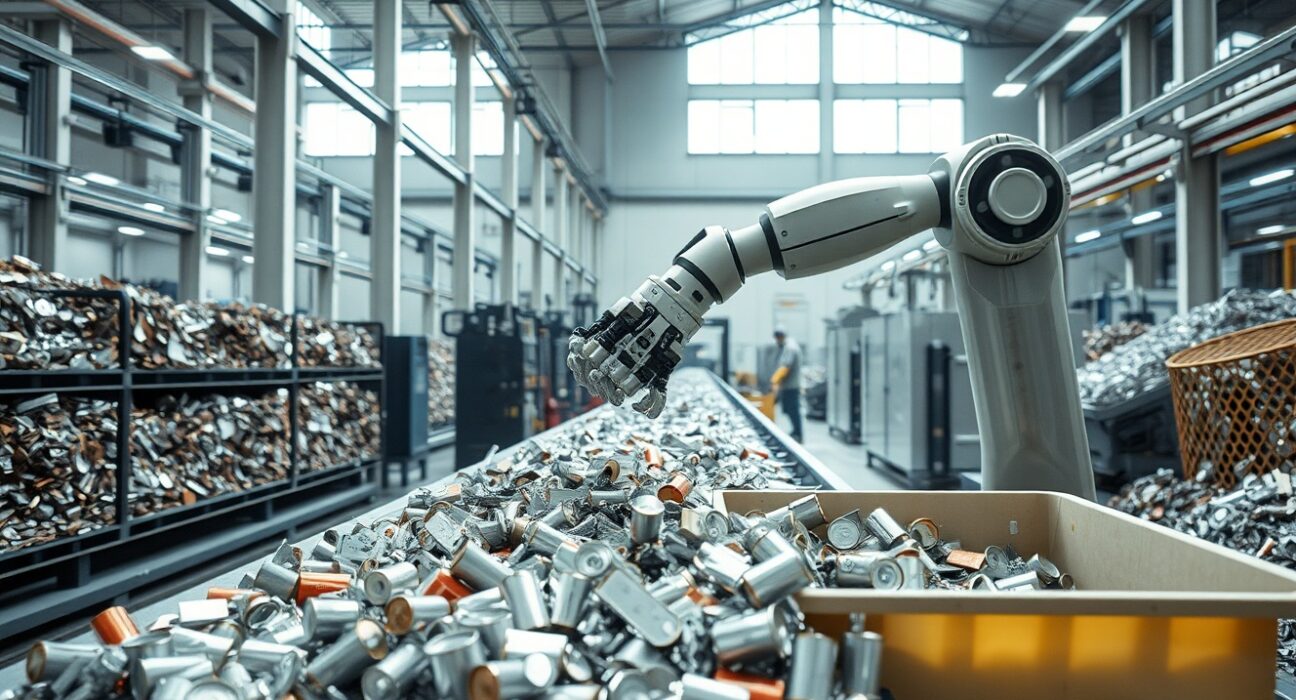
Amp has taken a broader approach, using AI-powered sorting systems to process both recycling and general waste streams. The system relies on visible light and infrared cameras to identify materials—from wrappers to foil—and differentiate plastics from aluminum. As waste flows along conveyor belts, robotic arms and puffs of air direct materials into separate bins. Amp says its system achieves over 90% accuracy in recovering specific materials, including aluminum.
“Half of the aluminum in a metro area—in places with successful recycling programs—are just in the garbage, not even touching the recycling system,” Horowitz said. For the metals industry, facilities like those being built by Sortera and Amp could help bolster domestic supplies of a critical mineral used across the economy.
“These types of projects are some of the biggest sources of domestically produced aluminum that are coming online in a given year,” he added.
What this means for supply chains and prices
The combination of higher aluminum prices and improved recovery technology could reshape the domestic supply chain for this critical material. With geopolitical risks continuing to disrupt global markets, the ability to recover more aluminum from domestic waste streams reduces reliance on imports and provides a buffer against price volatility.
For consumers, the impact may eventually be felt in everything from beverage cans to automotive parts and building materials. For the recycling industry, the message is clear: AI is no longer an experimental tool—it is becoming a core part of the business model.
Conclusion
As aluminum prices remain elevated due to geopolitical tensions, recycling startups are leveraging artificial intelligence to recover more of the metal from waste streams. With only 20% of aluminum currently recovered in the U.S., the potential for growth is substantial. Companies like Sortera and Amp are demonstrating that AI-powered sorting can improve accuracy and profitability, while also contributing to domestic supply chain resilience. The trend reflects a broader shift in the recycling industry toward technology-driven solutions that deliver both environmental and economic returns.
FAQs
Q1: Why have aluminum prices increased so sharply?
A1: Prices have risen roughly 20% due to geopolitical tensions in the Gulf region, which produces about 10% of the world’s aluminum. The U.S. also designated aluminum as a critical mineral, further highlighting supply chain vulnerabilities.
Q2: How does AI improve aluminum recycling?
A2: AI systems use sensors—including lasers, cameras, and X-ray fluorescence—to identify and classify scrap aluminum by grade. This allows robotic arms or air jets to sort materials with over 90% accuracy, increasing the value of recovered metal.
Q3: How much aluminum is currently recycled in the U.S.?
A3: According to the EPA, only about 20% of aluminum is recovered from waste streams. Startups like Sortera and Amp aim to significantly improve that rate by capturing aluminum that currently ends up in landfills.
Disclaimer: The information provided is not trading advice, Bitcoinworld.co.in holds no liability for any investments made based on the information provided on this page. We strongly recommend independent research and/or consultation with a qualified professional before making any investment decisions.