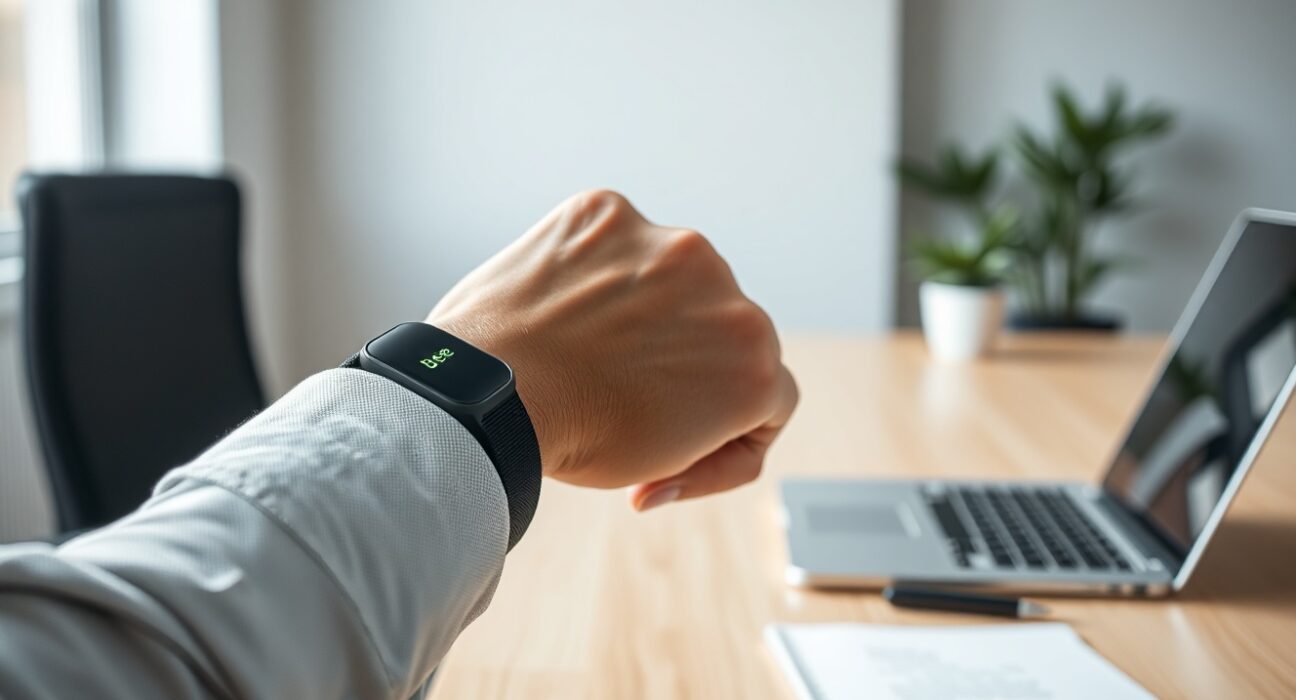
Amazon’s acquisition of the AI wearable startup Bee last year raised eyebrows in the tech world. Now, after several updates, the device is available to consumers — and I recently spent a week testing it. The Bee is a wrist-worn gadget designed to record, transcribe, and summarize conversations throughout the day, functioning as a kind of always-on digital assistant. After using it in both professional and personal settings, I came away with a mixed impression: it shows genuine promise for productivity, but its approach to data collection will give privacy-conscious users pause.
How the Bee Wearable Works
The Bee is straightforward to set up. After powering it on and syncing with the companion mobile app, users enter basic personal information. The device has a built-in recorder that activates when a button is pressed, indicated by a green light. When recording stops, the light turns off. The app then generates both a full transcript and a concise summary of the conversation. This process is designed to help users keep track of meetings, phone calls, and even casual discussions without relying on memory or manual note-taking.
Professional Use: A Competent Meeting Assistant
In a professional context, the Bee performed admirably. During a business-related phone call, I activated the device after obtaining consent from the other participant. The resulting summary was clear and well-structured, breaking down the conversation into logical segments. This allowed me to review key points without replaying the entire recording. For professionals who navigate multiple meetings daily, the Bee could serve as a reliable second brain.
However, the Bee is not uniquely capable in this regard. Competing services like Otter and Granola offer similar transcription and summarization features. The Bee’s advantage lies in its wearable form factor, which makes it more convenient to use throughout the day without needing to manage a phone or laptop.
Limitations in Transcription Accuracy
While summaries were generally accurate, the full transcripts were less reliable. The device sometimes omitted portions of conversations and struggled to identify different speakers without manual input. During my test, I had to manually label speakers after the fact. These issues are not uncommon among AI transcription tools, but they do limit the Bee’s usefulness for users who require verbatim records.
Privacy Concerns: The Elephant in the Room
As someone who values digital privacy, the Bee’s data collection practices gave me significant concern. To function optimally, the device requires extensive mobile permissions — including access to location, photos, contacts, calendar, and notifications. Users can also opt to share health data such as sleep patterns and heart rate. All of this information is stored in the cloud, raising questions about data security and long-term privacy.
Bee states that it uses encryption for data at rest and in transit, and claims to undergo regular third-party security audits. However, Amazon’s history of data security incidents — not uncommon for a company managing vast cloud infrastructure — makes these assurances less comforting. A local-only processing mode would alleviate many of these concerns, and Bee has demonstrated such a prototype to a tech YouTuber. But Amazon has not announced a timeline for releasing this feature.
Personal Use: Not Ready for Prime Time
I also tested the Bee during a casual movie night with friends. The device correctly identified that we were watching a film (Reservoir Dogs) and labeled the evening’s summary as “Tarantino Film Scene Analysis.” While this demonstrated an ability to distinguish real conversation from media playback, the experience reinforced my unease. The idea of an always-recording device in personal settings feels invasive, even if the technology works as intended. Bee has largely marketed itself as a personal life assistant, but that pitch will only resonate with users who are comfortable with pervasive digital surveillance.
Conclusion
The Bee wearable is a curious piece of hardware with genuine potential for professional use. Its ability to summarize meetings and conversations is helpful, and the wearable form factor adds convenience. However, its current reliance on cloud storage, extensive data permissions, and transcription limitations make it a hard sell for privacy-conscious consumers. If Amazon delivers on its promise of local-only processing, the Bee could become a more compelling option. For now, it occupies an awkward middle ground — useful enough to intrigue, but intrusive enough to give many users pause.
FAQs
Q1: Is the Bee wearable always recording?
No. The user must press a button to start recording, and a green light indicates when the device is active. When not recording, the light is off.
Q2: Can the Bee work without an internet connection?
Currently, the Bee requires cloud connectivity for processing. A local-only mode has been demonstrated but is not yet available.
Q3: What data does the Bee collect?
The Bee requires access to location, photos, contacts, calendar, and notifications. Users can also optionally share health data. All data is encrypted and stored in the cloud.
Disclaimer: The information provided is not trading advice, Bitcoinworld.co.in holds no liability for any investments made based on the information provided on this page. We strongly recommend independent research and/or consultation with a qualified professional before making any investment decisions.