

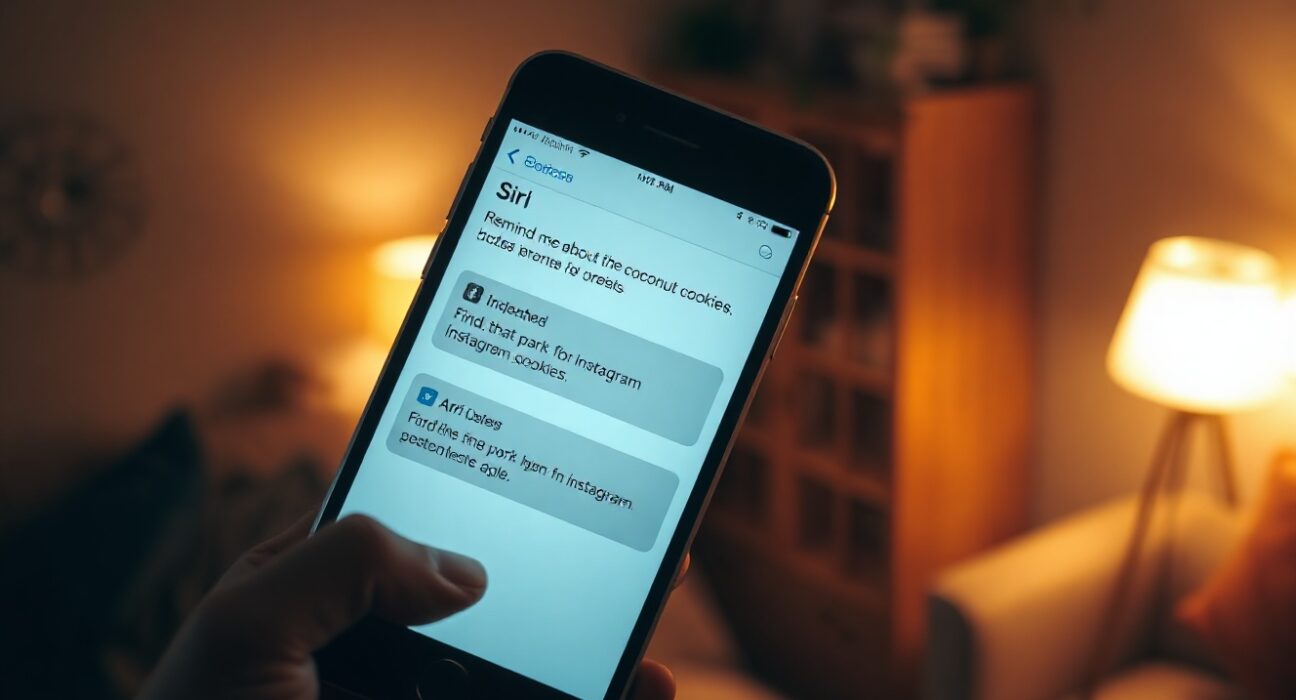
At WWDC 2026, Apple unveiled the long-awaited overhaul of Siri, powered by what it calls ‘Apple Intelligence.’ The new Siri promises to act as a truly personal assistant — one that knows your texts, your calendar, your photos, and even what’s on your screen. For many users overwhelmed by digital clutter, this sounds like a lifeline. But the feature raises familiar questions about privacy, trust, and whether we really want our devices to know that much about us.
What Apple’s New Siri Can Actually Do
The core of the update is ‘personal context’ — Siri can now search across Apple-native apps like iMessage, Notes, Calendar, Mail, and Photos to find information. In a demo, Apple Senior Director Justin Titi asked Siri to remind him of a dessert his daughter mentioned. Siri found a text from a month ago about coconut cookies. It’s a simple task, but it saves the user from scrolling through weeks of conversation history. Siri can also understand what’s on your screen. If you see a photo of a park on Instagram, you can ask Siri where it is. However, Apple has not yet confirmed whether Siri will integrate with third-party apps beyond its own ecosystem — that may depend on developer adoption.
The Privacy Paradox: On-Device vs. Cloud
Apple has long positioned itself as the privacy-focused alternative to Google and Meta. The new Siri continues that strategy. Simpler tasks — like summarizing emails or generating AI emojis — are processed entirely on-device, meaning your data never leaves your phone. For more complex requests, Apple introduced Private Cloud Compute (PCC), a system designed to process data in the cloud without exposing it to Apple itself. The company is so confident in PCC’s security that it offers a $1 million bug bounty. No successful hack has been reported yet. Still, the fundamental tension remains: the more useful Siri becomes, the more data it needs. Users must decide whether the convenience is worth the trade-off.
Is a Smarter Siri Worth the Risk?
The appeal of an always-on assistant that anticipates your needs is undeniable. Imagine Siri automatically creating a calendar event when a friend texts you about dinner plans, or reminding you to pick up a prescription when you walk past a pharmacy. These are the kinds of features that could genuinely reduce mental load. But as writer Calvin Kasulke pointed out in a recent conversation, there’s a risk that outsourcing life admin to AI could let important human skills — like paying attention and remembering details — atrophy. ‘What if you learned what your kid likes?’ he asked, pushing back against the idea that AI should handle even the most personal tasks.
How Apple’s Approach Differs from Google’s
Unlike Google’s controversial AI Overviews, which automatically inject AI-generated answers into search results, Apple’s Siri AI can be toggled on and off. This gives users a clear choice. Apple’s emphasis on on-device processing and PCC also contrasts with Google’s cloud-dependent model. For users who prioritize privacy, Apple’s approach may be more appealing — but it remains to be seen whether the features will be compelling enough to overcome the inherent discomfort of sharing so much personal data with any tech giant.
Conclusion
Apple’s new Siri represents a genuine step forward in making AI assistants useful in everyday life. The ability to search across apps and understand on-screen content could save users significant time and frustration. But the feature also forces a reckoning with how much we want our devices to know about us. For now, Apple offers an off switch — but the decision to use it is ultimately personal. As Siri gets smarter, users will have to decide whether the convenience is worth the cost to their privacy and their own habits of attention.
FAQs
Q1: When will the new Siri AI features be available?
The features were announced at WWDC 2026 and are expected to roll out with the next major iOS update later this year. Some features may be available in beta sooner.
Q2: Will Siri work with third-party apps like WhatsApp or Instagram?
Apple has not yet confirmed third-party integration. It may depend on developers adding support for Apple’s new Siri APIs.
Q3: Is my data safe with Apple’s Private Cloud Compute?
Apple says PCC processes data without exposing it to Apple or anyone else. The company offers a $1 million bug bounty for any successful hack, and none have been reported so far. However, no system is completely risk-free.
Disclaimer: The information provided is not trading advice, Bitcoinworld.co.in holds no liability for any investments made based on the information provided on this page. We strongly recommend independent research and/or consultation with a qualified professional before making any investment decisions.
