
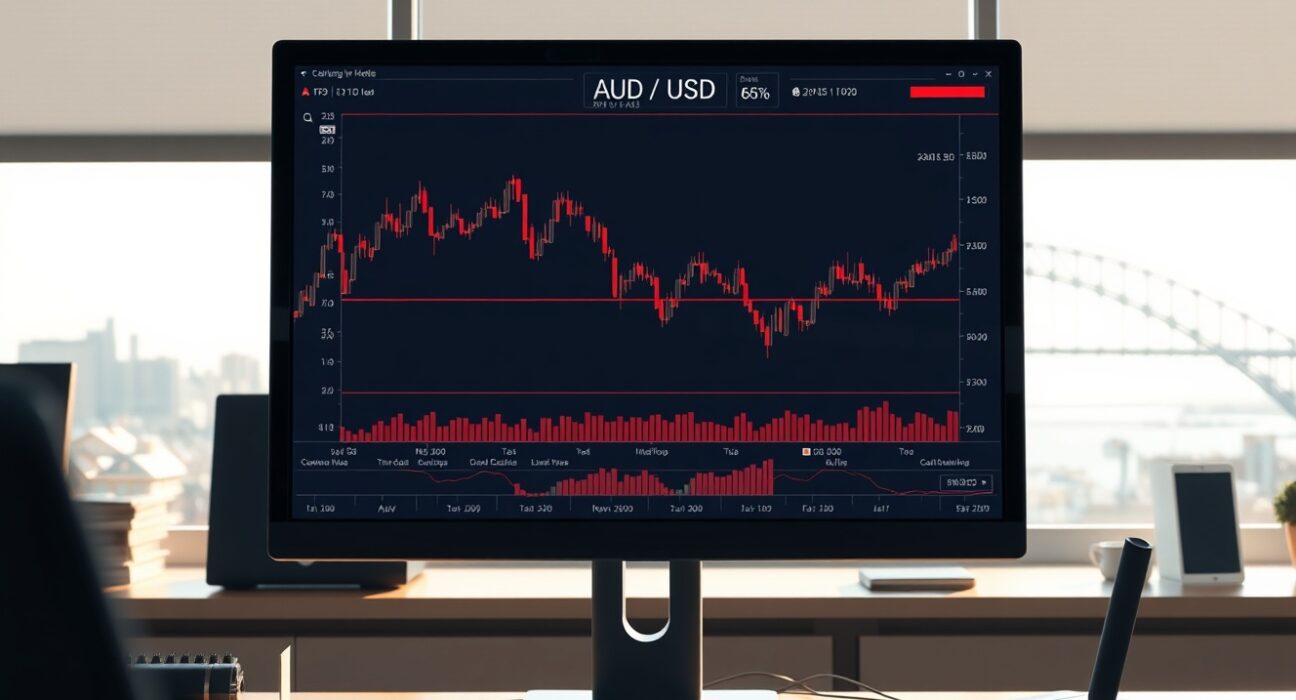
The Australian Dollar exhibits mixed trading patterns this week as renewed Middle East conflicts inject volatility into global markets while traders anxiously await crucial Australian employment data. This dual pressure creates a complex landscape for AUD traders worldwide, particularly affecting major currency pairs like AUD/USD and AUD/JPY.
Australian Dollar Reacts to Geopolitical Tensions
Currency markets demonstrate heightened sensitivity to Middle Eastern developments this trading session. The Australian Dollar, often viewed as a risk-sensitive currency, typically weakens during geopolitical uncertainty. However, current patterns show more nuanced behavior. For instance, the AUD/USD pair has fluctuated within a 50-pip range throughout the Asian session, reflecting conflicting market forces.
Several factors contribute to this mixed performance. First, Australia’s commodity exports face potential supply chain disruptions from Middle East conflicts. Second, safe-haven flows benefit traditional haven currencies, creating headwinds for the Aussie dollar. Third, energy price volatility impacts Australia’s terms of trade, creating both positive and negative effects on the currency.
Employment Data Anticipation Builds Market Tension
Traders currently focus intensely on upcoming Australian employment statistics. The Reserve Bank of Australia monitors labor market conditions closely when determining monetary policy. Strong employment figures could signal potential interest rate adjustments, while weak data might suggest economic softening. Market participants generally expect the following key metrics:
- Employment Change: Forecast: +20,000 jobs
- Unemployment Rate: Forecast: 4.0%
- Participation Rate: Forecast: 66.8%
Historical data reveals that Australian employment reports frequently trigger significant AUD movements. The table below illustrates recent market reactions:
| Date | Employment Change | AUD/USD Movement |
|---|---|---|
| March 2024 | +15,000 | +0.45% |
| February 2024 | +10,000 | +0.22% |
| January 2024 | +25,000 | +0.68% |
Expert Analysis of Dual Market Forces
Financial analysts observe that the Australian Dollar currently faces competing influences. Geopolitical tensions typically drive investors toward safer assets, potentially weakening commodity currencies. Conversely, strong domestic economic data could support the AUD. This creates a delicate balance for traders who must weigh external risks against internal fundamentals.
Market strategists note that the Australian currency’s correlation with Chinese economic performance adds another layer of complexity. China represents Australia’s largest trading partner, and Middle East conflicts can impact Chinese energy imports and manufacturing costs. Consequently, AUD traders must monitor multiple interconnected factors simultaneously.
Historical Context of AUD During Geopolitical Crises
The Australian Dollar has demonstrated specific patterns during previous geopolitical events. During the 2014-2016 Middle East tensions, the AUD declined approximately 8% against the US Dollar over six months. However, recovery typically followed once immediate crisis fears subsided. Current market conditions differ due to Australia’s strengthened economic position and diversified trade relationships.
Furthermore, Australia’s current account balance has improved significantly in recent years. This provides additional buffer against external shocks. The nation’s foreign currency reserves also offer monetary authorities greater flexibility to manage exchange rate volatility if necessary.
Technical Analysis and Trading Levels
Technical analysts identify key support and resistance levels for major AUD pairs. For AUD/USD, immediate support sits at 0.6550, while resistance appears at 0.6650. A break above resistance could signal bullish momentum, particularly if employment data exceeds expectations. Conversely, a breakdown below support might indicate further weakness, especially if Middle East tensions escalate.
Market participants also monitor AUD/JPY closely, as this pair often reflects broader risk sentiment. Current trading shows the pair testing important technical levels that could determine near-term direction. Options market data reveals increased hedging activity, suggesting traders anticipate potential volatility around the employment data release.
Conclusion
The Australian Dollar faces significant crosscurrents from renewed Middle East conflicts and impending employment data. Traders must navigate geopolitical risks while anticipating domestic economic indicators. The currency’s mixed trading patterns reflect this complex environment. Ultimately, the Australian Dollar’s trajectory will depend on both external stability and internal economic strength as markets process multiple information streams simultaneously.
FAQs
Q1: How do Middle East conflicts typically affect the Australian Dollar?
Middle East conflicts generally create risk aversion, potentially weakening the AUD as investors seek safer assets. However, Australia’s commodity exports can sometimes benefit from energy price increases, creating mixed effects.
Q2: Why is Australian employment data so important for currency traders?
Employment data directly influences Reserve Bank of Australia monetary policy decisions. Strong job numbers might lead to interest rate increases, typically strengthening the AUD, while weak data could have the opposite effect.
Q3: What time does Australian employment data get released?
The Australian Bureau of Statistics typically releases employment data at 11:30 AM Australian Eastern Standard Time (AEST) on the scheduled Thursday each month.
Q4: Which AUD currency pairs are most affected by these developments?
AUD/USD and AUD/JPY typically show the strongest reactions to both geopolitical events and Australian economic data releases due to their liquidity and sensitivity to risk sentiment.
Q5: How long do geopolitical effects usually last on currency markets?
Immediate effects can last hours to days, while sustained conflicts may influence currency trends for weeks or months, depending on severity and economic implications.
Disclaimer: The information provided is not trading advice, Bitcoinworld.co.in holds no liability for any investments made based on the information provided on this page. We strongly recommend independent research and/or consultation with a qualified professional before making any investment decisions.