

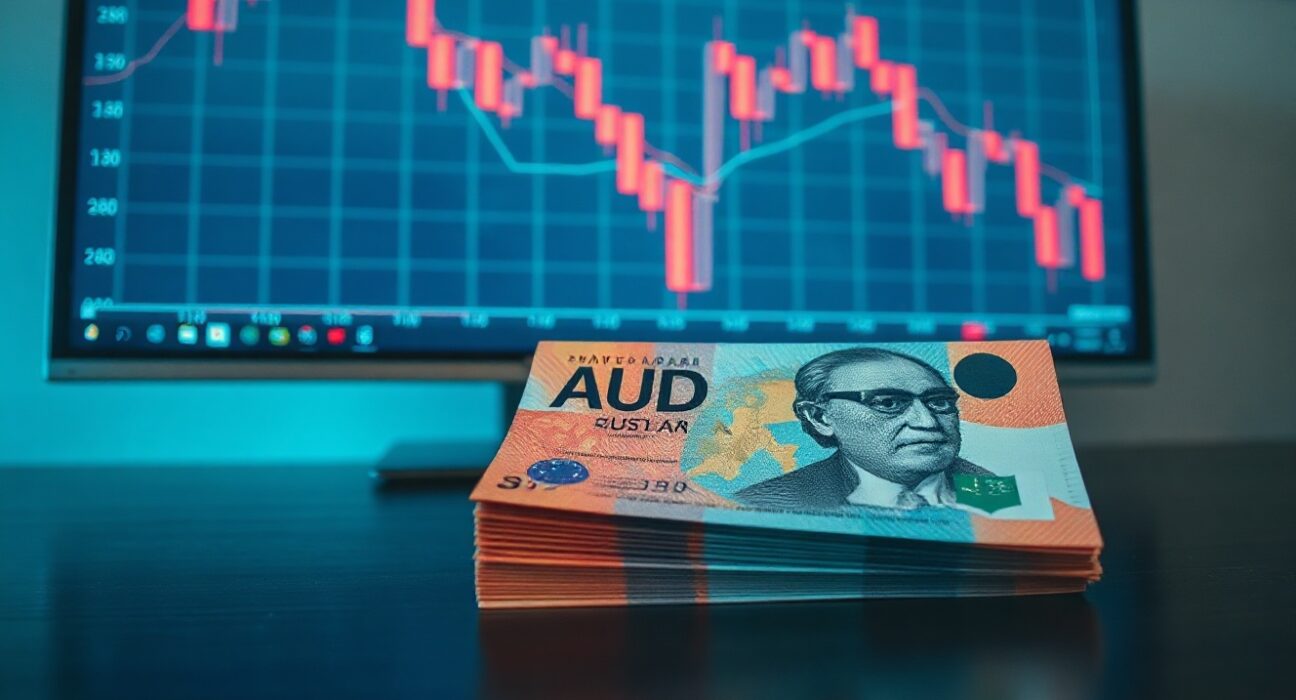
The Australian Dollar extended its recent decline on Wednesday, testing a fresh six-week low against the US Dollar as renewed trade policy uncertainty linked to former President Donald Trump weighed on risk-sensitive currencies. The AUD/USD pair slipped below the 0.6300 mark, reflecting growing caution among investors amid volatile global market conditions.
Market Context and Drivers
The move lower comes as markets digest the potential economic impact of Trump’s proposed tariff policies, which have historically been viewed as inflationary and disruptive to global trade flows. The Australian Dollar, often used as a proxy for risk appetite due to its close ties to commodity prices and Chinese demand, has been particularly sensitive to these developments. The currency has now given back gains made earlier in the month, as traders reassess the likelihood of a more protectionist US trade stance.
Analysts point to a combination of factors driving the AUD lower. The US Dollar has strengthened broadly on safe-haven flows, while the Reserve Bank of Australia’s (RBA) dovish policy outlook continues to cap any upside for the Aussie. Markets are pricing in a high probability of an RBA rate cut in the coming months, which further diminishes the yield advantage of holding Australian assets.
Technical and Sentiment Analysis
From a technical perspective, the AUD/USD pair has broken below its 50-day moving average, a signal that often attracts further selling pressure. The next key support level is seen around the 0.6200 region, a level last tested in late 2024. Resistance now sits at 0.6350, with any sustained recovery requiring a clear catalyst such as stronger-than-expected Chinese economic data or a shift in US trade rhetoric.
Impact on Traders and Businesses
For Australian importers and exporters, the weaker dollar presents a mixed picture. Exporters benefit from improved competitiveness, while importers face higher costs for goods priced in US dollars. Retail traders and forex investors are closely watching for any comments from RBA Governor Michele Bullock or US Federal Reserve officials for clues on future rate paths. The current environment underscores the importance of hedging strategies for businesses exposed to currency fluctuations.
Conclusion
The Australian Dollar’s slide to a six-week low reflects a broader risk-off mood driven by geopolitical and trade policy uncertainty. While the currency may find temporary support from elevated commodity prices, the medium-term outlook remains cautious. Traders should monitor US trade announcements and Chinese economic data for the next directional cues. The coming weeks will be critical in determining whether the AUD can stabilize or if further downside is ahead.
FAQs
Q1: Why is the Australian Dollar falling?
The Australian Dollar is under pressure due to renewed trade policy uncertainty linked to Donald Trump, which has strengthened the US Dollar and triggered a risk-off sentiment in global markets. Additionally, expectations of an RBA rate cut are weighing on the currency.
Q2: What is the next key support level for AUD/USD?
The next major support level is around 0.6200, a region that has held as a floor in previous sell-offs. A break below that could open the door to further losses toward 0.6100.
Q3: How does this affect Australian consumers?
A weaker Australian Dollar makes imported goods more expensive, potentially raising prices for electronics, fuel, and other US-dollar-denominated products. However, it benefits exporters by making Australian goods cheaper for foreign buyers.
Disclaimer: The information provided is not trading advice, Bitcoinworld.co.in holds no liability for any investments made based on the information provided on this page. We strongly recommend independent research and/or consultation with a qualified professional before making any investment decisions.
