

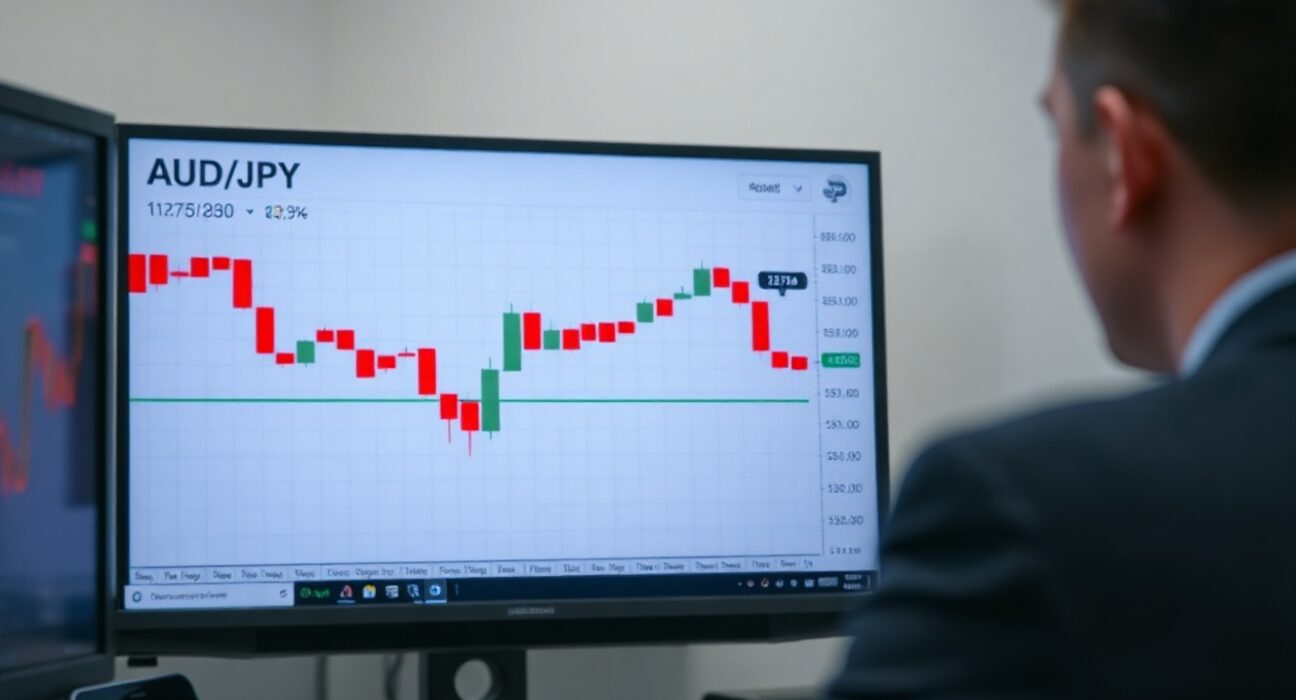
The Australian dollar (AUD) retreated from its multi-decade high against the Japanese yen (JPY) on Wednesday, following the release of weaker-than-expected Australian gross domestic product (GDP) figures. The AUD/JPY pair, which had recently touched levels not seen in over 30 years, pulled back as traders reassessed the economic outlook for Australia.
GDP Data Disappoints Markets
Australia’s economy grew by just 0.2% in the fourth quarter of 2025, falling short of the 0.5% forecast and marking a notable slowdown from the previous quarter’s 0.8% expansion. The annual growth rate eased to 1.5%, the weakest since the pandemic-era downturn, excluding the volatile COVID-19 period. The data raised concerns about the resilience of domestic demand amid high interest rates and persistent inflation.
The GDP release triggered a swift sell-off in the Australian dollar, with AUD/JPY dropping from around 98.50 to below 97.80 in early Asian trading. The move erased part of the currency pair’s recent gains, which had been driven by a hawkish Reserve Bank of Australia (RBA) stance and a weakening yen.
Why the AUD/JPY Pair Matters
The AUD/JPY cross is a closely watched barometer of risk appetite in global markets. The Australian dollar is considered a commodity-linked, higher-yielding currency, while the yen is a traditional safe-haven asset. When investors are optimistic, they tend to buy AUD and sell JPY, pushing the pair higher. Conversely, risk-off sentiment or negative economic data from Australia can trigger a reversal.
Prior to the GDP miss, the AUD/JPY had been trading near 99.00, its highest level since 1990, supported by expectations that the RBA would keep interest rates elevated for longer. The yen, meanwhile, has been under pressure from the Bank of Japan’s (BoJ) ultra-loose monetary policy, which has kept Japanese yields low relative to other developed economies.
Market Implications and RBA Outlook
The weaker GDP data complicates the RBA’s policy path. While inflation remains above the bank’s 2-3% target, slowing growth could reduce the urgency for further rate hikes. Markets are now pricing in a lower probability of a rate increase at the RBA’s next meeting in April, with some analysts suggesting the central bank may shift to a more neutral stance.
For traders, the key question is whether the AUD/JPY pullback is a temporary correction or the start of a sustained decline. Support is seen around 97.00, with a break below that level potentially opening the door to 95.50. On the upside, resistance remains near the recent highs around 99.00, and a move above that level would require a significant catalyst, such as stronger Australian employment data or a further weakening of the yen.
Yen Dynamics and BoJ Policy
The yen’s weakness has been a major theme in 2025, driven by the BoJ’s commitment to maintaining negative interest rates and yield curve control. However, the Japanese currency found some support on Wednesday as the GDP-driven risk-off mood prompted a modest safe-haven bid. The USD/JPY pair also edged lower, falling from 148.50 to 148.00, as traders reduced exposure to riskier assets.
Analysts at major investment banks remain divided on the yen’s outlook. Some expect the BoJ to eventually exit its ultra-loose policy, which could trigger a sharp yen rally, while others believe the central bank will maintain its dovish stance for the remainder of the year, keeping the yen under pressure.
Conclusion
The Australian dollar’s retreat from multi-decade highs against the yen underscores the market’s sensitivity to economic data and shifting central bank expectations. The weaker GDP print has introduced fresh uncertainty about the RBA’s policy trajectory, while the yen’s safe-haven appeal remains muted but not absent. Traders will now focus on upcoming Australian employment data and the BoJ’s March policy meeting for further direction.
FAQs
Q1: Why did the AUD/JPY pair fall after the GDP data?
The weaker-than-expected Australian GDP growth raised concerns about the economy’s health, reducing the likelihood of further RBA rate hikes. This made the Australian dollar less attractive to yield-seeking investors, leading to a sell-off against the yen.
Q2: What is the significance of the multi-decade high in AUD/JPY?
The AUD/JPY pair recently traded at levels not seen in over 30 years, reflecting the stark divergence between the RBA’s hawkish stance and the BoJ’s ultra-loose policy. The high also signaled strong risk appetite in global markets.
Q3: What should traders watch next for AUD/JPY?
Key factors include upcoming Australian employment and inflation data, RBA policy statements, and any signals from the BoJ regarding a potential shift away from negative interest rates. Technical levels around 97.00 and 99.00 are also critical for short-term trading.
Disclaimer: The information provided is not trading advice, Bitcoinworld.co.in holds no liability for any investments made based on the information provided on this page. We strongly recommend independent research and/or consultation with a qualified professional before making any investment decisions.
