
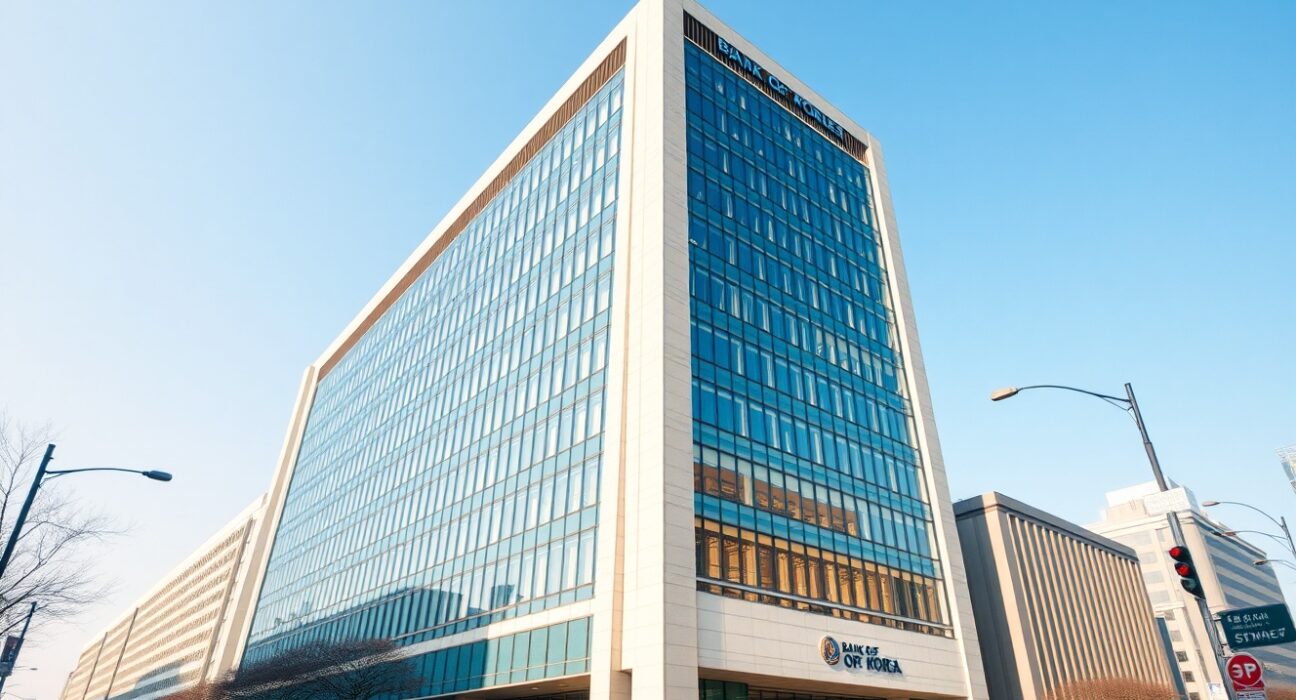
SEOUL, South Korea – June 2025: The Bank of Korea faces mounting pressure as economic indicators suggest a potential interest rate hike in July, according to analysis from ING and other financial institutions. Recent data releases have created a complex landscape for monetary policymakers who must balance inflation concerns against economic growth signals. This developing situation represents a critical juncture for Asia’s fourth-largest economy.
Bank of Korea’s Monetary Policy Framework
The Bank of Korea operates under a clear inflation-targeting mandate. Consequently, policymakers closely monitor multiple economic indicators. These indicators include consumer price inflation, employment figures, and export performance. The central bank’s Monetary Policy Board meets regularly to assess economic conditions. Their decisions directly influence borrowing costs throughout the Korean economy.
Recently, inflation data has shown persistent pressures. Specifically, the consumer price index exceeded the central bank’s target range for several consecutive months. Meanwhile, economic growth has demonstrated resilience despite global headwinds. This combination creates challenging conditions for monetary authorities. They must consider both price stability and economic expansion.
Economic Indicators Driving Rate Hike Speculation
Several key metrics have fueled speculation about a potential July rate increase. First, inflation remains elevated above the Bank of Korea’s 2% target. Second, wage growth has accelerated across multiple sectors. Third, housing prices continue their upward trajectory in major metropolitan areas. Fourth, export performance has exceeded expectations despite global trade tensions.
The following table summarizes recent economic indicators:
| Indicator | Latest Reading | Trend | Policy Implication |
|---|---|---|---|
| Consumer Price Inflation | 3.2% | Above Target | Hawkish |
| Core Inflation | 2.8% | Persistent | Hawkish |
| GDP Growth | 2.4% | Moderate | Neutral |
| Unemployment Rate | 2.7% | Low | Hawkish |
| Export Growth | 8.3% | Strong | Neutral |
These indicators collectively suggest tightening labor markets and persistent price pressures. Therefore, monetary policymakers face increasing justification for rate normalization. However, they must also consider external factors including global economic conditions and currency stability.
ING Analysis and Market Expectations
ING economists have highlighted specific data points supporting a July rate hike. Their analysis emphasizes three primary factors. First, service sector inflation has shown particular resilience. Second, household debt levels remain elevated despite previous tightening measures. Third, the won’s exchange rate dynamics create imported inflation risks.
Market participants have adjusted their expectations accordingly. Currently, interest rate futures indicate approximately 65% probability of a July rate increase. This represents a significant shift from earlier in the year. Previously, markets anticipated a more gradual normalization path. The changing expectations reflect evolving economic data.
Historical Context and Policy Trajectory
The Bank of Korea began its current tightening cycle in August 2022. Since then, policymakers have implemented multiple rate increases. Their approach has been characterized as measured and data-dependent. Each decision has followed careful analysis of economic indicators. This methodical approach has maintained policy credibility.
However, the current economic landscape presents unique challenges. Global central banks have adopted divergent monetary policies. The Federal Reserve has paused its tightening cycle. Meanwhile, the European Central Bank continues its inflation fight. These divergent paths create complex dynamics for emerging market central banks.
Potential Impacts of a July Rate Decision
A potential July rate hike would have widespread economic implications. First, borrowing costs would increase for businesses and consumers. Second, financial market volatility might intensify. Third, currency markets would likely react to the policy shift. Fourth, economic growth projections might require downward revision.
Key sectors would experience direct effects:
- Real Estate: Higher mortgage rates would cool housing markets
- Manufacturing: Increased financing costs for capital investment
- Consumption: Reduced discretionary spending due to higher credit costs
- Exports: Potential currency appreciation affecting competitiveness
Policymakers must carefully weigh these potential impacts. Their decision will influence economic trajectories through 2025 and beyond. Therefore, market participants await the July meeting with particular attention.
Alternative Scenarios and Risk Factors
While data suggests a July hike, alternative scenarios remain possible. First, external economic shocks could delay tightening. Second, inflation data might show unexpected moderation. Third, financial stability concerns could take precedence. Fourth, global economic conditions might deteriorate rapidly.
The Bank of Korea maintains flexibility in its decision-making process. Policy statements emphasize data dependence rather than predetermined paths. This approach allows for responsive adjustments to changing conditions. Consequently, the July decision remains uncertain despite current indicators.
Conclusion
The Bank of Korea faces a critical monetary policy decision in July 2025. Economic indicators increasingly support additional tightening measures. Inflation persistence and strong economic data create compelling arguments for a rate hike. However, policymakers must consider multiple factors including global conditions and financial stability. The central bank’s data-driven approach will determine the final outcome. Market participants should prepare for potential volatility surrounding the July announcement. Ultimately, the Bank of Korea’s decision will significantly influence South Korea’s economic trajectory.
FAQs
Q1: What economic indicators most influence Bank of Korea decisions?
The Bank of Korea primarily monitors inflation data, employment figures, GDP growth, and financial stability metrics. Core inflation and wage growth receive particular attention in current policy discussions.
Q2: How would a July rate hike affect Korean consumers?
Consumers would face higher borrowing costs for mortgages, auto loans, and credit cards. Savings rates might increase slightly, but overall disposable income would likely decrease due to higher debt servicing costs.
Q3: What is the Bank of Korea’s current inflation target?
The central bank maintains a 2% inflation target over the medium term. This target provides the primary framework for monetary policy decisions and communications.
Q4: How often does the Bank of Korea’s Monetary Policy Board meet?
The board convenes eight times annually, approximately every six weeks. Emergency meetings can occur if economic conditions require immediate policy responses.
Q5: What global factors influence Bank of Korea decisions?
Global central bank policies, particularly from the Federal Reserve, significantly impact decisions. Trade dynamics, commodity prices, and geopolitical developments also receive careful consideration.
Disclaimer: The information provided is not trading advice, Bitcoinworld.co.in holds no liability for any investments made based on the information provided on this page. We strongly recommend independent research and/or consultation with a qualified professional before making any investment decisions.