

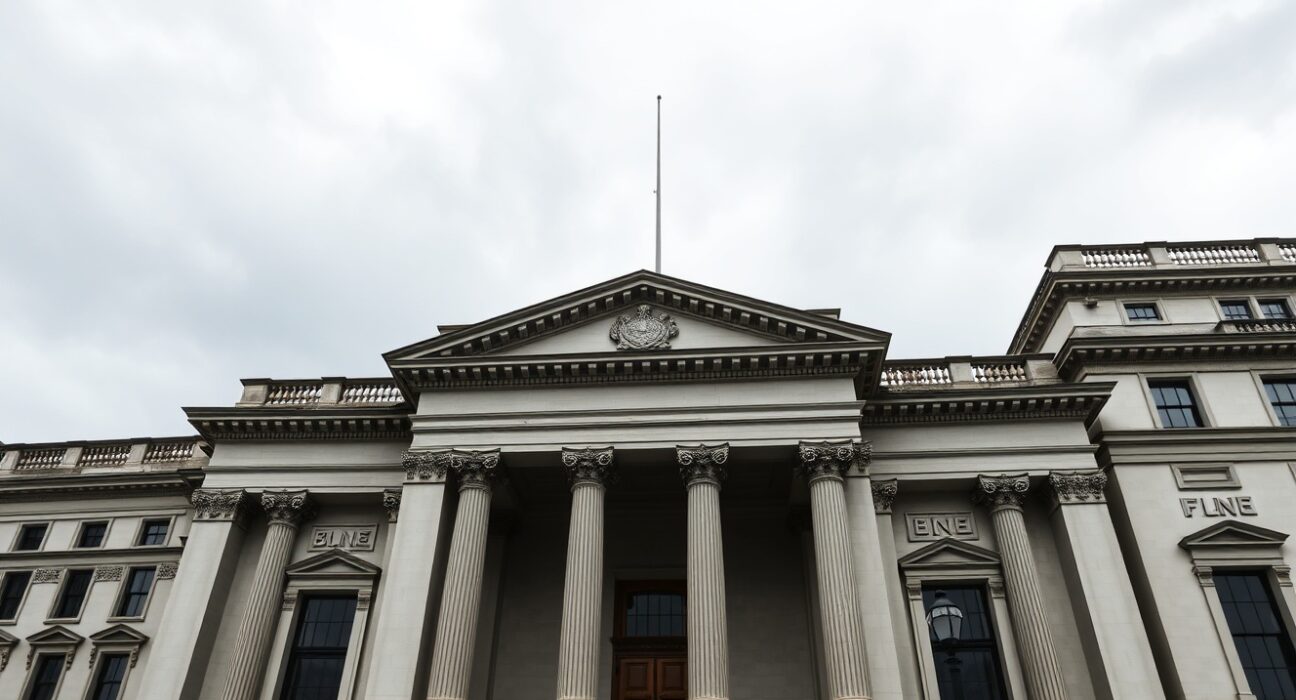
The Bank of England maintains an active hold on interest rates, but Rabobank analysts warn of significant risks emerging in June. This stance reflects a delicate balancing act between controlling inflation and supporting economic growth. Understanding these dynamics is crucial for investors and policymakers alike.
Bank of England’s Active Hold Policy Explained
Rabobank’s latest analysis describes the Bank of England’s current monetary policy as an “active hold.” This term means the central bank keeps rates steady but remains ready to adjust quickly if economic data shifts. The Monetary Policy Committee (MPC) has held the base rate at 5.25% since August 2023. However, recent minutes show a split among members, with some favoring a cut and others a hike. This division underscores the uncertainty facing the UK economy.
The active hold strategy allows the BoE to wait for clearer signals on inflation and wage growth. Core inflation remains sticky, hovering around 4.5% in early 2025. Services inflation, a key measure for the MPC, stays above 6%. These figures prevent the committee from committing to a dovish path. At the same time, the UK economy shows signs of stagnation. GDP growth barely reached 0.1% in the first quarter of 2025. This weak performance raises the risk of a recession if rates stay high too long.
Rabobank Highlights June Risks for UK Rates
Rabobank specifically flags June 2025 as a critical inflection point. Several factors converge during this month. First, the next round of UK wage data releases in early June. Second, the US Federal Reserve’s rate decision in mid-June influences global markets. Third, the European Central Bank’s policy meeting also occurs in June. These events create a volatile backdrop for the BoE’s own decision on June 20.
Rabobank analysts point to three key risks:
- Wage spiral: If private sector wage growth exceeds 6%, the MPC may need to hike rates to prevent second-round effects on prices.
- Service inflation persistence: A reading above 5.5% in May data could force a hawkish response.
- Global spillovers: A surprise rate hike from the Fed or ECB could pressure the pound and import inflation.
These risks mean the BoE cannot simply hold passively. The “active” component of the hold requires constant vigilance and readiness to act.
Comparing BoE Stance with Other Central Banks
The Bank of England is not alone in its cautious approach. The Federal Reserve also maintains a high plateau, with rates at 5.5%. The ECB held rates at 4.5% after its last hike. However, the BoE faces unique challenges. UK inflation remains higher than in the US or Eurozone. The UK labor market also shows more persistent tightness, with unemployment at 3.8% and vacancies still elevated. This structural difference forces the BoE to keep a tighter leash than its peers.
| Central Bank | Current Rate | June Outlook |
|---|---|---|
| Bank of England | 5.25% | Active hold, risk of hike |
| Federal Reserve | 5.50% | Hold, possible cut later |
| European Central Bank | 4.50% | Hold, dovish tilt |
This comparison shows the BoE’s position as the most hawkish among major central banks. Rabobank’s analysis suggests this divergence may persist through June, creating opportunities for currency traders and bond investors.
Market Implications of the Active Hold
Financial markets have already priced in the BoE’s cautious stance. The British pound trades near $1.27, supported by higher yields. The 2-year gilt yield hovers around 4.8%, reflecting expectations of a prolonged hold. However, Rabobank warns that markets may be underestimating the June risks. If the MPC signals a potential hike, gilt yields could spike and the pound could rally to $1.30. Conversely, a dovish surprise would push yields lower and weaken sterling.
For UK homeowners, the active hold means mortgage rates stay elevated. The average 2-year fixed rate remains above 5.5%. This pressure on household budgets continues to dampen consumer spending. Rabobank notes that any rate move in June would have immediate effects on housing market sentiment. A hike would further cool demand, while a cut could spark a mini-boom.
Historical Context: BoE Holds and Subsequent Moves
History shows that BoE holds often precede significant policy shifts. In 2022, the MPC held rates in February before embarking on a series of hikes. In 2020, the hold in March was followed by an emergency cut. Rabobank’s analysis draws on these precedents to argue that the current hold is not neutral. Instead, it represents a pause for assessment, not a permanent resting point.
The key difference today is the inflation outlook. Unlike previous cycles, the BoE fights inflation that originated from supply shocks, not demand overheating. This makes the path forward less predictable. Rabobank emphasizes that the MPC must balance the risk of doing too little against the risk of doing too much. This dilemma defines the active hold.
Expert Perspectives on Rabobank’s Analysis
Several economists have weighed in on Rabobank’s June risk assessment. Jane Foley, a senior strategist at Rabobank, states: “The BoE is in a bind. It cannot cut rates without clear evidence that inflation is sustainably returning to 2%. Yet, holding too long risks damaging the economy unnecessarily.” This view echoes the broader consensus among UK-focused analysts.
Other experts point to the importance of wage data. Samuel Tombs, chief UK economist at Pantheon Macroeconomics, notes: “The MPC has signaled that wage growth is the single most important indicator. If April’s data shows a moderation, the case for a hold strengthens. If not, June becomes a live meeting.” This data dependency means the BoE’s decision hinges on numbers, not rhetoric.
Conclusion
Rabobank’s analysis underscores the Bank of England’s active hold as a strategic pause fraught with June risks. The combination of sticky inflation, weak growth, and global spillovers creates a high-stakes environment for the MPC. Investors, homeowners, and businesses must prepare for potential volatility around the June 20 decision. The active hold is not a passive wait; it is a calculated position that could shift rapidly. Understanding these dynamics helps market participants navigate the uncertain path ahead.
FAQs
Q1: What does “active hold” mean for the Bank of England?
A1: An active hold means the Bank of England keeps interest rates unchanged but remains ready to adjust policy quickly based on incoming economic data. It signals vigilance rather than a neutral stance.
Q2: Why does Rabobank see June as risky for UK rates?
A2: Rabobank highlights June because of converging factors: UK wage data, US Federal Reserve and ECB decisions, and persistent services inflation. These could force the BoE to hike or cut unexpectedly.
Q3: How might the BoE’s active hold affect mortgage rates?
A3: The active hold keeps mortgage rates elevated, with the average 2-year fixed rate above 5.5%. Any rate move in June would directly impact housing market sentiment and borrowing costs.
Q4: Is the Bank of England more hawkish than other central banks?
A4: Yes, compared to the Federal Reserve and ECB, the BoE faces higher inflation and a tighter labor market, making its stance more hawkish. This divergence affects currency and bond markets.
Q5: What indicators should investors watch for June?
A5: Investors should monitor UK wage growth data (early June), services inflation (mid-June), and the Fed and ECB policy decisions. These will shape the BoE’s June 20 decision.
Disclaimer: The information provided is not trading advice, Bitcoinworld.co.in holds no liability for any investments made based on the information provided on this page. We strongly recommend independent research and/or consultation with a qualified professional before making any investment decisions.
