
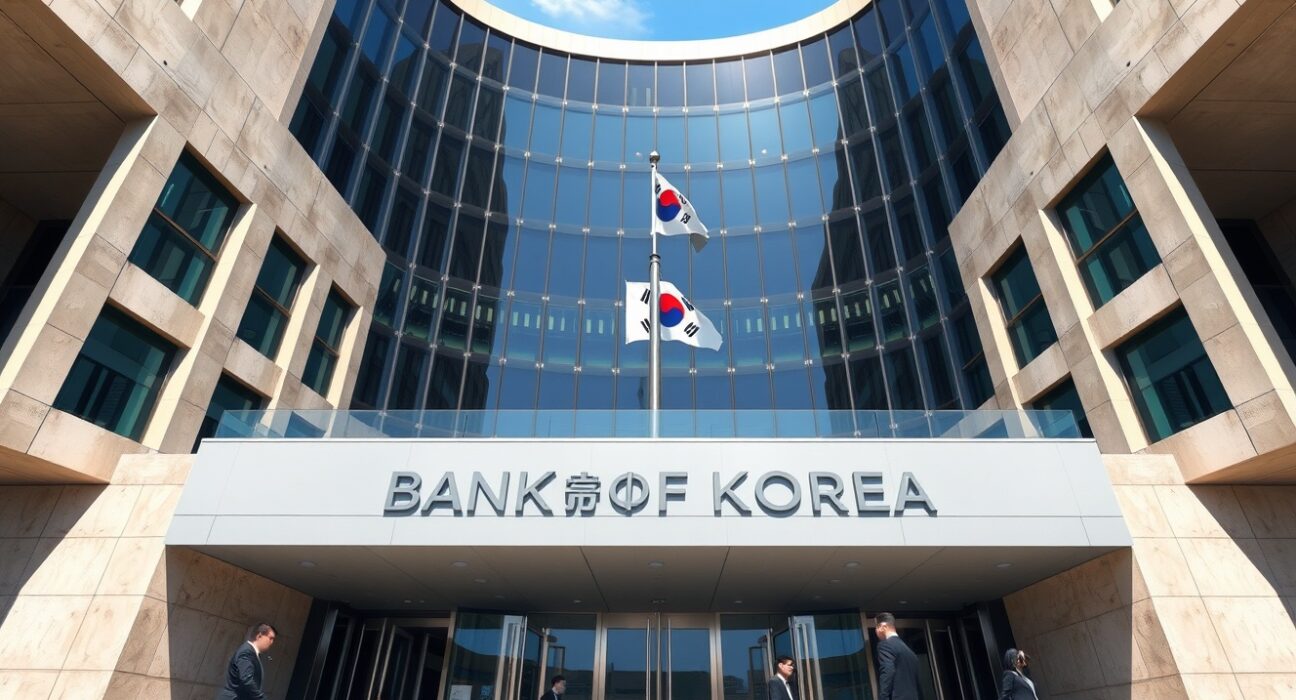
SEOUL, South Korea – The Bank of Korea’s increasingly hawkish monetary policy stance may accelerate interest rate increases sooner than previously anticipated, according to fresh analysis from ING economists. This potential policy shift carries significant implications for South Korea’s economic trajectory, financial markets, and global investment flows throughout 2025.
Bank of Korea Signals Monetary Policy Tightening
The Bank of Korea maintains responsibility for price stability in Asia’s fourth-largest economy. Recently, central bank officials have expressed growing concerns about persistent inflationary pressures. Consequently, monetary policy committee members have adopted more hawkish language during public statements. This rhetorical shift typically precedes concrete policy actions.
South Korea’s consumer price index has remained above the central bank’s 2% target for several consecutive quarters. Additionally, rising global commodity prices and domestic wage growth continue to fuel inflation expectations. Therefore, the Bank of Korea faces mounting pressure to normalize monetary policy after years of accommodative settings.
ING Analysis Predicts Earlier Rate Hikes
ING economists have revised their interest rate forecasts following recent central bank communications. Previously, most analysts expected gradual monetary tightening throughout 2025. However, ING’s latest research suggests the timeline could accelerate significantly. The financial institution cites several key factors supporting this assessment.
Economic Indicators Driving Policy Changes
Multiple economic indicators demonstrate South Korea’s resilient recovery from global economic challenges. Strong export performance, particularly in semiconductors and electric vehicles, continues to drive economic growth. Meanwhile, household debt levels remain elevated, creating financial stability concerns for policymakers.
The following table illustrates key economic metrics influencing Bank of Korea decisions:
| Indicator | Current Level | Policy Implication |
|---|---|---|
| Inflation Rate | 3.2% | Above target, requires tightening |
| GDP Growth | 2.4% | Supports policy normalization |
| Household Debt/GDP | 104% | Financial stability concern |
| Export Growth | 8.7% | Economic resilience indicator |
Furthermore, the Federal Reserve’s monetary policy decisions create additional considerations. Historically, the Bank of Korea monitors U.S. interest rate movements closely. Significant divergence between Korean and U.S. rates can trigger capital outflows and currency volatility. Thus, synchronized global monetary tightening often influences domestic policy timing.
Market Impacts and Financial Sector Implications
Earlier interest rate hikes would immediately affect South Korea’s financial markets. Bond yields typically rise in anticipation of monetary tightening. Consequently, government bond prices generally decline as investors demand higher returns. The Korean won might also appreciate against major currencies, potentially affecting export competitiveness.
Banking sector profitability often improves during rising rate environments. However, higher borrowing costs can dampen economic activity across several sectors:
- Real Estate: Mortgage rates increase, cooling housing market activity
- Corporate Investment: Higher financing costs may delay expansion plans
- Consumer Spending: Disposable income decreases with higher loan payments
- Stock Market: Valuation multiples often compress as discount rates rise
International investors closely monitor these developments. South Korean assets represent significant components of emerging market portfolios. Therefore, monetary policy changes frequently trigger substantial capital reallocations across global investment funds.
Historical Context and Policy Evolution
The Bank of Korea has navigated numerous economic cycles since its establishment in 1950. During the 1997 Asian financial crisis, the central bank implemented emergency measures to stabilize financial markets. More recently, the institution deployed unprecedented stimulus during the COVID-19 pandemic. Now, policy normalization represents the next phase in this ongoing economic management.
South Korea’s monetary policy framework has evolved considerably over decades. Initially focused on direct credit controls, the central bank gradually adopted inflation targeting in the early 2000s. This framework prioritizes price stability while considering financial stability and economic growth. The current policy deliberations occur within this established institutional context.
Expert Perspectives on Policy Timing
Financial analysts present varying views about optimal policy timing. Some economists advocate for preemptive action to anchor inflation expectations. Others caution against premature tightening that might undermine economic recovery. ING’s analysis appears to align with the former perspective, emphasizing inflation risks over growth concerns.
Central bank independence remains crucial for effective policy implementation. The Bank of Korea operates with considerable autonomy from political influence. This institutional arrangement allows policymakers to make difficult decisions based on economic fundamentals rather than short-term political considerations.
Global Monetary Policy Convergence
Major central banks worldwide continue to navigate post-pandemic economic normalization. The European Central Bank, Bank of Japan, and People’s Bank of China each face unique challenges. However, the Federal Reserve’s policy trajectory particularly influences global financial conditions. South Korea’s export-oriented economy remains especially sensitive to these international developments.
Emerging market central banks often face difficult trade-offs during global tightening cycles. Capital flight risks increase when interest rate differentials narrow significantly. Therefore, the Bank of Korea must balance domestic price stability objectives with external financial stability concerns. This delicate balancing act explains the cautious yet firm approach evident in recent communications.
Conclusion
The Bank of Korea’s hawkish monetary policy shift signals potential earlier interest rate hikes according to ING analysis. This development reflects growing concerns about persistent inflation and financial stability risks in South Korea’s economy. Market participants should prepare for accelerated policy normalization with significant implications for bonds, currencies, and equities. Ultimately, the central bank’s decisions will shape South Korea’s economic trajectory throughout 2025 and beyond.
FAQs
Q1: What does “hawkish shift” mean in monetary policy?
In central banking terminology, a hawkish shift indicates increased concern about inflation and greater willingness to raise interest rates to control price increases. This contrasts with a dovish stance that prioritizes economic growth over inflation concerns.
Q2: How would earlier rate hikes affect ordinary Korean citizens?
Earlier interest rate increases would raise borrowing costs for mortgages, auto loans, and credit cards. Savers might benefit from higher deposit rates, but overall consumer spending could decrease as debt servicing costs increase.
Q3: Why does ING’s analysis matter for international investors?
ING provides influential economic research followed by global institutional investors. Their revised forecasts often prompt portfolio adjustments across emerging market funds, affecting capital flows into and out of South Korean financial assets.
Q4: How does the Bank of Korea typically implement rate decisions?
The Bank of Korea’s Monetary Policy Board meets eight times annually to set the base rate. Decisions require majority approval from the seven-member committee, with the Governor holding the deciding vote in case of ties.
Q5: What indicators should investors watch for policy clues?
Key indicators include monthly inflation data, GDP growth figures, employment statistics, and the central bank’s own inflation forecasts. Additionally, statements from Monetary Policy Board members provide important signals about policy direction.
Disclaimer: The information provided is not trading advice, Bitcoinworld.co.in holds no liability for any investments made based on the information provided on this page. We strongly recommend independent research and/or consultation with a qualified professional before making any investment decisions.