

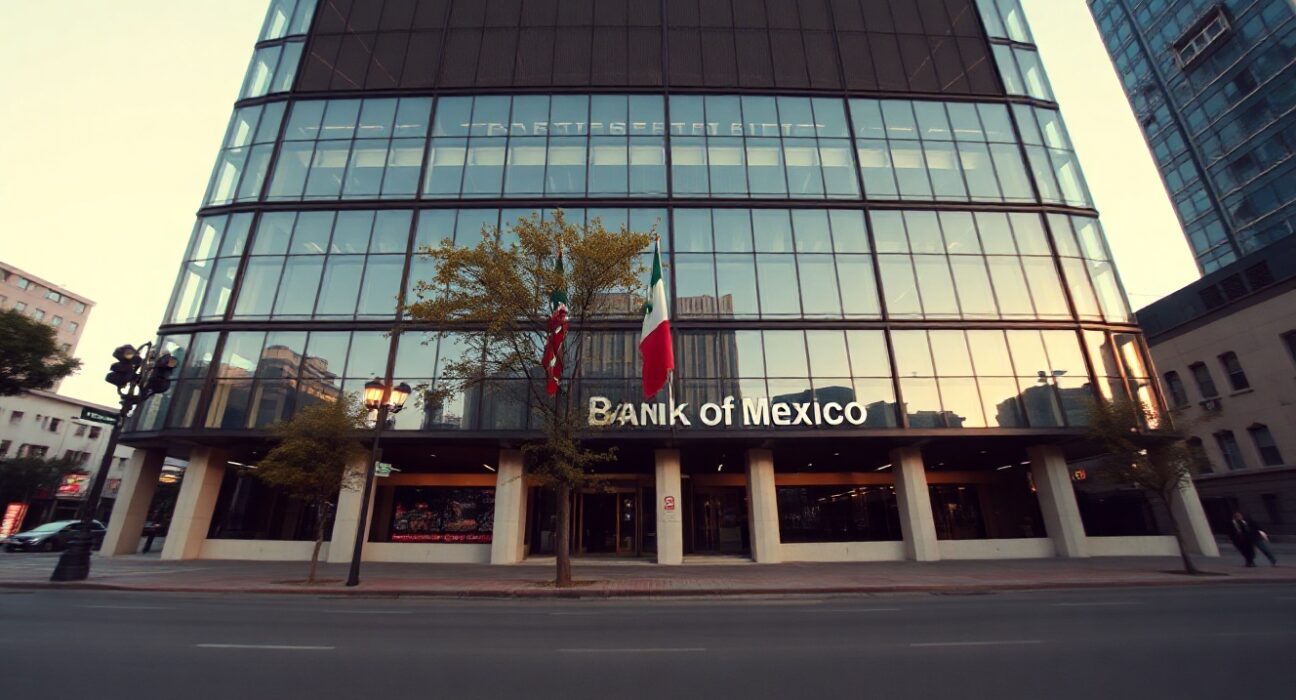
The Bank of Mexico (Banxico) kept its benchmark interest rate unchanged at 6.5% during its February monetary policy meeting, aligning with market forecasts and signaling a cautious stance as policymakers weigh persistent inflation pressures against signs of slowing economic growth.
Policy Decision and Rationale
Banxico’s decision to hold the rate at 6.5% was widely anticipated by analysts, with a consensus forecast pointing to no change. The central bank’s statement emphasized that inflation remains above its 3% target, with core price pressures proving stickier than expected, while economic activity shows signs of moderation.
The governing board noted that while headline inflation has eased from its peak, the disinflation process is not yet complete. It also highlighted upside risks to the inflation outlook, including potential depreciation of the Mexican peso, rising energy costs, and supply-side disruptions. The bank reiterated that its future policy decisions will be data-dependent, with a close eye on both inflation expectations and the evolution of economic activity.
Market Reaction and Peso Performance
Following the announcement, the Mexican peso traded marginally weaker against the U.S. dollar, reflecting the lack of a surprise in the decision. Investors had largely priced in a hold, and attention now shifts to the central bank’s forward guidance and the timing of potential rate cuts later this year.
According to market analysts, the decision was consistent with a gradual normalization path. Some economists expect Banxico to begin easing policy in the second half of 2026, but only if inflation continues to trend downward and the peso remains stable. The central bank’s cautious tone suggests it is in no hurry to reduce borrowing costs, even as growth concerns mount.
Implications for Borrowers and the Economy
For businesses and households, the unchanged rate means borrowing costs remain elevated, which could continue to weigh on consumption and investment. The manufacturing sector, which has shown resilience, may face headwinds from tight financial conditions, while services activity is also expected to moderate.
The decision also carries implications for fiscal policy, as higher interest rates increase the cost of servicing public debt. With the government targeting a reduced fiscal deficit, the central bank’s cautious stance underscores the delicate balance between containing inflation and supporting growth.
Conclusion
Banxico’s decision to hold rates at 6.5% reflects a data-dependent approach, with inflation risks taking precedence over short-term growth concerns. The central bank is likely to maintain this cautious stance until clearer signs of disinflation emerge. For now, the Mexican economy faces a challenging path, with monetary policy expected to remain restrictive for an extended period.
FAQs
Q1: Why did Banxico keep interest rates unchanged at 6.5%?
Banxico held rates at 6.5% to balance persistent inflation pressures against slowing economic growth. The central bank sees inflation risks as still elevated, so it chose to maintain its restrictive stance while monitoring incoming data.
Q2: What does this decision mean for the Mexican peso?
The peso showed little reaction, as the decision was widely expected. The currency’s outlook will depend on Banxico’s future guidance and global risk sentiment, with a potential easing cycle later in 2026 possibly putting pressure on the peso.
Q3: When could Banxico start cutting interest rates?
Most analysts expect Banxico to begin cutting rates in the second half of 2026, but only if inflation continues to decline and the peso remains stable. The central bank has emphasized that decisions will be data-dependent, so timing remains uncertain.
Disclaimer: The information provided is not trading advice, Bitcoinworld.co.in holds no liability for any investments made based on the information provided on this page. We strongly recommend independent research and/or consultation with a qualified professional before making any investment decisions.
