
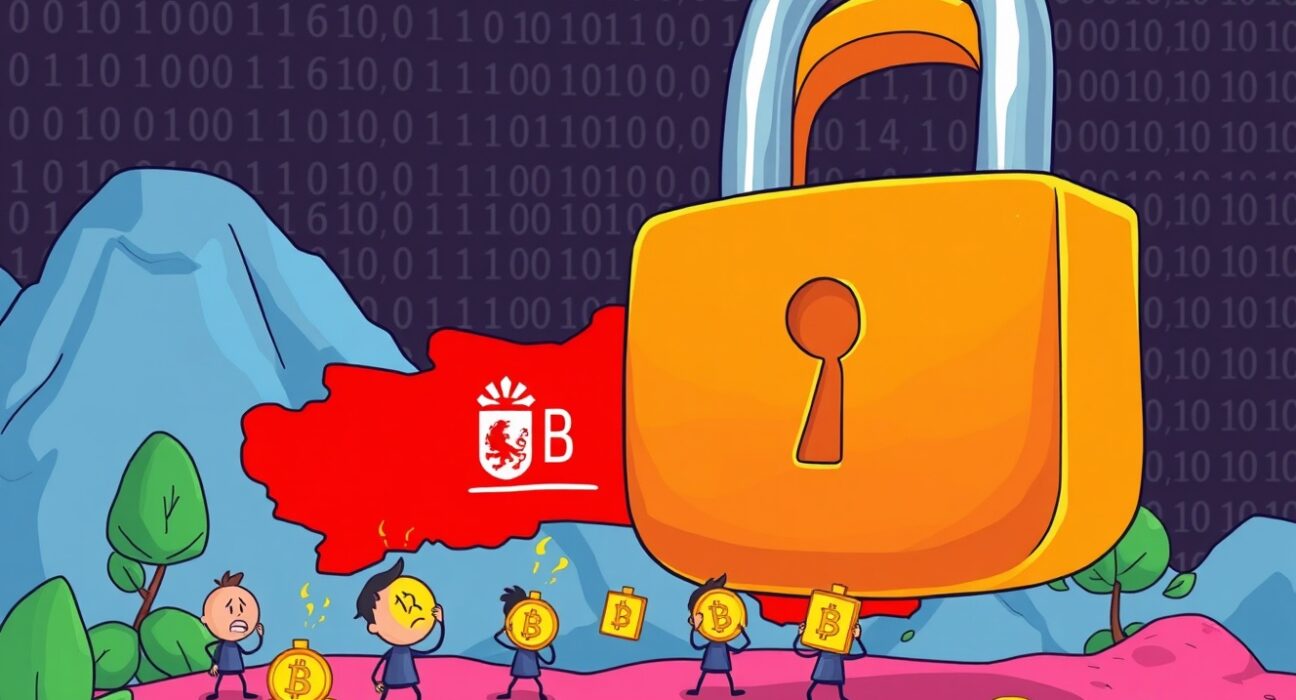
In a surprising regulatory move, the government of Belarus has blocked access to several major cryptocurrency exchanges, including Bybit, Bitget, and OKX. This action creates immediate uncertainty for crypto users in the country and raises critical questions about the future of digital asset regulation in Belarus. The decision appears contradictory, coming just months after the president encouraged banks to promote cryptocurrency use.
Why Did Belarus Block Cryptocurrency Exchanges?
Local media first reported that Belarus blocked access to these platforms, though officials have not provided a clear, public reason. This lack of transparency is a major concern for the crypto community. The block seems to target specific international exchanges, not a blanket ban on all cryptocurrency activity. However, the timing is puzzling.
In September, President Alexander Lukashenko urged the nation’s banks to actively promote the use of cryptocurrencies. Then, last month, the government introduced a mandatory registration system for all crypto wallets. The recent decision to block exchanges like Bybit and OKX creates a confusing and restrictive environment for users trying to follow the rules.
What Does This Mean for Crypto Users in Belarus?
For everyday users, the immediate impact is clear: they cannot directly access their accounts on the affected platforms from within Belarus. While tech-savvy individuals might turn to VPNs to bypass the block, this introduces new risks.
- Account Suspension Risk: Using a VPN violates the terms of service of most exchanges. Users risk having their accounts suspended or frozen if the platform detects access from a masked IP address.
- Legal Uncertainty: The legality of using a VPN for this purpose in Belarus is unclear, potentially putting users in a precarious position.
- Access to Funds: The primary concern for many is whether they can withdraw or manage their existing assets on these blocked exchanges.
This situation forces Belarusian crypto holders into a difficult choice: attempt risky access or potentially lose access to their digital assets.
Understanding the Bigger Picture of Crypto Regulation in Belarus
The decision to block cryptocurrency exchanges is part of a broader, and often conflicting, regulatory trend. On one hand, the government has shown interest in harnessing blockchain technology and digital assets. The mandatory wallet registration system, for example, suggests a desire for oversight and control.
On the other hand, blocking major international platforms signals a move to limit decentralized, foreign access to financial tools. Experts suggest this could be an attempt to steer users toward domestic, state-sanctioned platforms where the government has more visibility and control over transactions. It reflects a global tension between embracing innovation and maintaining financial sovereignty.
What Are the Potential Next Steps for Belarus?
The future of cryptocurrency in Belarus now hangs in the balance. The government’s next actions will be crucial. Will they clarify the reasons for the block and establish clear, fair rules? Or will they continue with restrictive measures that stifle the industry?
Possible outcomes include:
- The introduction of a licensed, domestic exchange ecosystem.
- Stricter capital controls on cryptocurrency inflows and outflows.
- A formal clarification of the legal status of using VPNs for crypto access.
- Further contradictory statements from different government bodies.
For now, the block on exchanges like Bybit and OKX creates a chilling effect, discouraging participation and innovation in the Belarusian crypto space.
Conclusion: A Cautionary Tale for Global Crypto Markets
The situation in Belarus serves as a stark reminder of the regulatory risks inherent in the cryptocurrency world. A government can shift its stance rapidly, leaving users and investors scrambling. The move to block major exchanges undermines earlier promises of support and creates a climate of fear and uncertainty. For the global crypto community, it highlights the importance of understanding local regulations and the fragile balance between technological freedom and state control. The path forward for Belarusian crypto enthusiasts remains fraught with obstacles and unanswered questions.
Frequently Asked Questions (FAQs)
Which cryptocurrency exchanges are blocked in Belarus?
Reports confirm that access to Bybit, Bitget, and OKX has been blocked. The full list may include other international platforms.
Can I still use a VPN to access my account on a blocked exchange?
Technically, yes, a VPN can bypass the block. However, this violates most exchanges’ terms of service and could lead to account suspension. The legal status of doing so in Belarus is also unclear.
Why would Belarus block exchanges after the president supported crypto?
This is the central contradiction. Analysts believe it may be an attempt to control the flow of capital and push users toward future domestic, regulated platforms that are easier for the government to monitor.
What is the mandatory crypto wallet registration system?
Introduced last month, this system requires individuals in Belarus to register their cryptocurrency wallets with authorities, likely to increase transaction transparency for the state.
Will my funds be safe on a blocked exchange?
Your funds should remain on the exchange’s platform, but your ability to access and withdraw them from within Belarus is now severely limited without using a VPN.
Are all cryptocurrencies banned in Belarus now?
No, this is not a ban on cryptocurrency itself. It is a block on accessing specific foreign exchange websites. The legal status of owning crypto is still governed by previous decrees and the new wallet registration rule.
Found this analysis of Belarus blocking cryptocurrency exchanges insightful? The regulatory landscape is constantly shifting. Share this article on your social media to help others in the crypto community stay informed about these critical global developments.
To learn more about the latest cryptocurrency regulatory trends, explore our article on key developments shaping global crypto policy and institutional adoption.
Disclaimer: The information provided is not trading advice, Bitcoinworld.co.in holds no liability for any investments made based on the information provided on this page. We strongly recommend independent research and/or consultation with a qualified professional before making any investment decisions.