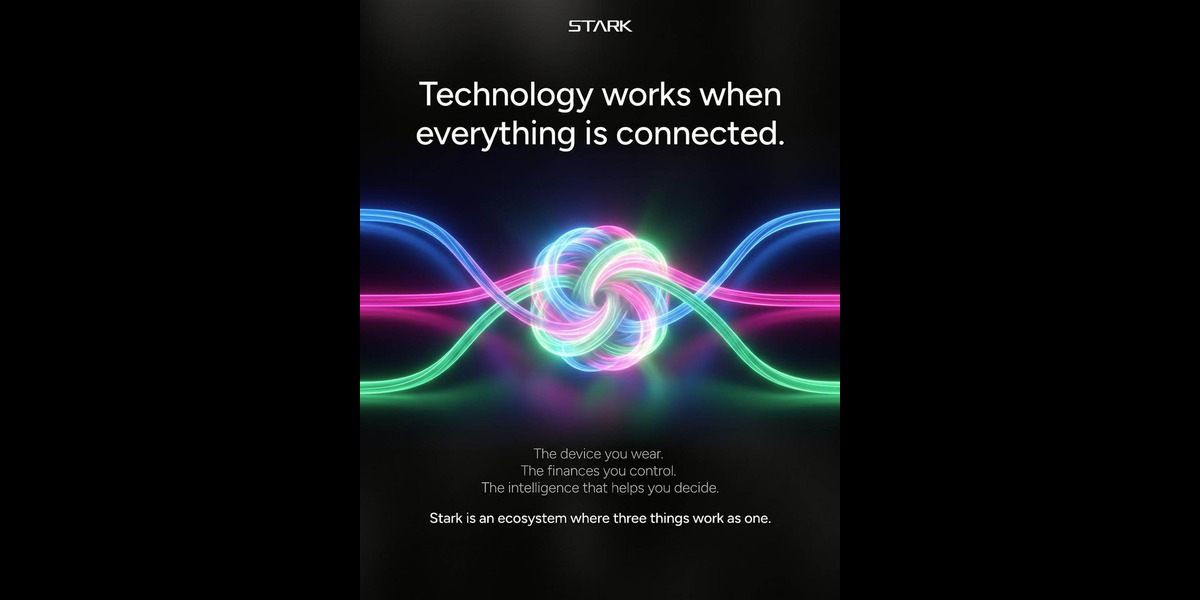
For years, the startup playbook was relatively straightforward: build one standout product, acquire users, scale rapidly, and eventually expand into adjacent markets. Today, however, that formula is evolving. An increasing number of technology companies are pursuing a different strategy—building integrated ecosystems from the outset rather than relying on a single flagship product.
The shift reflects broader changes across the technology sector. As markets become more competitive and customer acquisition costs continue to rise, businesses are looking for ways to diversify revenue streams, increase customer lifetime value, and create stronger competitive moats. Instead of developing isolated products, many companies are investing in interconnected platforms that combine multiple digital services, proprietary infrastructure, and long-term capital allocation strategies.
One company following this approach is STARK, which describes itself as both a venture fund and a venture builder. Rather than concentrating resources on a single technology product, the company is simultaneously developing solutions across artificial intelligence, cybersecurity, digital privacy, and wearable technology. Each product is designed to function as part of a broader ecosystem rather than as an independent business.
The company’s portfolio currently includes STARK GREEN, an AI platform; STARK BLACK, a privacy-focused browser; STARK PINK, a VPN service; and STARK RING, a wearable device. According to the company, investment capital is distributed across these businesses, allowing multiple products to evolve in parallel while sharing technological resources and infrastructure.
This diversified structure is characteristic of the venture builder model, where enterprise value is created through a portfolio of complementary products instead of depending on a single high-growth startup. Rather than pursuing one potential “unicorn”, venture builders seek to generate long-term value through synergies across multiple businesses.
STARK has now entered the next stage of its development by introducing paid subscription plans across its digital services. The move represents a transition from a primarily investment-funded organization toward one supported by recurring commercial revenue.
For technology companies, subscription-based income is generally viewed as a more resilient business model than relying exclusively on external fundraising. Predictable recurring cash flows provide greater financial stability, support long-term product development, and reduce dependence on changing venture capital market conditions. They also allow companies to reinvest in research and development while maintaining strategic flexibility.
Another central component of STARK’s strategy is its digital token, ST. The company says the token is intended to become the common economic layer connecting its various products and services. Beyond facilitating transactions within the ecosystem, ST is also integrated into the company’s affiliate program, where referral rewards are paid in the token.
From a business perspective, this approach gives the digital asset practical utility rather than positioning it solely as a speculative cryptocurrency. It also embeds the partner network directly into the broader platform, making referrals part of the ecosystem’s economic infrastructure instead of a standalone marketing initiative.
More broadly, a unified digital asset can help align incentives among the company, users, developers, and strategic partners, creating a shared framework that supports long-term ecosystem growth.
The company’s financing strategy also reflects a long-term outlook. STARK structures its investment model around a one-year capital commitment period, recognizing that software development, artificial intelligence, and hardware innovation typically require longer development cycles than many traditional businesses.
This approach allows management to focus on execution and product development instead of continuously raising new capital. Longer investment horizons are particularly valuable in emerging technology sectors, where significant research and engineering efforts often precede meaningful commercial revenues.
According to the company, newly raised capital will be allocated toward expanding existing products, strengthening the underlying technology infrastructure, and launching additional services. As recurring subscription revenue grows, those cash flows are expected to provide additional resources for reinvestment across the ecosystem, creating a reinforcing cycle of growth.
Beyond its internal product portfolio, STARK also intends to work with external innovators. The company says it is actively evaluating startups and technology teams whose projects align with its strategic priorities. This hybrid model—combining in-house product development with investments in outside startups—is widely used by international venture builders seeking to accelerate innovation while diversifying execution risk.
The strategy reflects broader trends shaping today’s technology industry. Artificial intelligence, cybersecurity, digital privacy, and wearable devices remain among the fastest-growing segments of the global digital economy. Increasingly, companies are finding that the greatest competitive advantage comes not from individual products but from the connections between them.
Integrated ecosystems create opportunities for cross-selling, improve customer retention, and allow technology platforms to scale more efficiently than standalone applications. As a result, investors are placing greater emphasis on business models capable of generating recurring revenue while supporting multiple complementary products.
STARK’s strategy is built around this principle. Subscription services are designed to establish predictable recurring revenue, the ST token is intended to serve as the ecosystem’s economic infrastructure, long-term capital commitments support sustained product development, and collaboration with external startups broadens the company’s innovation pipeline.
Rather than pursuing growth through a single breakthrough product, the company is positioning itself to build a scalable technology platform spanning several high-growth sectors. As venture capital increasingly shifts toward platform-based businesses, ecosystem-driven models such as this may become an increasingly important blueprint for the next generation of technology companies.
Disclaimer: The information provided is not trading advice, Bitcoinworld.co.in holds no liability for any investments made based on the information provided on this page. We strongly recommend independent research and/or consultation with a qualified professional before making any investment decisions.