
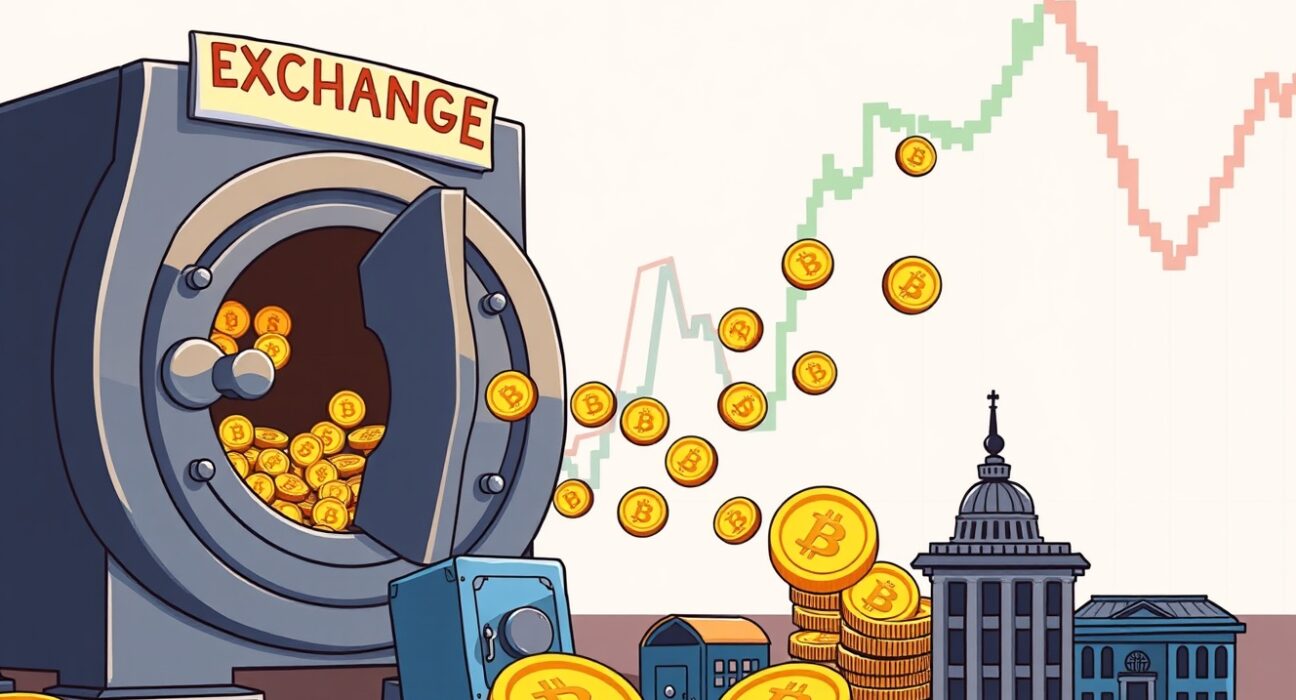
Have you checked where your Bitcoin is lately? You’re not alone. A seismic shift is underway in the crypto landscape, as Bitcoin exchange reserves have experienced a dramatic year-over-year decline of over 400,000 BTC. This massive outflow from centralized platforms signals a profound change in investor behavior and market structure. Let’s unpack what this means for the future of Bitcoin’s price and the broader adoption narrative.
What Does the Drop in Bitcoin Exchange Reserves Actually Mean?
Data from analytics firm Santiment reveals a clear trend: investors are pulling their Bitcoin off exchanges. This movement of over 400,000 BTC—worth tens of billions of dollars—is more than just a statistic. It represents a fundamental shift from short-term trading to long-term holding. When Bitcoin sits on an exchange, it’s often seen as ‘for sale.’ Its removal suggests investors are opting for self-custody, viewing their BTC as a store of value to be secured privately, not a quick-trade asset.
Santiment analysts note this decline can signal an easing of long-term selling pressure. Simply put, less Bitcoin readily available on exchanges means less potential supply to hit the market during sell-offs. This trend has persisted even as Bitcoin’s price trades robustly around the $90,000 level, indicating conviction beyond mere price speculation.
Where is the Bitcoin Going? The Rise of ETFs and Institutional Holdings
If Bitcoin is leaving exchanges, where is it heading? The answer highlights two powerful, parallel trends shaping the market.
- Exchange-Traded Funds (ETFs): Data from sources like Bitbo shows U.S. spot Bitcoin ETFs now hold a staggering 1.5 million BTC. These financial products allow traditional investors to gain exposure without directly managing keys, absorbing a huge portion of the available supply.
- Public Companies & Institutions: Major corporations and funds now hold over one million BTC in their treasuries. This institutional adoption treats Bitcoin as a strategic reserve asset, similar to gold.
Combined, these two groups control approximately 11% of Bitcoin’s total 21 million supply. This institutional wall is a primary driver sucking liquidity from exchanges and into long-term cold storage.
Why Are Investors Pulling Bitcoin Off Exchanges?
The exodus from centralized platforms isn’t random. It’s driven by clear, rational motivations that every crypto holder should understand.
- Security & Self-Sovereignty: The mantra ‘not your keys, not your coins’ has never been more relevant. High-profile exchange failures have taught investors the risks of third-party custody.
- Long-Term ‘HODL’ Mentality: The market is maturing. Many buyers now intend to hold for years, not days. Moving coins to a private wallet is the logical step for this strategy.
- Anticipation of Future Scarcity: With the next Bitcoin halving reducing new supply and institutional demand rising, investors are positioning for potential future price appreciation by securing their coins now.
What Are the Implications for Bitcoin’s Price and Market Health?
This drain on Bitcoin exchange reserves creates a fundamentally different supply dynamic. A lower liquid supply on trading venues can lead to increased price volatility, but often to the upside. When demand meets limited available sell-side liquidity, prices can move sharply. This environment potentially reduces the severity of prolonged bear markets, as the ‘weak hands’ have already moved their coins off exchanges.
However, it also presents a challenge for new entrants. As Bitcoin becomes harder to source from exchanges without moving the price, the role of ETFs as a liquidity conduit becomes even more critical for mainstream adoption.
Actionable Insights for Crypto Investors
What should you do in response to this market shift? Consider these points.
- Evaluate Your Custody Strategy: If you’re holding long-term, research secure self-custody solutions like hardware wallets.
- Understand Market Liquidity: Recognize that large buy or sell orders on exchanges may have a bigger price impact than before.
- Monitor the Data: Keep an eye on exchange reserve metrics as a key indicator of overall market sentiment and potential selling pressure.
In conclusion, the staggering 400,000 BTC drop in Bitcoin exchange reserves is a powerful vote of confidence in Bitcoin’s long-term value. It marks the maturation of the market from a speculative trading arena to an ecosystem where institutional adoption and personal sovereignty are paramount. This supply squeeze, driven by ETFs and corporate treasuries, lays the groundwork for a new era of Bitcoin economics defined by scarcity and institutional validation.
Frequently Asked Questions (FAQs)
Q: Why is a drop in Bitcoin exchange reserves considered bullish?
A: It’s considered bullish because it reduces the immediate selling pressure on the market. Bitcoin held in private wallets or institutional custody is less likely to be sold impulsively, creating a scarcer liquid supply for trading.
Q: Does this mean I should immediately move all my Bitcoin off an exchange?
A: It depends on your goals. If you are actively trading, you need some funds on an exchange. If you are a long-term holder, moving the majority to a secure private wallet is a prudent strategy for security and peace of mind.
Q: How do Bitcoin ETFs affect exchange reserves?
A: ETFs purchase massive amounts of Bitcoin, often directly from exchanges or OTC desks. This process permanently removes that Bitcoin from the exchange’s available supply, as the ETF custodian holds it in deep cold storage.
Q: What is the risk of everyone moving Bitcoin off exchanges?
A: The primary risk is reduced liquidity, which can lead to higher volatility and wider bid-ask spreads, making large trades more expensive to execute. It also centralizes trading activity among fewer participants.
Q: Where can I track Bitcoin exchange reserve data?
A: Several analytics platforms like Glassnode, CryptoQuant, and Santiment provide real-time and historical data on exchange balances, allowing you to monitor these trends yourself.
Did this analysis of the shifting Bitcoin landscape help you? If you found insights on the drop in Bitcoin exchange reserves valuable, share this article with your network on Twitter or LinkedIn to spark the conversation.
To learn more about the latest Bitcoin trends, explore our article on key developments shaping Bitcoin institutional adoption and long-term price action.
Disclaimer: The information provided is not trading advice, Bitcoinworld.co.in holds no liability for any investments made based on the information provided on this page. We strongly recommend independent research and/or consultation with a qualified professional before making any investment decisions.