

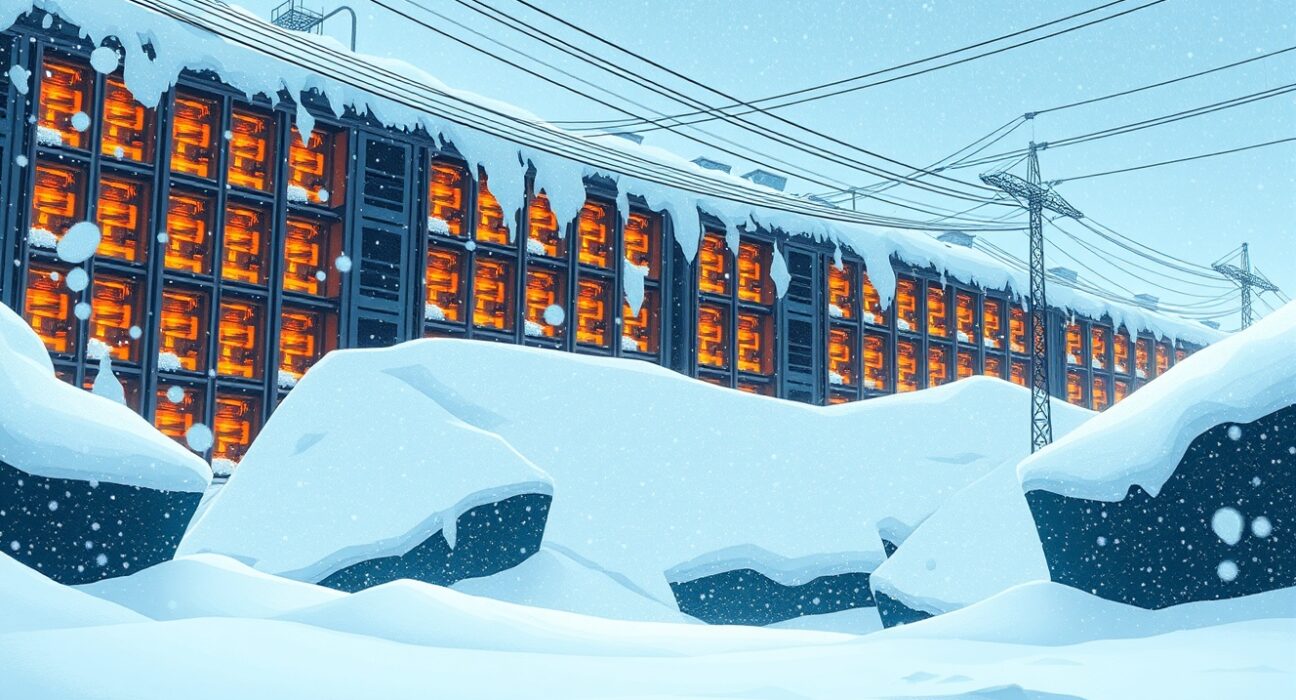
A severe winter storm sweeping across the United States in January 2025 has triggered a significant decline in the Bitcoin hashrate, forcing major mining operations to reduce power consumption amid widespread grid disruptions. This weather event demonstrates the growing vulnerability of cryptocurrency infrastructure to extreme climate conditions, particularly for energy-intensive proof-of-work networks like Bitcoin.
Bitcoin Hashrate Decline: Immediate Network Impact
The Bitcoin network experienced a measurable hashrate reduction of approximately 15-25% during the peak of the winter storm, according to blockchain analytics firms. This decline directly correlates with mining operations in affected states voluntarily curtailing their electricity usage. Consequently, the network witnessed longer average block generation times, temporarily slowing transaction processing. Mining companies in Texas, Wyoming, and Pennsylvania reported the most significant operational reductions. These states collectively represent nearly 40% of the United States’ Bitcoin mining capacity. The hashrate decline represents one of the most substantial weather-related impacts on the Bitcoin network since China’s mining ban in 2021.
Winter Storm Disrupts Power Grid Stability
The severe winter storm created unprecedented strain on regional power grids across multiple states. Grid operators issued emergency alerts, requesting voluntary and mandatory load reductions to prevent widespread blackouts. Bitcoin mining facilities, as large, flexible energy consumers, became primary targets for these reduction requests. Many operations participate in demand response programs. These programs compensate miners for reducing consumption during grid stress. The table below illustrates the relationship between weather severity and mining response:
| Region | Temperature Drop | Estimated Mining Load Reduction | Primary Grid Concern |
|---|---|---|---|
| Texas (ERCOT) | 25°F below average | 30-40% | Natural gas supply freeze |
| Midwest (MISO) | 20°F below average | 20-30% | Coal plant outages |
| Northeast (PJM) | 18°F below average | 15-25% | Transmission line icing |
This grid-first response highlights the evolving relationship between cryptocurrency mining and traditional energy infrastructure. Mining operations increasingly function as grid stabilizers during extreme events.
Expert Analysis: Mining’s Role in Grid Resilience
Energy analysts note that Bitcoin mining’s interruptible load provides unique value to grid operators. Dr. Sarah Chen, an energy economist at Stanford University, explains the dynamic. “Bitcoin mining facilities can power down within minutes, unlike industrial factories or hospitals,” Chen states. “This flexibility makes them ideal participants in demand response markets, especially during winter peaks when heating demand soars.” However, the sudden hashrate reduction reveals network concentration risks. The United States now hosts approximately 38% of global Bitcoin mining. Regional weather events can therefore create noticeable global network effects. This concentration contrasts with the decentralized ideal of cryptocurrency networks.
Historical Context of Weather Impact on Cryptocurrency Mining
Weather disruptions to cryptocurrency mining are not unprecedented, but their scale and frequency are increasing. In 2021, Texas summer heat waves prompted similar mining curtailments. In 2023, hydropower-dependent mining in Sichuan, China, faced reductions during drought conditions. The 2025 winter storm event, however, represents the most severe cold-weather impact on U.S. mining to date. The event underscores several critical trends:
- Geographic Concentration: Mining has consolidated in regions with cheap energy, often making it vulnerable to local climate patterns.
- Energy Interdependence: Mining profitability remains tightly coupled with energy availability and pricing volatility.
- Network Security: Temporary hashrate drops, while recoverable, briefly reduce the computational security of the Bitcoin network against potential 51% attacks.
Network difficulty adjustments will eventually compensate for the hashrate decline. The Bitcoin protocol automatically recalibrates mining difficulty every 2,016 blocks, or approximately every two weeks. This adjustment ensures block times return to the target 10-minute average, regardless of total network hashrate.
Economic and Market Implications
The hashrate decline coincided with noticeable effects on mining economics and broader cryptocurrency markets. Mining profitability metrics, measured by hash price, showed temporary improvement for remaining online miners. These miners received a larger share of block rewards due to reduced competition. However, offline miners faced revenue losses and potential operational challenges, including:
- Fixed cost burdens without corresponding revenue
- Restart logistics and potential hardware issues from rapid shutdowns
- Contractual penalties or lost incentives from power agreements
Bitcoin’s price showed minimal direct reaction to the hashrate news, suggesting mature market understanding of temporary network perturbations. Analysts emphasize that short-term hashrate volatility rarely affects long-term price trends. The network has historically demonstrated remarkable resilience to much larger disruptions.
The Future of Climate-Resilient Mining Infrastructure
Industry leaders are already discussing adaptations to mitigate future weather risks. Proposed solutions include greater geographic diversification of mining operations, investment in on-site backup power generation, and deployment of more energy-efficient mining hardware. Some companies are exploring “stranded” energy sources, like flare gas or remote hydropower, that are less integrated with main grids. These sources might offer greater insulation from widespread weather disruptions. The winter storm of 2025 will likely accelerate these trends, pushing the industry toward more resilient and sustainable operational models.
Conclusion
The severe U.S. winter storm of January 2025 provided a stark demonstration of cryptocurrency infrastructure’s vulnerability to extreme weather. The resulting Bitcoin hashrate decline highlighted the complex interdependence between mining operations, energy grids, and climate patterns. While the network’s difficulty adjustment mechanism ensures long-term stability, the event underscores the need for greater operational resilience. As Bitcoin mining continues to mature as an industry, its ability to navigate climate-related challenges will remain crucial for network security and reliability. The 2025 winter storm serves as both a stress test and a catalyst for innovation in cryptocurrency infrastructure design.
FAQs
Q1: What is Bitcoin hashrate and why does it matter?
A1: Bitcoin hashrate measures the total computational power securing the Bitcoin network. A higher hashrate indicates greater network security against attacks. The temporary decline during the storm slightly reduced this security margin until the network adjusted.
Q2: How long does it take for Bitcoin’s difficulty to adjust after a hashrate drop?
A2: The Bitcoin network automatically adjusts mining difficulty every 2,016 blocks, which typically takes about two weeks. This adjustment brings block production back to the target rate of one block every ten minutes, regardless of the current hashrate.
Q3: Did the winter storm affect Bitcoin transaction times or fees?
A3: Yes, temporarily. Longer block times initially slowed transaction confirmations. However, the mempool (waiting area for unconfirmed transactions) did not become severely congested, and fee spikes were moderate compared to previous network stress events.
Q4: Are Bitcoin miners required to reduce power usage during grid emergencies?
A4: Participation varies. Many large miners voluntarily enroll in demand response programs that compensate them for reducing load. In some extreme cases, grid operators can mandate reductions to prevent blackouts, affecting all large energy consumers, including miners.
Q5: Could this happen to other cryptocurrencies?
A5: Proof-of-work cryptocurrencies with concentrated mining in affected regions could experience similar impacts. Proof-of-stake networks, which validate transactions through token ownership rather than computational work, are not affected by hashrate fluctuations and consume far less energy.
Disclaimer: The information provided is not trading advice, Bitcoinworld.co.in holds no liability for any investments made based on the information provided on this page. We strongly recommend independent research and/or consultation with a qualified professional before making any investment decisions.
