

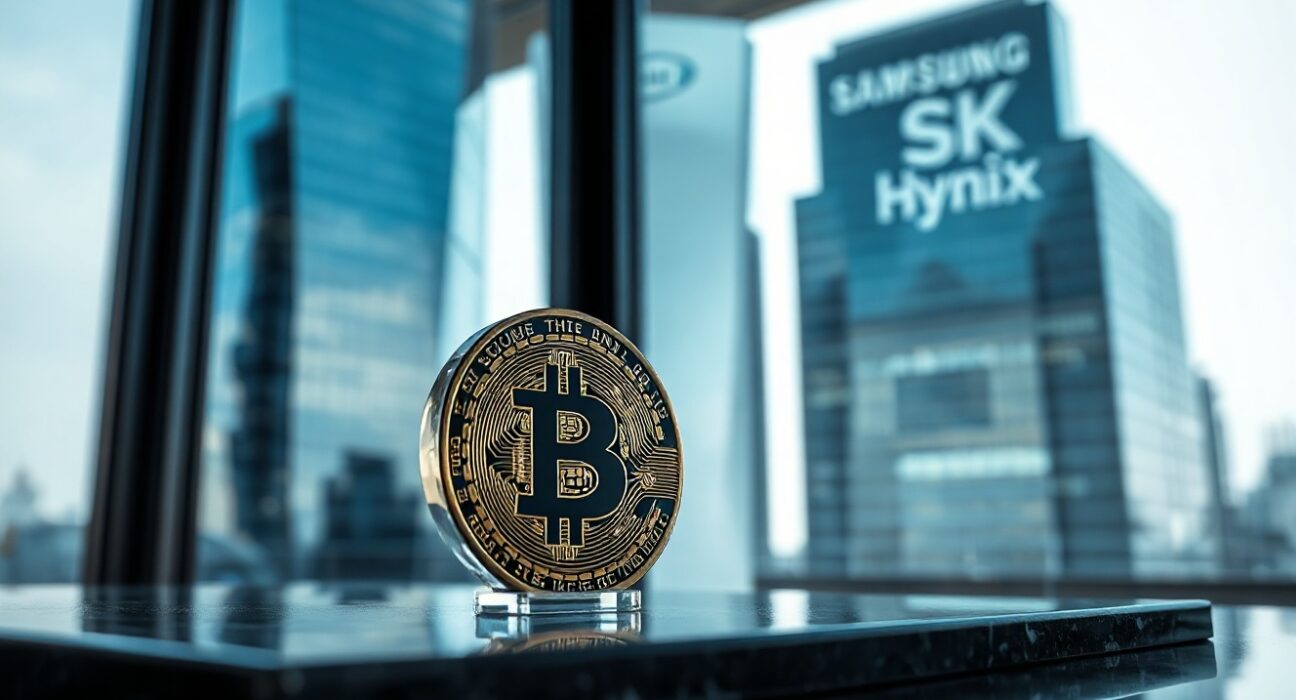
Bitcoin (BTC) has once again surpassed the $1.2 trillion market capitalization mark, pushing its valuation ahead of South Korean tech giants Samsung Electronics and SK Hynix. The milestone, reported by Cointelegraph and based on data from the global corporate market cap ranking site Infinite Market Cap, underscores Bitcoin’s continued dominance as a store of value and its growing weight in the global financial landscape.
Bitcoin’s Valuation in Context
As of the latest data, Bitcoin’s market cap of approximately $1.2 trillion places it above Samsung Electronics (around $370 billion) and SK Hynix (approximately $130 billion), two of the world’s largest semiconductor manufacturers. This comparison highlights a recurring trend: Bitcoin’s valuation often rivals or exceeds that of major multinational corporations during bullish market cycles.
This is not the first time Bitcoin has surpassed these corporate giants. Similar milestones occurred during previous market rallies in 2021 and early 2024, when Bitcoin’s price surged above $60,000. However, the current achievement is notable because it comes amid a period of renewed institutional interest, regulatory clarity in several jurisdictions, and growing adoption of Bitcoin as a treasury asset by public companies.
What Drives Bitcoin’s Market Cap?
Bitcoin’s market capitalization is calculated by multiplying its current price by the total number of coins in circulation (approximately 19.5 million). Unlike corporate valuations, which are based on earnings, assets, and future growth projections, Bitcoin’s market cap reflects market sentiment, supply-demand dynamics, and its perceived role as a hedge against inflation and currency debasement.
The recent price rally, which pushed Bitcoin above $60,000, has been fueled by several factors: the approval of spot Bitcoin exchange-traded funds (ETFs) in the United States, expectations of a more favorable regulatory environment, and macroeconomic conditions such as persistent inflation and geopolitical uncertainty.
Implications for Investors and the Market
For investors, Bitcoin’s ability to consistently rank among the world’s largest assets by market cap reinforces its legitimacy as an alternative asset class. It also raises questions about how to value a decentralized digital asset compared to traditional equity markets.
For the broader cryptocurrency ecosystem, Bitcoin’s market cap milestone serves as a bellwether for market health. A rising Bitcoin market cap often correlates with increased liquidity and investor confidence across the entire digital asset space, including altcoins and decentralized finance (DeFi) projects.
Conclusion
Bitcoin’s latest market cap milestone, surpassing Samsung Electronics and SK Hynix, is a significant indicator of its growing acceptance and valuation in the global economy. While such comparisons are not directly analogous — Bitcoin is a commodity-like asset, not a company — they provide a useful benchmark for understanding its scale. As the cryptocurrency market continues to mature, Bitcoin’s ability to maintain or exceed these valuations will depend on regulatory developments, macroeconomic trends, and ongoing adoption by both retail and institutional investors.
FAQs
Q1: How is Bitcoin’s market cap calculated?
Bitcoin’s market cap is calculated by multiplying its current price by the total number of bitcoins that have been mined (circulating supply). It does not represent a company’s valuation but rather the total dollar value of all bitcoins in existence.
Q2: Why does Bitcoin’s market cap sometimes exceed that of major companies?
Bitcoin’s price is driven by supply and demand dynamics, investor sentiment, and its perceived value as a digital store of wealth. During bullish market cycles, its price can rise sharply, pushing its market cap above that of many large corporations.
Q3: Does Bitcoin’s market cap affect its price?
Market cap is a result of price, not a driver of it. However, a higher market cap can signal greater market maturity and liquidity, which may attract larger institutional investors and further stabilize the asset.
Disclaimer: The information provided is not trading advice, Bitcoinworld.co.in holds no liability for any investments made based on the information provided on this page. We strongly recommend independent research and/or consultation with a qualified professional before making any investment decisions.
