
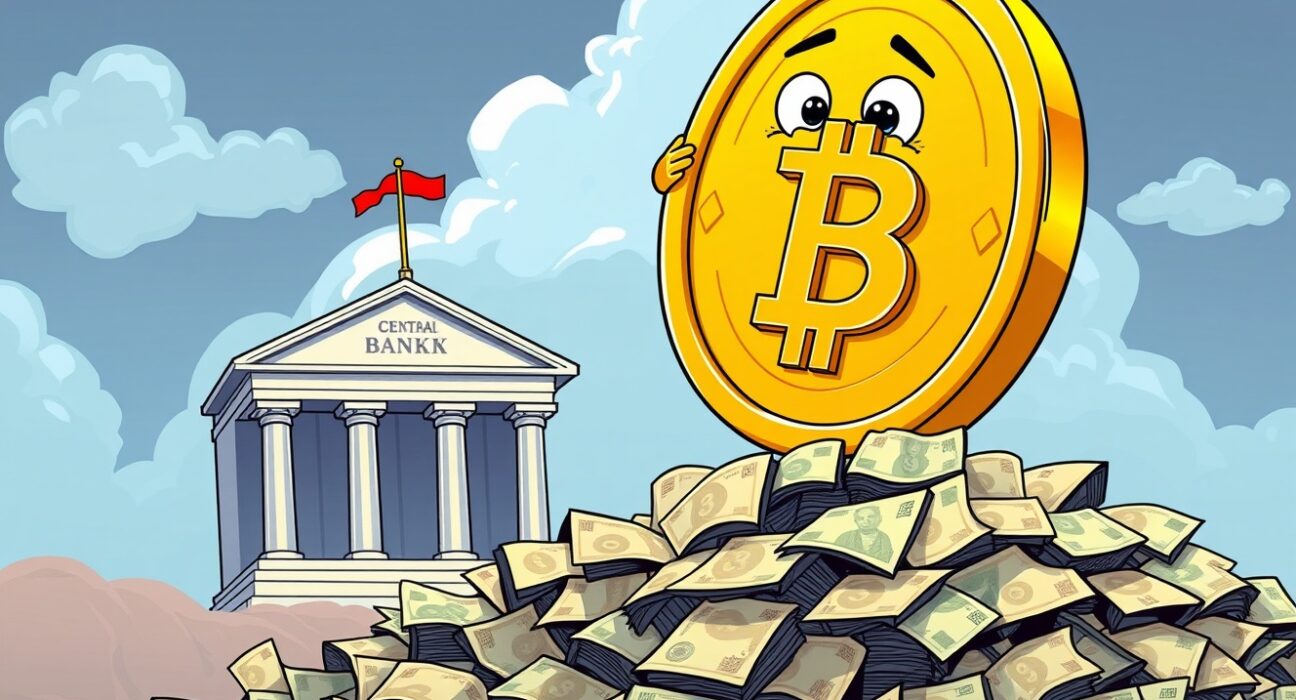
Could a central bank’s controversial policy be the rocket fuel for the next Bitcoin bull run? BitMEX co-founder Arthur Hayes has dropped a bombshell prediction, directly linking the Bank of Japan’s monetary strategy to a potential seven-figure future for Bitcoin. His analysis presents a compelling, if audacious, case for a stunning Bitcoin price prediction of $1 million. Let’s unpack the logic behind this bold forecast.
What is Hayes’s $1 Million Bitcoin Price Prediction Based On?
Arthur Hayes, a respected and often provocative voice in crypto, made his case on social media platform X. His argument hinges on a single, powerful directive: “Do not bet against the Bank of Japan.” Hayes points to the BOJ’s long-standing commitment to negative real interest rates as the core catalyst. This policy, designed to stimulate Japan’s economy, effectively makes holding yen costly over time. Hayes argues this creates immense pressure for capital to seek harder, non-depreciating assets. Therefore, his Bitcoin price prediction isn’t just hopeful thinking; it’s framed as a direct consequence of global monetary flows.
How Do Negative Rates Fuel a Bitcoin Surge?
To understand this potential chain reaction, we need to grasp the mechanics. Negative real interest rates mean inflation outpaces the nominal interest rate. Savers and institutions see the purchasing power of their yen erode. This triggers a search for alternative stores of value. Hayes forecasts this will lead to two major outcomes:
- A drastically weaker yen, potentially reaching 200 yen per U.S. dollar.
- A monumental capital flight into assets perceived as inflation-resistant.
Bitcoin, with its fixed supply of 21 million coins, is positioned as a prime beneficiary. The logic is clear: if Japanese capital, and indeed global capital anticipating further currency debasement, moves even a fraction into Bitcoin, the demand shock could be unprecedented. This forms the bedrock of Hayes’s ambitious Bitcoin price prediction.
Is This Bitcoin Price Prediction Realistic or Pure Speculation?
While the narrative is compelling, it’s crucial to weigh the challenges. A Bitcoin price prediction of $1 million represents a nearly 15x increase from all-time highs. Such a move would require:
- Sustained BOJ policy without major reversal.
- Massive institutional adoption from Japanese and international investors.
- Regulatory clarity in major markets to facilitate large-scale entry.
Furthermore, other macroeconomic factors, like U.S. Federal Reserve policy, would also play a critical role. Hayes’s scenario is a specific, focused lens on one powerful driver, but the real-world path is inevitably more complex.
What Can Investors Learn From This Analysis?
Regardless of whether the $1 million target is hit, Hayes’s perspective offers actionable insights. It reinforces Bitcoin’s growing narrative as a monetary policy hedge. For investors, the key takeaway is to monitor global central bank actions, not just crypto-specific news. The potential weakening of major fiat currencies like the yen could create tailwinds for decentralized digital assets. Diversifying into Bitcoin can be seen as a strategic move to mitigate the risks of aggressive monetary easing elsewhere in the world.
In conclusion, Arthur Hayes has connected dots between traditional finance and crypto in a provocative way. His stunning Bitcoin price prediction of $1 million rests on the premise that the Bank of Japan’s negative rate policy will unleash a wave of capital seeking an exit from currency debasement. While the journey will have volatility, this analysis highlights a fundamental shift: Bitcoin is increasingly analyzed through the lens of global macroeconomics, not just technological adoption. The era of crypto as a standalone asset class is fading, replaced by its integration into the broader narrative of 21st-century finance.
Frequently Asked Questions (FAQs)
What did Arthur Hayes predict about Bitcoin?
Arthur Hayes predicted that the Bank of Japan’s negative interest rate policy could drive Bitcoin’s price to $1 million, alongside a significant weakening of the Japanese yen.
How do negative interest rates affect Bitcoin?
Negative real interest rates erode the value of holding a currency like the yen. This can push investors to seek alternative stores of value, such as Bitcoin, which has a fixed supply and is seen as a hedge against inflation and currency devaluation.
Is the Bank of Japan still using negative rates?
As of the latest updates, the BOJ has maintained an ultra-loose monetary policy, though it has made minor adjustments. The core environment of very low rates persists, which is the foundation of Hayes’s analysis.
What would Bitcoin at $1 million mean for its market cap?
A $1 million Bitcoin price would give it a total market capitalization of approximately $20 trillion, rivaling the current market cap of gold and representing a massive shift in global asset allocation.
Should I invest based on this prediction?
This prediction is a macroeconomic analysis, not financial advice. Always conduct your own research, understand the high volatility of cryptocurrencies, and consider your personal risk tolerance before making any investment decisions.
What other factors could influence Bitcoin’s price?
Bitcoin’s price is influenced by many factors, including U.S. monetary policy, regulatory developments worldwide, institutional adoption rates, technological advancements, and overall market sentiment.
Did this analysis of a potential macro-driven Bitcoin boom change your perspective? Share this article with fellow investors on X or your favorite social media platform to continue the conversation about the future of finance.
To learn more about the latest Bitcoin trends, explore our article on key developments shaping Bitcoin institutional adoption.
Disclaimer: The information provided is not trading advice, Bitcoinworld.co.in holds no liability for any investments made based on the information provided on this page. We strongly recommend independent research and/or consultation with a qualified professional before making any investment decisions.