
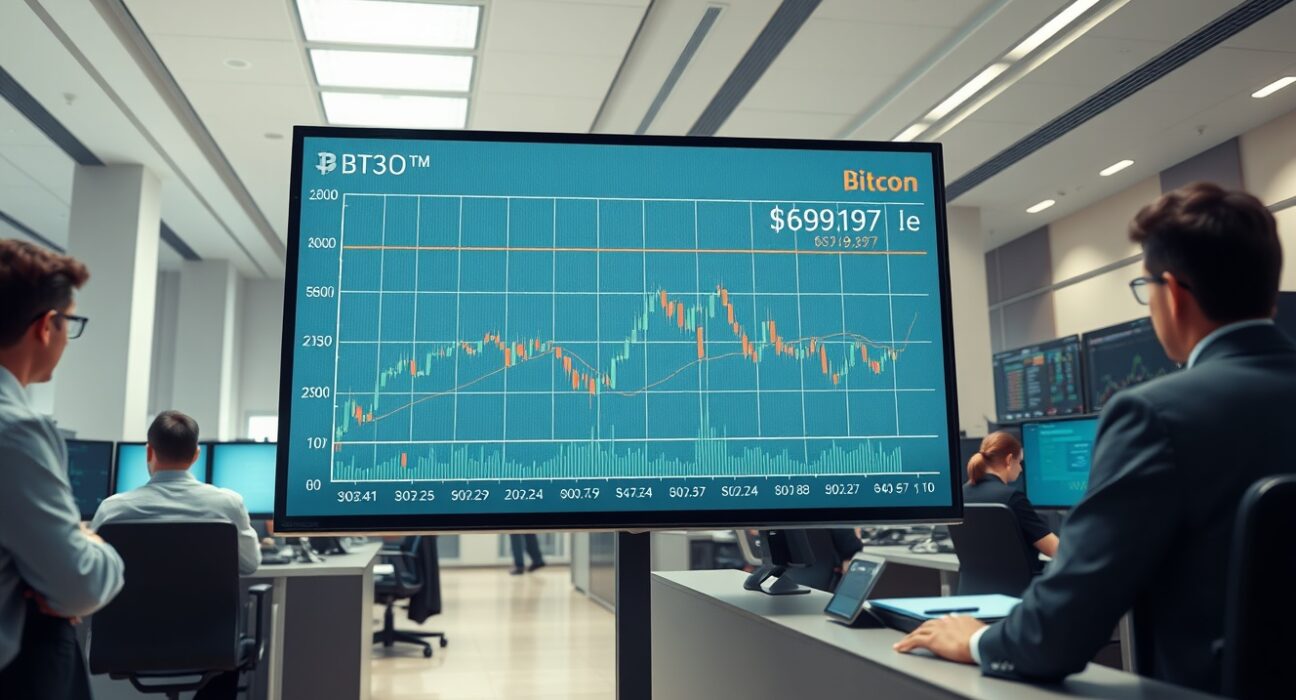
Global cryptocurrency markets face a critical inflection point as Bitcoin approaches $69,197, a level that could trigger nearly $1 billion in short position liquidations according to Coinglass data from March 2025. This massive concentration of leveraged bets creates unprecedented market tension across major centralized exchanges. Meanwhile, a drop below $65,907 threatens $232.59 million in long positions, creating a volatile trading corridor with significant implications for Bitcoin’s price discovery mechanism.
Bitcoin Liquidation Mechanics and Market Structure
Liquidation events represent forced position closures when traders cannot meet margin requirements. These events typically accelerate price movements in their triggering direction. The current $986.47 million short liquidation cluster above $69,197 reflects substantial bearish sentiment among leveraged traders. Conversely, the $232.59 million long liquidation zone below $65,907 indicates where bullish leverage becomes unsustainable. This asymmetric risk distribution highlights prevailing market psychology and positioning.
Major exchanges including Binance, Bybit, OKX, and Deribit host these positions. Each platform employs slightly different liquidation mechanisms, but all follow the same fundamental principle. When Bitcoin’s price breaches specific thresholds, automated systems begin closing positions. This process can create cascading effects as liquidations trigger further price movements. Market participants closely monitor these levels because they often serve as technical inflection points.
Historical Context of Crypto Liquidations
Previous Bitcoin cycles provide valuable context for understanding current liquidation risks. During the 2021 bull market, similar liquidation clusters preceded significant volatility events. For instance, the May 2021 correction saw over $8 billion in liquidations within 24 hours. That event reshaped market structure and risk management practices across the industry. Current liquidation levels, while substantial, remain below historical extremes when adjusted for market capitalization growth.
The cryptocurrency derivatives market has matured significantly since 2021. Exchange risk management systems now incorporate more sophisticated circuit breakers and insurance funds. Additionally, institutional participation has increased, potentially providing more stability during volatile periods. However, the fundamental dynamics of leveraged trading remain unchanged. High leverage combined with Bitcoin’s inherent volatility creates persistent liquidation risks that market participants must navigate.
Expert Analysis of Market Implications
Market analysts emphasize several key considerations regarding the current liquidation landscape. First, the concentration of shorts above $69,197 suggests many traders anticipate resistance at previous all-time high levels. This positioning reflects technical analysis patterns and psychological barriers common in cryptocurrency markets. Second, the relatively smaller long liquidation zone indicates more conservative bullish positioning, possibly reflecting lessons learned from previous volatile episodes.
Third, exchange order book depth around these levels becomes crucial. Thin liquidity can exacerbate price movements during liquidation events, potentially creating exaggerated spikes or drops. Major exchanges typically maintain deeper liquidity near significant technical levels, but unexpected volatility can still overwhelm normal market functioning. Finally, the timing of potential liquidations matters significantly. Asian, European, and American trading sessions exhibit different liquidity profiles that can influence how liquidation cascades develop.
Risk Management Strategies for Traders
Professional traders employ various strategies to navigate high-liquidation environments. These approaches include:
- Position sizing adjustments: Reducing leverage as prices approach known liquidation clusters
- Hedging techniques: Using options or perpetual swaps to limit directional exposure
- Monitoring exchange metrics: Tracking funding rates, open interest, and liquidation heatmaps
- Diversification across exchanges: Spreading positions to mitigate platform-specific risks
Retail traders face particular challenges during volatile periods. Educational resources from exchanges and trading platforms increasingly emphasize risk management fundamentals. Many platforms now offer simulated trading environments where users can practice navigating liquidation scenarios without real capital at risk. Regulatory developments in various jurisdictions also influence how exchanges manage liquidation processes and protect users.
Market Infrastructure and Systemic Considerations
The cryptocurrency market’s underlying infrastructure plays a crucial role in managing liquidation events. Exchange matching engines must process thousands of orders per second during volatile periods. Network congestion on underlying blockchains can complicate withdrawals and deposits when traders need to move funds quickly. Additionally, the interconnectedness of centralized and decentralized finance creates complex risk transmission channels.
Recent infrastructure improvements include enhanced risk management frameworks, better collateral verification systems, and more transparent liquidation processes. Many exchanges now provide real-time liquidation data through public APIs, allowing third-party services to build analytical tools. This transparency represents significant progress from earlier market phases where liquidation mechanisms were less visible to ordinary participants.
Comparative Analysis of Exchange Approaches
Different exchanges employ varying methodologies for handling liquidations. The table below summarizes key differences:
| Exchange | Liquidation Method | Insurance Fund | Auto-Deleveraging |
|---|---|---|---|
| Binance | Partial liquidation system | Yes | Rarely triggered |
| Bybit | Full position closure | Yes | Yes |
| OKX | Hybrid approach | Yes | Yes |
| Deribit | Options-specific mechanisms | Yes | No |
These structural differences influence how liquidation events unfold across platforms. During previous volatility episodes, exchanges with more robust risk management systems generally experienced smoother operations. The industry continues evolving its approaches as market complexity increases and regulatory expectations develop.
Conclusion
The Bitcoin liquidation landscape presents significant near-term market risks with nearly $1 billion in short positions vulnerable above $69,197. This concentration reflects broader market sentiment and positioning dynamics that could influence Bitcoin’s price trajectory. While market infrastructure has improved substantially, the fundamental tension between leveraged trading and cryptocurrency volatility persists. Market participants must remain vigilant about risk management as prices approach these critical technical levels. The evolving Bitcoin liquidation scenario will likely provide important insights into market maturity and the continuing development of cryptocurrency trading ecosystems.
FAQs
Q1: What triggers a liquidation in cryptocurrency trading?
A liquidation occurs when a trader’s position loses enough value that their remaining collateral cannot cover potential losses. Exchanges automatically close these positions to prevent negative balances.
Q2: Why are liquidation levels concentrated around specific prices?
Traders often place stops and leverage positions around significant technical levels like previous highs or lows. This collective behavior creates liquidation clusters at predictable price points.
Q3: How do liquidations affect Bitcoin’s price?
Liquidations can accelerate price movements as forced selling or buying enters the market. Large liquidations sometimes trigger cascading effects that amplify volatility.
Q4: Can traders avoid liquidation?
Traders can manage liquidation risk through careful position sizing, using stop-loss orders, maintaining adequate collateral, and avoiding excessive leverage during volatile periods.
Q5: How have exchanges improved liquidation processes?
Modern exchanges employ insurance funds, partial liquidation systems, better risk management tools, and more transparent processes than early cryptocurrency trading platforms.
Disclaimer: The information provided is not trading advice, Bitcoinworld.co.in holds no liability for any investments made based on the information provided on this page. We strongly recommend independent research and/or consultation with a qualified professional before making any investment decisions.