

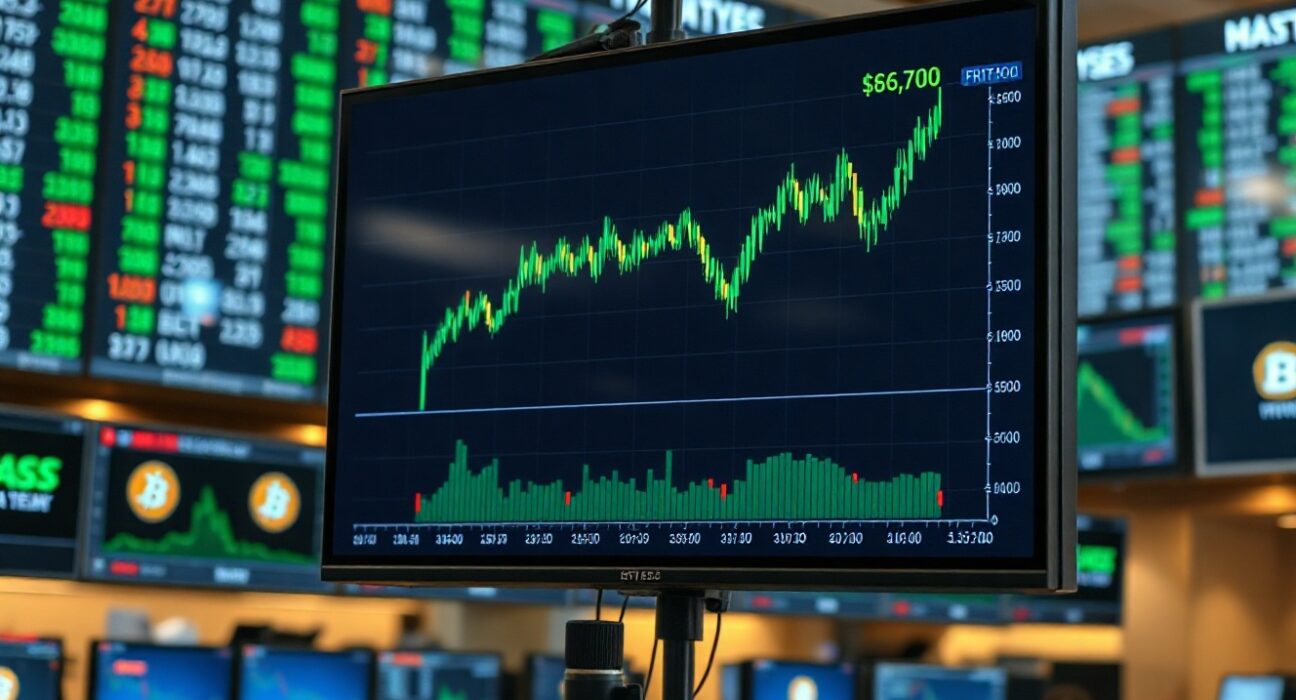
Bitcoin’s price action is approaching a critical juncture that could force a wave of forced selling across major crypto exchanges. According to data from CoinGlass, a move above $65,763 would liquidate approximately $202.63 million in short positions, while a drop below $64,316 would trigger around $161.23 million in long liquidations. These levels represent significant liquidity pools that could amplify price swings in either direction.
Understanding Liquidation Clusters
Liquidation occurs when a trader’s margin balance falls below the maintenance requirement, leading exchanges to close positions automatically. Large clusters of liquidations often act as magnets for price movement, as they create cascading effects that can accelerate trends. The data from CoinGlass aggregates open interest and leverage across major centralized platforms, offering a snapshot of where the market is most vulnerable.
For traders, these levels are more than just technical markers—they represent potential volatility triggers. A break above $65,763 could see short sellers forced to buy back Bitcoin, adding upward pressure. Conversely, a slide below $64,316 might lead to long positions being unwound, exacerbating downside moves. The proximity of these levels suggests that the market is coiled for a decisive move.
Market Context and Implications
Bitcoin has been trading in a relatively tight range over the past week, with volatility compressing as investors weigh macroeconomic signals and ETF flows. The liquidation data highlights how leveraged positioning can influence short-term price dynamics, especially when the market is near key thresholds. This is particularly relevant for retail and institutional traders who monitor open interest to gauge sentiment.
It’s important to note that liquidation data is dynamic and can change rapidly as new positions open or close. The figures provided by CoinGlass reflect a specific point in time and may not represent the exact amount that would be liquidated if the price were to hit those levels. Nonetheless, the concentration of leverage around these price points is a clear indicator of market sentiment.
Why This Matters to Bitcoin Investors
For everyday investors, understanding liquidation levels can provide insight into potential volatility. A sudden price spike or drop could be amplified by forced liquidations, leading to wider-than-expected moves. This is especially relevant for those using stop-loss orders or trading on margin, as slippage can occur during rapid price changes.
Moreover, the presence of large liquidation clusters often signals that the market is overheated or that a breakout is imminent. While not a guarantee of direction, these levels are closely watched by algorithmic traders and market makers, making them self-fulfilling in some cases. Investors should approach these levels with caution and consider risk management strategies.
Conclusion
Bitcoin’s price is at a pivotal point, with $65,763 and $64,316 serving as key thresholds that could trigger significant liquidation events. While the data from CoinGlass provides a useful roadmap for potential volatility, it is not a definitive predictor of market direction. As always, traders and investors should conduct their own research and consider the broader market context before making decisions.
FAQs
Q1: What are liquidations in crypto trading?
Liquidations occur when a trader’s position is automatically closed by the exchange due to insufficient margin. This happens when the market moves against the trader’s position, and the account balance falls below the required maintenance margin.
Q2: How does CoinGlass calculate liquidation levels?
CoinGlass aggregates open interest and leverage data from major centralized exchanges to estimate the total value of positions that would be liquidated at specific price levels. The figures are based on current market conditions and can change as traders open or close positions.
Q3: Should I trade based on liquidation levels?
Liquidation levels are one of many tools traders use to gauge potential volatility. They should not be used in isolation. It’s essential to combine them with technical analysis, market news, and a solid risk management plan.
Disclaimer: The information provided is not trading advice, Bitcoinworld.co.in holds no liability for any investments made based on the information provided on this page. We strongly recommend independent research and/or consultation with a qualified professional before making any investment decisions.
