
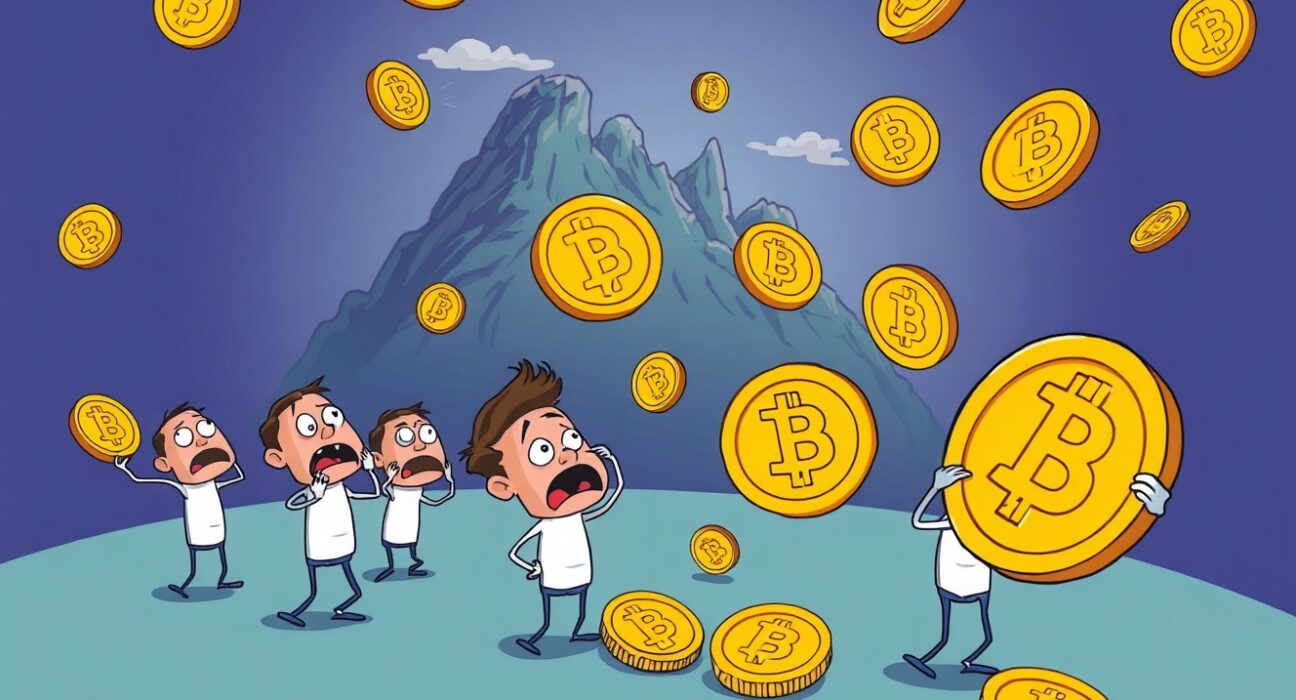
The cryptocurrency market is a dynamic landscape, often revealing its deepest sentiments through the actions of its participants. Recently, a significant shift has been observed among Bitcoin short-term holders, signaling a crucial moment for the market. For the first time in four months, these investors have begun selling their Bitcoin at a loss, a phenomenon often termed “capitulation.” This development, highlighted by CryptoQuant contributor gaah_im, suggests a temporary weakening of confidence among speculative investors who are particularly sensitive to price volatility. What exactly does this mean for the future of Bitcoin and the broader crypto ecosystem?
Understanding Bitcoin Short-Term Holders and Capitulation
Who exactly are Bitcoin short-term holders, and why does their behavior matter so much? Generally, these are investors who have held their Bitcoin for less than 155 days. They are often seen as more speculative, reacting quickly to price movements, and are less resilient to market downturns compared to long-term holders. When these investors start selling their assets below their purchase price, it’s known as capitulation.
- Capitulation is a term that describes a period of intense selling pressure, where investors, often out of fear or exhaustion, give up hope and sell their holdings at a loss.
- This action often marks a potential bottom or a significant turning point in a market cycle, as the weakest hands are flushed out.
- For Bitcoin short-term holders, this recent selling spree at a loss indicates that the recent price corrections have tested their conviction, pushing some to exit their positions to prevent further losses.
What Triggered This Shift Among Bitcoin Short-Term Holders?
The recent capitulation among Bitcoin short-term holders didn’t happen in a vacuum. Several factors could contribute to such a significant shift in market sentiment. The overall macroeconomic environment, including interest rate hikes and inflation concerns, often influences risk appetite across all financial markets, including crypto. Moreover, recent Bitcoin price fluctuations and periods of consolidation might have worn down the patience of these more volatile investors.
- Market Volatility: Bitcoin has experienced periods of heightened volatility, leading to sharp price drops that can quickly erase gains for short-term positions.
- Macroeconomic Headwinds: Global economic uncertainties can lead investors to de-risk, pulling capital from speculative assets like cryptocurrencies.
- Profit-Taking by Others: While short-term holders are selling at a loss, long-term holders might be taking profits, adding to selling pressure and further impacting short-term sentiment.
This dynamic creates a challenging environment where quick gains are harder to come by, forcing Bitcoin short-term holders to re-evaluate their positions.
Implications for the Broader Bitcoin Market
When Bitcoin short-term holders capitulate, it typically has several key implications for the wider market. While it signals temporary weakness and fear, it can also be a cleansing event, removing over-leveraged positions and creating a healthier foundation for future growth.
- Potential for a Market Bottom: Historically, periods of significant capitulation have often preceded market bottoms, as the selling pressure from weak hands subsides.
- Shift in Ownership: Assets often transfer from short-term, speculative hands to long-term, conviction-driven investors during such phases, strengthening the market’s underlying structure.
- Reduced Speculative Pressure: With fewer short-term traders, the market might experience less impulsive buying and selling, potentially leading to more stable price action in the immediate future.
However, it’s crucial to remember that market recoveries are not instantaneous. The path forward might still involve periods of consolidation and testing of support levels before a sustained uptrend can emerge.
Navigating the Current Landscape: What Should Investors Consider?
For those looking at the market, understanding the behavior of Bitcoin short-term holders offers valuable insights. While the current environment presents challenges, it also highlights potential opportunities for long-term investors.
- Focus on Long-Term Conviction: If you believe in Bitcoin’s fundamental value proposition, periods of short-term capitulation can offer attractive entry points.
- Risk Management is Key: Always invest within your risk tolerance. Volatility remains a constant in the crypto market.
- Stay Informed: Keep an eye on on-chain metrics and broader market analysis to gauge sentiment and identify potential shifts.
This period serves as a reminder that patience and a clear investment strategy are paramount in navigating the often-turbulent waters of cryptocurrency.
Conclusion
The recent capitulation among Bitcoin short-term holders marks a pivotal moment, reflecting a temporary dip in speculative confidence. While this can be unsettling, it’s a natural part of market cycles, often paving the way for more robust, long-term growth. By understanding these dynamics, investors can approach the market with greater clarity and strategic foresight. The crypto landscape is continuously evolving, and informed decisions are always the most powerful tool in your investment arsenal.
Frequently Asked Questions (FAQs)
1. What does “capitulation” mean in the context of Bitcoin?
Capitulation refers to a period where investors, often due to fear or exhaustion, sell their assets at a loss. For Bitcoin, it means that many holders are selling their coins for less than what they paid for them, typically indicating a significant market downturn or bottoming process.
2. Who are Bitcoin short-term holders?
Bitcoin short-term holders are investors who have held their Bitcoin for less than 155 days. They are generally more reactive to price changes and are often considered more speculative than long-term holders.
3. Is Bitcoin short-term holder capitulation a bad sign for the market?
While it indicates current weakness and fear, historically, significant capitulation events have often preceded market bottoms. It can be seen as a “cleansing” event, removing weak hands and setting the stage for future recovery, though the immediate aftermath can still be volatile.
4. How does this impact long-term Bitcoin investors?
Long-term investors, who hold Bitcoin for more than 155 days, are typically less affected by short-term price swings and capitulation events. In fact, these periods can sometimes present opportunities for long-term holders to accumulate more Bitcoin at lower prices.
5. How often do Bitcoin short-term holders capitulate?
Capitulation events among Bitcoin short-term holders are not constant but occur periodically during significant market downturns or corrections. The recent event is notable because it’s the first time in four months, highlighting the intensity of the current market pressure.
Share Your Insights!
Did this analysis help you understand the current Bitcoin market dynamics? Share this article with your fellow crypto enthusiasts and investors to spread awareness about the crucial behavior of Bitcoin short-term holders!
To learn more about the latest explore our article on key developments shaping Bitcoin price action.
Disclaimer: The information provided is not trading advice, Bitcoinworld.co.in holds no liability for any investments made based on the information provided on this page. We strongly recommend independent research and/or consultation with a qualified professional before making any investment decisions.