
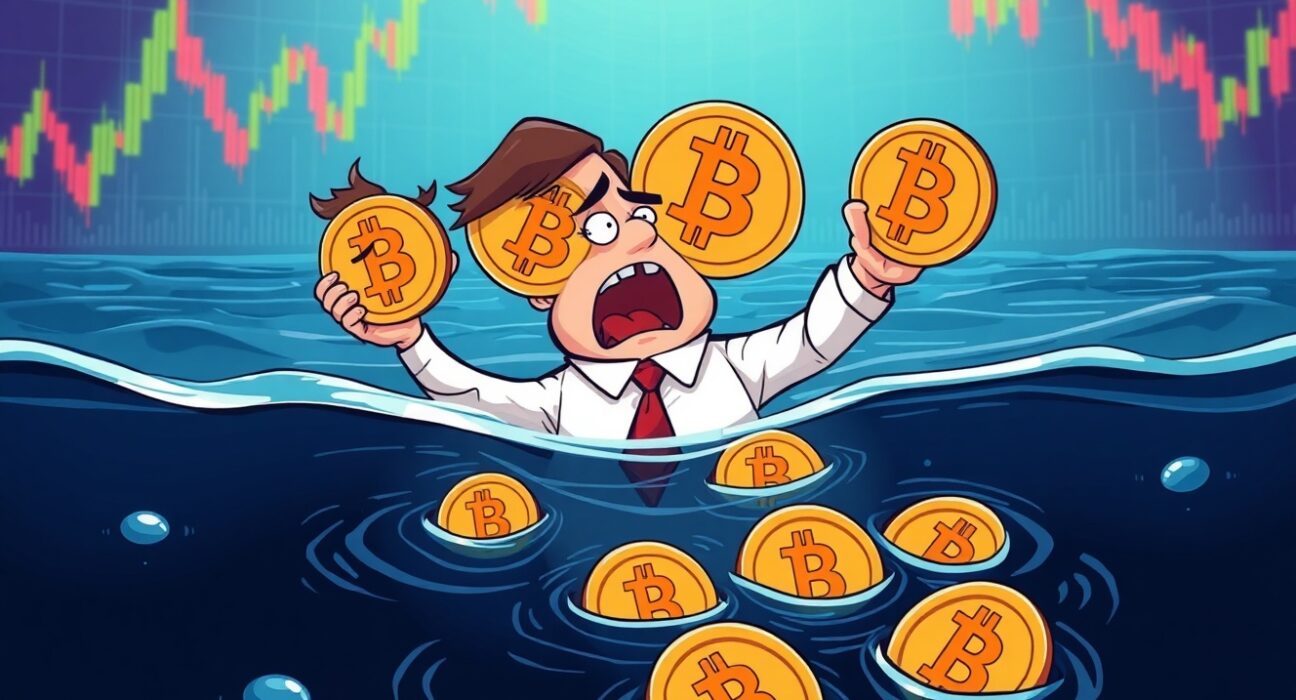
Are Bitcoin short-term holders facing their toughest challenge since the FTX collapse? Recent data reveals a startling reality: the amount of Bitcoin held at a loss by short-term holders has surged to 2.8 million BTC, marking the highest level since November 2022. This dramatic development signals potential turbulence ahead for cryptocurrency investors and the broader digital asset market.
What Does This Bitcoin Short-Term Holder Crisis Mean?
Short-term holders, defined as wallets holding Bitcoin for less than 155 days, are currently experiencing unprecedented pressure. The 2.8 million BTC held at a loss represents a significant portion of circulating supply, creating potential selling pressure that could impact market stability. This situation becomes even more concerning when we consider that long-term holders have been reducing their positions simultaneously.
The current environment presents several critical challenges for Bitcoin short-term holders:
- Maximum pain threshold – Many investors bought near recent highs
- Psychological pressure – Watching unrealized losses mount daily
- Market volatility – Increased likelihood of panic selling
- Opportunity cost – Capital tied up in losing positions
How Are Long-Term Holders Reacting to This Situation?
While Bitcoin short-term holders struggle with mounting losses, long-term investors are making strategic moves. Glassnode data shows LTH Bitcoin holdings decreased from 14.75 million in July to 14.3 million in November. This gradual reduction suggests experienced investors are taking profits or reallocating capital during this period of market uncertainty.
The behavior of Bitcoin short-term holders often contrasts sharply with long-term strategies. Where new investors might panic sell during downturns, veteran holders typically view these conditions as accumulation opportunities. However, the current scale of losses among Bitcoin short-term holders could create ripple effects throughout the entire cryptocurrency ecosystem.
What Historical Patterns Tell Us About Recovery
Historical data provides valuable context for understanding the current Bitcoin short-term holder situation. Previous cycles show that when STH losses reach extreme levels, markets often approach significant turning points. The current 2.8 million BTC figure surpasses even the levels seen during major previous corrections, suggesting we might be nearing a potential reversal zone.
Key recovery indicators to watch include:
- Volume patterns – Increasing buying volume at current levels
- Exchange flows – Reduction in Bitcoin moving to exchanges
- Miner behavior – Decreased selling pressure from miners
- Institutional interest – Renewed accumulation by large players
Actionable Insights for Navigating Current Market Conditions
For current Bitcoin short-term holders facing losses, several strategies can help manage risk and position for recovery. First, avoid making emotional decisions based on short-term price movements. Second, consider dollar-cost averaging to reduce average entry prices. Third, maintain a long-term perspective rather than focusing on daily fluctuations.
The situation for Bitcoin short-term holders, while challenging, also presents unique opportunities. Market extremes often create the best entry points for disciplined investors. Those who maintain composure during these periods typically achieve the strongest returns when markets eventually recover.
Conclusion: Navigating the Storm as Bitcoin Short-Term Holders
The current environment presents significant challenges for Bitcoin short-term holders, with 2.8 million BTC held at losses reaching post-FTX highs. However, history shows that such extreme conditions often precede market turning points. By understanding market dynamics, maintaining discipline, and focusing on long-term fundamentals, investors can navigate this volatile period successfully.
Remember that cryptocurrency markets are cyclical, and current pressures on Bitcoin short-term holders will eventually give way to new opportunities. The key lies in staying informed, managing risk appropriately, and maintaining perspective during challenging market conditions.
Frequently Asked Questions
What defines a Bitcoin short-term holder?
Short-term holders are wallets that have held Bitcoin for less than 155 days. These investors typically show different behavior patterns compared to long-term holders.
How significant is the current 2.8 million BTC loss figure?
This represents the highest level of Bitcoin held at a loss by short-term holders since the FTX collapse in November 2022, making it a significant market indicator.
Are long-term holders also selling their Bitcoin?
Yes, Glassnode data shows long-term holder Bitcoin holdings decreased from 14.75 million in July to 14.3 million in November, indicating some profit-taking.
What typically happens when STH losses reach extreme levels?
Historically, extreme STH loss levels often precede market bottoms or significant reversals, as selling pressure exhausts and new buyers emerge.
Should current short-term holders consider selling?
This depends on individual circumstances, but panic selling during extreme loss periods often locks in losses rather than creating opportunities.
How can investors protect themselves in volatile markets?
Dollar-cost averaging, proper position sizing, and maintaining a long-term perspective can help navigate cryptocurrency market volatility effectively.
Found this analysis helpful? Share this crucial Bitcoin market insight with fellow investors on social media to help them understand the current short-term holder situation and make informed decisions. Your share could help someone navigate these challenging market conditions more effectively!
To learn more about the latest Bitcoin trends, explore our article on key developments shaping Bitcoin price action and market recovery patterns.
Disclaimer: The information provided is not trading advice, Bitcoinworld.co.in holds no liability for any investments made based on the information provided on this page. We strongly recommend independent research and/or consultation with a qualified professional before making any investment decisions.